Der Fuchs und die Gans
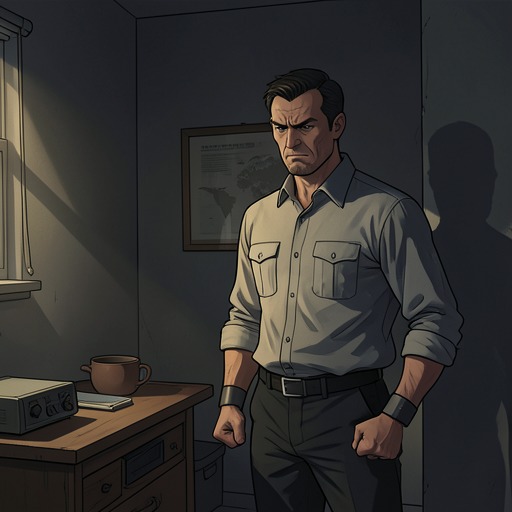
Wann wird es endlich wieder so, wie es nie warDer Fuchs und die Gans is an improvised song that gives the narrator a way to come down from violent, unpredictable fits of rage. Neither a fixed composition nor merely a distraction, it changes with the machine or road that sets its rhythm: a bodily means of calming himself that his family must also endure.
Origin and Form
The song first takes shape during one of the narrator’s mother’s attempts to soothe him. His anger has become less visibly tied to an immediate insult and more chronic: he can erupt over a broken shoelace or fall into a rage without any apparent trigger. When an episode leaves him on the floor, his mother carries him through the house and sets him on the washing machine, sometimes switching it on without any laundry inside.
During one such calming cycle, the narrator begins singing about a fox and a goose. The song has neither a melody nor a fixed text. Its winding, repetitive narrative wanders through visits, plans to go to a lake, and a search for a red towel, but it need not arrive at a predetermined ending. The narrator can begin a line without knowing how he will finish it; the story keeps moving because it does not depend on a stable script.
The Washing Machine as Accompaniment
The song’s first setting shapes how it sounds. As the family’s underwear swirls in the wash, the narrator sings; while the laundry soaks and the drum pauses, his speech-song slows too. When the machine enters its spin cycle, its shaking loosens his body and seems to throw his tongue up and down. The narrator describes the words as if the washing machine were telling its own story through him.
This scene makes relief inseparable from rhythm and motion. The machine does not simply provide a place to sit: its changing cycles supply pauses, tempo, and physical jolts that enter the song’s performance. In the narrator’s account, the boundary between his own voice and the machine’s movement briefly blurs, while the repetitive, meandering song accompanies his return to himself.
Changing with the Road
The song travels beyond the laundry room. In the car, the narrator sings different versions according to the surface beneath the wheels: cobblestones produce a different song from a smooth highway or a curving country road. Its form remains open, but its rhythm responds to the route, making the surrounding journey an accompaniment as active as the washing machine had been.
For his brothers, this resource is a hardship. Before longer drives, the narrator is made to sign a contract promising not to sing. Yet his parents prefer a son who sings off-key without stopping to one who spends the journey screaming. The song is therefore both a means of managing his rage and a compromise that the family tolerates because of what it prevents.
Family Life and Significance
One drive gathers the song’s soothing function and its cost into the same confined scene. The family of five travels with the windows shut in drizzling weather. The narrator’s father drives at half the permitted speed and smokes continuously; the narrator’s mother repeatedly tugs at a seat belt that feels too tight to her. On the back seat, the narrator’s brothers sit as far from him as they can, their heads turned toward the windows, while he sings until the family reaches its destination.
The song does not resolve the family’s discomfort or cure the narrator’s recurring anger. Instead, it marks a change in how that anger is lived with: what might otherwise become another episode of screaming takes the form of an untiring, improvised performance. Its wandering story and road-dependent variations make it at once an intimate method of self-soothing and a repeated test of the family’s patience.