Erfinden heißt Erinnern
Wann wird es endlich wieder so, wie es nie warErfinden heißt Erinnern, meaning that inventing is a way of remembering, names the narrator’s decisive discovery about how stories and memory interact. After a childhood account of finding a dead man in a garden has accumulated deliberate embellishments, one invented detail—the dead man’s ring—unexpectedly restores a real, forgotten feature of the scene. The phrase becomes more than a paradox: it describes how the narrator’s act of shaping the past can bring back what unaided recollection cannot reach.
From discovery to repeated story
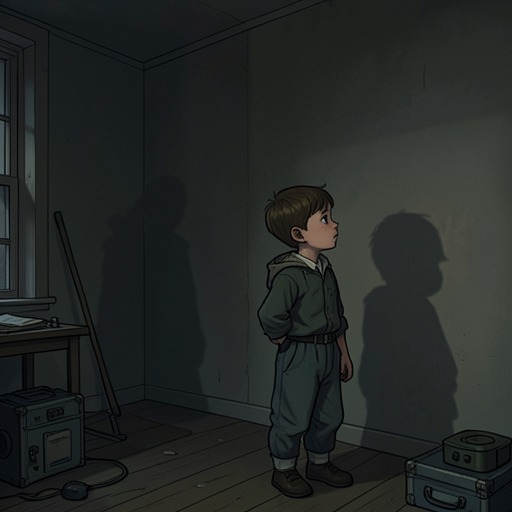
The insight grows out of a childhood experience that the narrator recounts again and again. After finding a dead man in a garden, the narrator tells the story to family, classmates, and other listeners. Its retelling becomes a performance: details are refined, effective turns of phrase retained, and versions adjusted to the audience. For classmates and the narrator’s brothers, gruesome details make the story more frightening; adult listeners can be impressed by the narrator’s claim to have carefully noted the scene and reported it. The story does not remain a stable account. Each telling reshapes it in response to the people listening.
The narrator understands that the additions are lies, yet feels that the story has acquired a life of its own and that its teller must live up to it. The extraordinary event seems worth keeping close, and embellishment becomes a way of holding on to it. This gives invention an ambivalent role: it distorts what happened, but it also expresses the narrator’s attachment to an experience that otherwise might slip away. The story’s growing ornamentation is not presented as simple forgetfulness or deliberate deception alone. It is an effort to make the remembered event vivid and enduring, even as the narrator loses track of which details belong to the original encounter.
The ring and the recovered memory
The turning point comes during another telling, this time to a friend of the narrator’s eldest brother. To keep the familiar account interesting, the narrator adds a scene in which the dead man wears a valuable-looking ring. The narrator imagines briefly climbing back over the garden gate to take it, but says that the school bell rang and sent the narrator running away. The detail is introduced as fiction, another improvised flourish in a story already shaped for its audience.
As the narrator describes the ring, however, a sudden physical shock accompanies a clear image: the dead man really had worn a gold wedding ring on his lifeless left hand. The narrator immediately insists that the ring was real, while the brother and his friend fail to understand what the claim means. What had been invented has brought an obscured detail back into view. The memory does not return through a deliberate search for evidence; it surfaces in the act of narrating, when the imagined ring unexpectedly meets the remembered one.
The narrator later understands this moment as an excavation. The invented ring seems to have scraped away at something enclosed in the depths of memory and released it. In that sense, the lie is neither simply a falsehood nor a reliable reconstruction. It supplies the form through which a true detail can become accessible, while leaving the larger problem of separating remembered experience from later invention unresolved.
Stories, listeners, and shared memory
The phrase also describes a social process. The family responds to the original discovery in different ways: the narrator’s mother offers comfort, while the narrator’s father, a child and adolescent psychiatrist, discusses life’s transience and suggests that the elderly man died of a heart attack while picking flowers. The narrator’s brothers initially do not believe the account. After the narrator breaks down in rage and tears, they comfort the narrator and press for details. The story is thus made and tested in company, through sympathy, skepticism, questioning, and repeated retelling.
The same pattern appears in a quieter remembered scene from the narrator’s father’s fortieth birthday. Among the details preserved from a day crowded with major events is a garden-furniture advertisement showing a woman painting a fence. The narrator leans closer to inspect the picture; the father gradually raises the paper until his face appears opposite the narrator’s, and the two laugh before he lowers it again. The remembered image is not important because it records a public milestone. Its persistence comes from the intimate gesture it preserves, showing how a seemingly incidental detail can hold a relationship in memory.
Another encounter gives the language of remembering a different force. When the narrator meets Ferdinand after the death of the narrator’s brother, Ferdinand mistakes the narrator for the dead brother and exclaims in relief that the narrator is alive and is not the brother. His repeated embrace and celebration make the narrator feel, in the narrator’s later understanding, as though Ferdinand has raised the narrator from the dead. This is not the recovery of a forgotten object, as with the ring. It is an instance in which another person’s confusion and recognition alter the meaning of absence, loss, and survival.
The past as material to shape
The narrator’s later reflection extends the childhood discovery into a broader account of time. The past may seem like the settled part of life, already completed and waiting to be told, while the future appears open to deliberate construction. The narrator questions that distinction: perhaps the past, too, must be shaped before an open future is possible. Memories are imagined as stored parcels that must be opened again, not accepted as complete and self-evident records.
This view does not mean that the past is freely invented or that factual differences cease to matter. The ring matters precisely because the narrator recognizes a difference between a detail first made up and one that proves to have been real. Instead, the episode shows that memory may require storytelling to become available at all. The narrator’s later willingness to treat the past as disorder—to reshape and embellish it, and to allow the dead to return in memory as familiar yet independent—continues the insight first discovered in the garden story. In Erfinden heißt Erinnern, invention is the means by which the past can be approached, revised, and made capable of opening onto an uncertain future.