
The Meaning of Power
War and PeaceThe novel contrasts formal authority with the actual forces that make commands effective or useless.
increasing Bearing strength in each event
 decreasing
Bearing strength in each eventdecreasingCourtly Authority
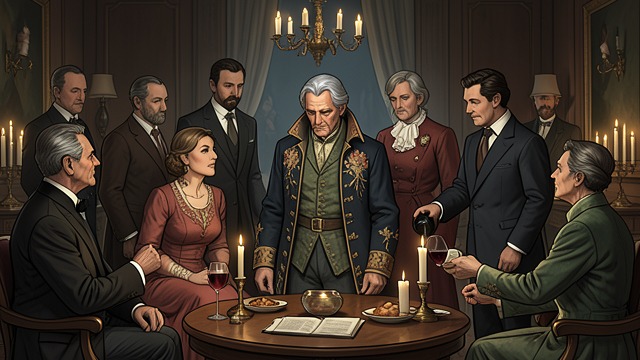
Power as Social Performance
Prince Vasili Kuragin exercises influence through rank, familiarity, and access rather than direct force.
Invisible Hierarchy
Guests obey conventions that no one openly commands.
Early Model
The drawing room presents power as a relation between expectation and compliance.
Military Command
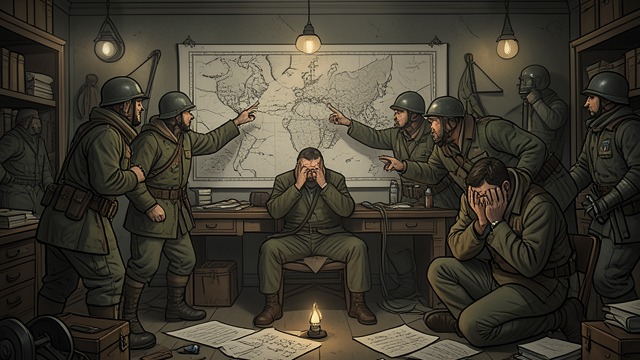
Authority Without Unity
The Russian army suffers because Emperor Alexander I, Mikhail Barclay de Tolly, Pfuel, Bennigsen, and advisers issue overlapping guidance.
Formal Rank
Many men possess authority, but no single will can organize the whole army.
Practical Result
The structure of power creates indecision rather than command.
Rostopchin's Mob
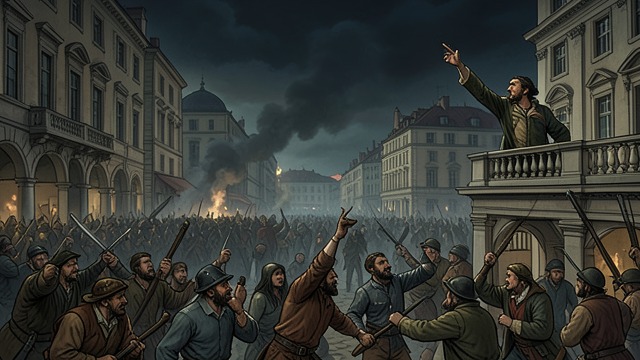
Authority Loses Its Ground
Count Fyodor Rostopchin tries to control Moscow through proclamations, weapons, rumors, and theatrical patriotism.
Public Dependence
The crowd initially expects him to direct its action.
Collapse
Once the army leaves, his authority becomes an attempt to find a victim for his own failure.
Kutuzov's Authority
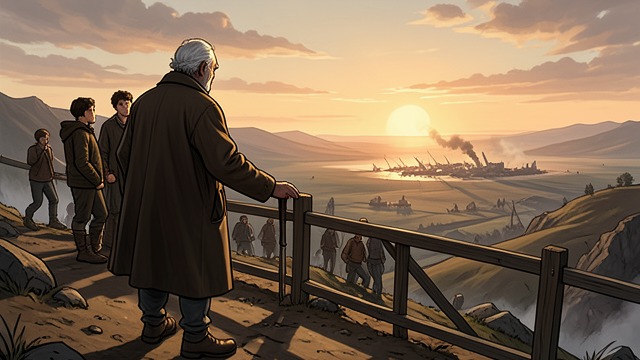
Power as Restraint
Mikhail Kutuzov exercises authority by refusing to convert every opportunity into an attack.
Moral Relation
He represents the people's will more faithfully by listening to the army than by imposing a personal plan.
Effective Command
His power lies in recognizing when not to act.
Power as Relation
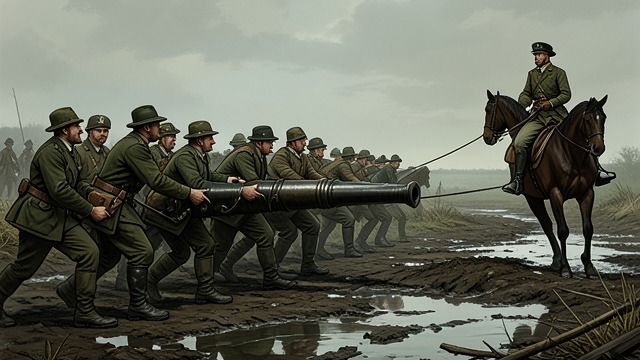
The Commander's Paradox
The epilogue defines power as the relation between expressed will and the action of those who execute it.
Collective Structure
The more directly people act, the less they command; the more they command, the less they act directly.
Historical Law
Power is neither supernatural cause nor private genius but a relation within collective movement.
July 1805 at Anna Pavlovna's reception
August 1812 at the Drissa headquarters
September 1812 during the evacuation of Moscow
September-October 1812 after the Council of Fili
1813-1820 in the second epilogue
