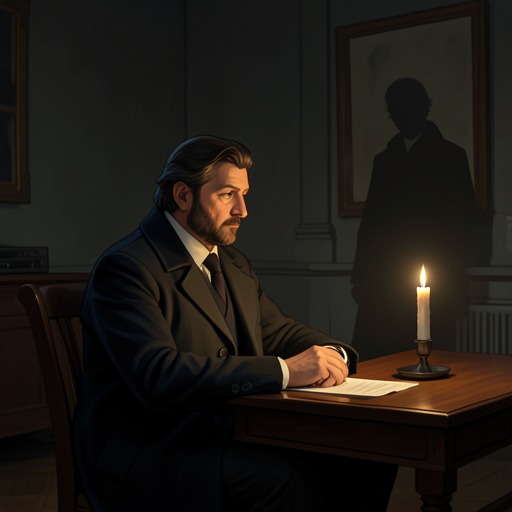
Faith Plantation
Washington BlackFaith Plantation is the Barbados estate where Washington Black spends his childhood under enslavement, and the place whose violence and unresolved family history continue to shape his life after escape. First encountered as a working plantation, it returns in memory, testimony, and written records: a landscape of labor and punishment whose history cannot be set aside simply by leaving it behind.
Setting and Early Life
The narrative places Faith Plantation in Barbados in 1830. Washington’s account begins with an explicit hesitation about origins: he says he was told he was born on the estate in 1818, but had also heard that he was born aboard an illicit Dutch vessel during the Atlantic crossing in the autumn of 1817. He does not claim certainty between those versions. What is certain is that his childhood on Faith is organized around field labor. He recalls wielding a hoe at two, weeding, collecting fodder, and handling manure; at nine, he received a straw hat and a shovel too heavy for him, and felt proud to be counted a man.
Faith is also the place where Washington’s relationship with Big Kit takes shape. She is feared and revered by the people around her, but to him she is a powerful presence and a source of stories about a world beyond the plantation. Her accounts of her past shift, including whether she had children, and he remembers stopping work to listen. Long afterward, the estate’s records reveal what those changing stories had concealed: Big Kit was his mother. The discovery makes Faith not merely the site of his earliest memories, but the place where the kinship at the center of those memories was hidden from him.
Plantation Rule and Violence
After a new master takes control, Faith’s system of discipline becomes more brutal. In the second week, the old overseers are dismissed and replaced by men recruited from the docks, including former soldiers and slavers. Maimings and killings follow. Enslaved people are punished for perceived defiance or unsuccessful escape, and the survivors are made to witness the consequences. After James is killed, the people on the plantation are made to file past his remains and are branded again. Washington, still a boy, cries at night as the killings continue.
The estate’s violence is not limited to a single episode or master’s decision. It is sustained through labor discipline, physical punishment, surveillance, and the threat of being treated as property. Corvus Peak, a steep mountain near the plantation, embodies this hierarchy in the landscape: overseers can use it to watch the fields, while the field workers regard it as a fearful place they do not visit. When Titch proposes surveying it as a possible launch site for the Cloud-cutter, Washington understands the contrast between its scientific purpose and its established role as a vantage point over plantation labor.
The plantation’s owners also treat the enslaved population as a workforce to be counted against production. When Titch seeks workers for his project, the master refuses to lose fifteen people from field work. His objection makes explicit the economic logic governing the estate: even a proposed technical experiment must be weighed against the labor extracted from enslaved people. Washington’s later role as Titch’s scientific assistant does not erase that legal status. Aboard ship, Titch identifies Washington as his property while arguing that his skills deserve respect, exposing how personal advocacy remains entangled with the language of ownership.
Flight, Memory, and the Plantation Record
Faith remains present after Washington escapes. During the voyage away from Barbados, he thinks of Big Kit, Gaius, and those he has left behind, measuring his own survival against the suffering continuing only a short distance away. In America, he and Titch must keep their arrival discreet, and Titch warns that mercy can be revoked. The danger of recapture is made concrete by the bounty notice posted for Washington: it describes him as a lifelong slave, identifies his burns and clothing, and offers a reward for his capture, dead or alive. The notice names John Francis Willard as acting for Erasmus Wilde and locates the claim at Faith Plantation.
Years later, Washington’s return to the estate through memory takes the form of drawing. He renders its huts, hurricane-worn roofs, Spanish cedars, royal palm, frogs, sugar boiler, and the path leading to Wilde Hall. The same remembered landscape includes places marked by coercion: a mantrap for runaways, a boulder associated with executions by whipping, a tree bearing a noose and knife marks, and ground where the dead had been left. The drawing is neither a neutral inventory nor a simple act of nostalgia. It brings the plantation’s beauty and its violence into the same frame, refusing to let one cancel the other.
The records kept about Faith offer another, colder form of remembrance. In an organization still engaged in antislavery work after emancipation in the British West Indies, Washington and Tanna are given access to bound plantation documents. A scrapbook of newspaper clippings contains the very bounty advertisement they had seen in Virginia. An apprenticeship register lists the names and death dates of people who continued working at the estate after emancipation. Washington finds Big Kit’s death recorded there, in writing that reduces a life to a line among administrative entries. The survival of these documents permits discovery, but their orderly form also repeats the reduction of people to property, labor, and recordable facts.
After Emancipation and the Estate’s Legacy
When Washington asks what became of the enslaved people after Faith was sold, Mrs. Wilde answers that they were no longer slaves but apprentices and workers, paid for grounds work and given lodging. Her description presents the changed legal arrangement as an improvement; Washington’s concern for Big Kit and Gaius, and the records of deaths among the apprentices, expose the limits of that account. The change in status does not make the plantation’s history disappear, nor does the language of wages and lodging settle what happened to the people who had been forced to work there.
Faith consequently links several distinct kinds of evidence: a child’s uncertain recollection of his birth, the violence that structures daily life, a fugitive notice designed to return him to enslavement, the adult artist’s recovered images, and the written registers that reveal Big Kit’s death and identity. The estate is both a place Washington leaves and a history he must encounter again. Its lasting significance lies in that contradiction: escape gives him distance from Faith, but neither distance nor emancipation can undo what the plantation made, concealed, and recorded.