Hudson Bay
Washington BlackHudson Bay is a pivotal northern waypoint in Washington Black’s journey from enslavement toward an uncertain freedom. Titch arranges a costly detour to an outpost there while searching for his father; after Titch disappears, Washington is left to find his own passage onward, carrying the fear of capture into the next stage of his life.
A Detour North
After leaving Norfolk, Titch pays the ship’s captain to change course and set them down at an outpost in Hudson Bay. The journey north gives Washington a temporary sense of security in Titch’s company, though his account later recognizes that Titch may have been anxious both about finding his father alive and about John Willard’s pursuit. Their arrival makes the bay a threshold between the American waters they have left and the remote northern settlement where Titch hopes to learn what became of James Wilde.
Arrival at the Trading Post
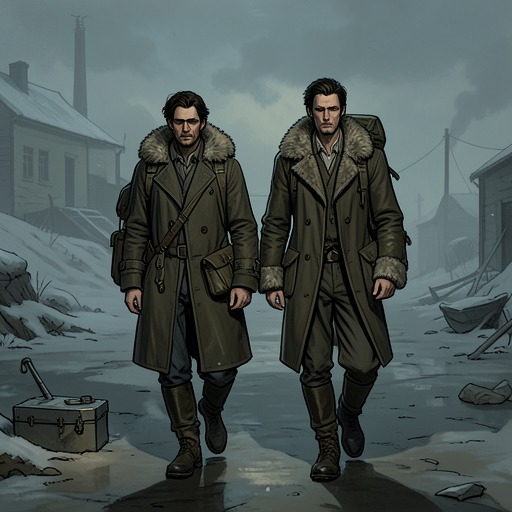
Near the bay, the water is calm and dotted with pieces of ice. Titch and Washington part from Captain Holloway and Jacob Ibel, then take a small cutter toward the trading post, a group of leaning wooden shacks. A trader there listens as Titch asks about James Wilde, the English naturalist believed to have died at a western outpost. The place is thus not simply a destination: it is the point where Titch’s search for his father comes into direct contact with the uncertainty of northern travel and the people who hold local knowledge.
An Uncertain Refuge
After spending several weeks at the northern outpost, Washington arranges passage on a vessel bound for the Maritime islands. He has chosen to seek safety among the Loyalists, but his departure is shaped by fear: he worries that a captain might sell him to a ship bound for the Slave States and that John Willard or his agents might find him. Hudson Bay therefore offers neither a settled home nor a lasting guarantee of protection. It is a temporary stopping place from which Washington must continue alone.
Significance
The bay’s place in the novel’s geography underscores how movement across borders can alter a person’s prospects without ending the danger. Washington has escaped the plantation and reached a distant northern outpost, yet he remains vulnerable to capture and forced return. Hudson Bay also stands at the point where Titch’s family search and Washington’s struggle for safety briefly share a route before separating: Titch seeks his father, while Washington must decide how to survive without him.