Sir James Wilde
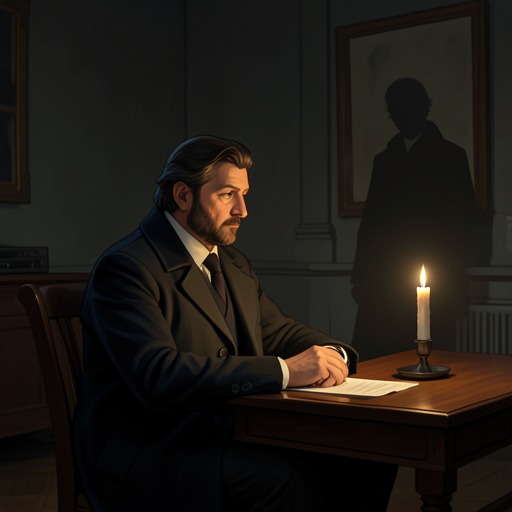
Washington BlackSir James Wilde is a natural philosopher and Arctic explorer whose scientific renown shapes the lives of his sons, Christopher Wilde and Erasmus Wilde, even while he remains far from them. First reported dead in an Arctic accident, he is later found alive by Christopher; his eventual death and Christopher’s disappearance leave that discovery without a secure resolution. Sir James’s importance lies as much in the authority attached to his scientific work as in the family obligations and grief his absence sets in motion.
Identity and scientific standing
Sir James is described by Christopher as a man devoted to science, not estate management. Although the family owns several properties, Christopher explains that Sir James does not concern himself with rents or tenants; those responsibilities had already passed to Erasmus even when their father was at home. Sir James spends extended periods away on research. At the time Christopher tells Washington Black about him, he has been away for a year and is expected to remain abroad for at least two more.
His work has given him exceptional standing in the scientific world. Christopher identifies him as a Fellow of the Royal Society, a recipient of the Copley Medal, and the holder of the Bakerian lectureship. He is also renowned for collecting specimens, most of which he donates to Montagu House. The account presents him as both a prominent researcher and a practical collector: his scientific reputation is tied to gathering objects from the natural world and making them available to institutions and other observers.
Sir James’s outlook is characterized as mechanical. Christopher says that his father believes people can know everything if they can unlock nature’s secrets. The description credits him with having discovered much, while also marking a boundary in that confidence: he cannot understand his wife’s heart. His commitment to explaining the natural world therefore coexists with an acknowledged failure to comprehend an intimate human relationship.
Family, inheritance, and absence
Sir James’s long expeditions leave the family’s practical affairs to others. After Richard Black dies, his estates, including Faith Plantation, pass to Erasmus. Christopher explains that Erasmus had already been managing the family’s English properties and now has further responsibility for Richard’s estates. Because Sir James is away, he cannot offer the counsel Erasmus may have expected; the transfer of property and authority thus coincides with the father’s physical absence.
Christopher describes Sir James and his wife as poorly suited to one another. In his account, their class imposes duties that do not necessarily follow personal affinity, and he links this family arrangement to the struggle for freedom within their social position. He also describes his mother as headstrong and difficult for both husband and son to understand. The contrast between Sir James’s confidence in scientific inquiry and his inability to read his wife presents the family not as a settled home but as a relationship marked by distance and incomplete understanding.
The Arctic expedition extends that distance into a crisis. At a family dinner, Philip reports that Sir James has died in an accident at his Arctic outpost, while admitting that he does not know the particulars. The news reaches Christopher through a letter from his mother, which Philip says contains the details. The report makes the expedition more than an interval of absence: it appears to close the possibility of Christopher’s reunion with his father.
Reported death and Christopher’s response
After hearing the news, Christopher is described as stunned, his face drained of colour as he looks at the tablecloth. Yet the immediate conversation also turns to the consequences for Faith. Philip conveys that Christopher’s mother believes Christopher may manage the plantation for two or three years while Erasmus attends to Sir James’s affairs. The proposed arrangement places Christopher in an estate-management role his father had avoided, making the supposed death a change in both family structure and responsibility.
In the days that follow, Christopher enters a grey, withdrawn state and does not want to discuss either his father’s death or England. His grief is bound to a specific unrealized hope: he believes Sir James will never see the work of his life, their shared passion for flight made whole through his own hands. The loss is therefore both personal and intellectual. The son wants recognition from the father, and the reported death appears to make that recognition impossible.
Christopher then turns to the question of a memorial. He argues that someone should travel to the Arctic and erect a marker at Sir James’s resting place, because Peter House, Sir James’s assistant and only companion there, is not given to sentimental gestures. Christopher cannot accept that his father should pass from the world without a sign of remembrance. He speaks of the marker as a response to Sir James’s work in enlightening people about the world, linking public scientific achievement to the private duty of mourning.
Arctic reversal and narrative significance
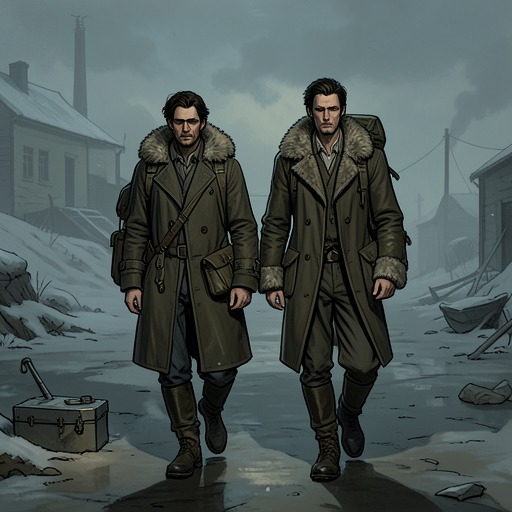
The report of Sir James’s death proves incomplete: Christopher later finds his father alive in the Arctic. That reversal gives the earlier news a double consequence. It has already shaped Christopher’s grief and prompted thoughts of a memorial, but it has not described the final outcome of Sir James’s expedition. The story withholds a secure account of the circumstances behind the reported accident, making the distinction between what has been announced and what has actually happened central to Sir James’s place in the narrative.
The reunion does not settle the family’s fate. Christopher disappears into an Arctic blizzard, and Sir James later dies in the Arctic camp. The sequence leaves the father’s survival confirmed but does not turn their reunion into a lasting repair: Christopher is lost, and Sir James’s death is ultimately established. His story is thus shaped by repeated uncertainty—years of absence, an erroneous report of death, a return to life, and a final death far from home.
Sir James also serves as a point of comparison for the novel’s other scientific ambitions. His prizes, fellowship, and specimen donations show how institutions confer authority on a researcher; Christopher’s later work on flight carries the emotional weight of a project he hopes his father might have seen. Elsewhere, Washington Black’s scientific illustrations and discoveries demonstrate that observation and skill can exist without equal access to training, recognition, or authorship. Set against Sir James’s established reputation, those contrasts make scientific achievement inseparable from the question of who is recognized as a knower. The father’s absence intensifies that question: his authority remains powerful even when he is unavailable to witness the work of those who follow him.