
Empire and Self Government
WatchmenThis flow examines the argument that political freedom may be pursued within an empire rather than only through total separation.
increasing Bearing strength in each event
 decreasing
Bearing strength in each eventdecreasingThe Imperial Argument
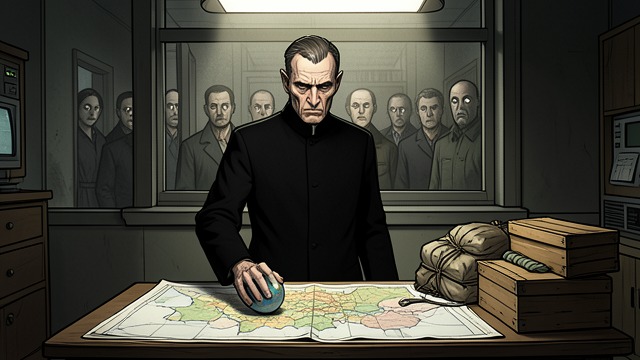
The Imperial Argument
Order as Necessity
Emil Vorgens explains that the Terran Empire provides law, commerce, and food distribution across worlds too interdependent to survive alone. Its expansion was not entirely planned, but arose from the collapse of the Masters.
He believes that dismantling the Empire would produce starvation and chaos. His defense is pragmatic rather than affectionate.
The Moral Weakness
Sittas asks whether necessity excuses cultural destruction. Vorgens must confront the possibility that an efficient order can still be unjust.
The Case for Autonomy
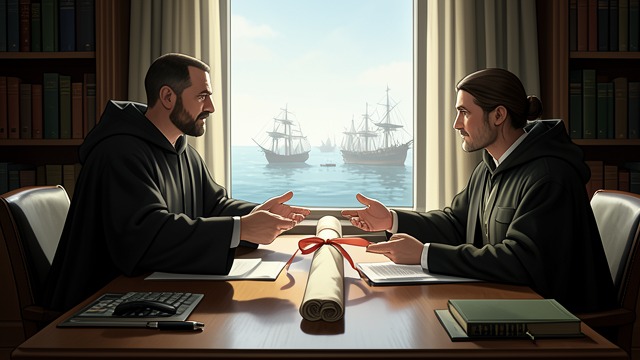
The Case for Autonomy
A Conditional Freedom
Vorgens offers Shinarian leaders the possibility of self-government within the Empire. He admits that he cannot guarantee it, but argues that it is more attainable than independence under military pressure.
Clanthas and Altai recognize that the offer is not complete freedom. It is nevertheless a political opening created by Shinarian courage and the threat posed by the Komani.
Choice Rather Than Submission
The crucial change is that Vorgens asks the leaders to decide. Imperial policy begins to acknowledge Shinarian agency.
A Future Not Fixed
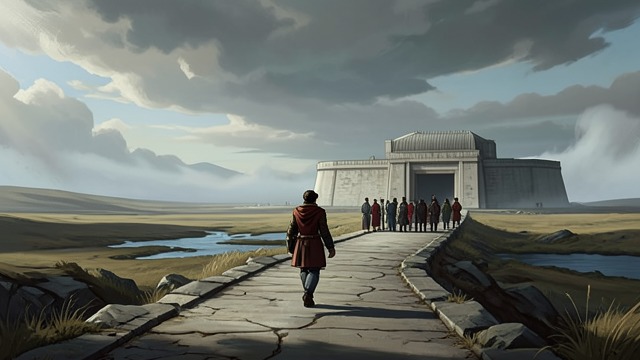
A Future Not Fixed
Political Possibility
As Vorgens leaves, Shinar has not become fully independent, but its people have proved capable of defense, negotiation, and collective political action.
The future remains uncertain because the Empire must still accept the Senate’s case for autonomy. Yet the people’s political identity has changed permanently.
Chosen History
The story rejects inevitability. Shinar’s future will be shaped by decisions made under pressure rather than dictated solely by imperial power.
during Vorgens’s first discussion with Sittas
during the Shinar Peace Settlement conference
at the departure from Shinar
