
The Meaning of Victory
WatchmenThis flow contrasts military success with political and moral victory in both halves of the novel.
increasing Bearing strength in each event
 decreasing
Bearing strength in each eventdecreasingThe Carmeer Victory Denied
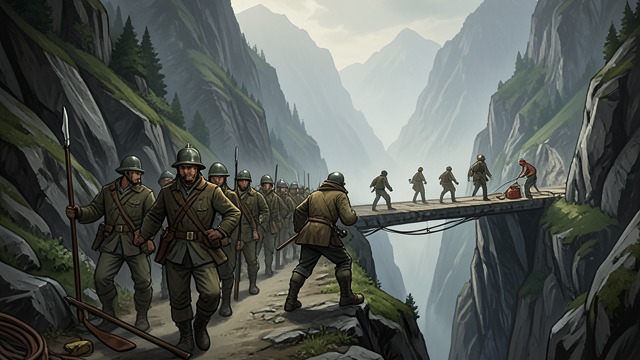
The Carmeer Victory Denied
Refusing the Trap
The Komani intend to destroy the Mobile Force and use that victory to trigger a wider uprising. Emil Vorgens refuses to give them the decisive battle they want.
His forces fight a rear-guard action while engineers create an escape route. Tactical retreat becomes strategic victory.
A New Standard
The operation proves that survival can be more important than battlefield dominance. It also gives Vorgens authority to shape the wider war.
The Katan Victory
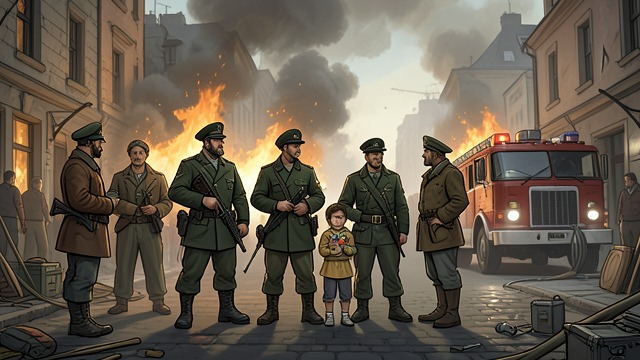
The Katan Victory
A Ruined City
Katan survives the Komani assault, but large sections burn and the city’s defenders suffer heavy losses. Victory does not restore what war has destroyed.
The Terran Marines, citizens, and Merdon’s fighters win because they coordinate rather than because one side dominates alone.
Meaning Through Reconstruction
The citizens celebrate because they have defended their home. Their celebration gives political meaning to sacrifice, even while the ruins expose its cost.
The Peaceful Victory
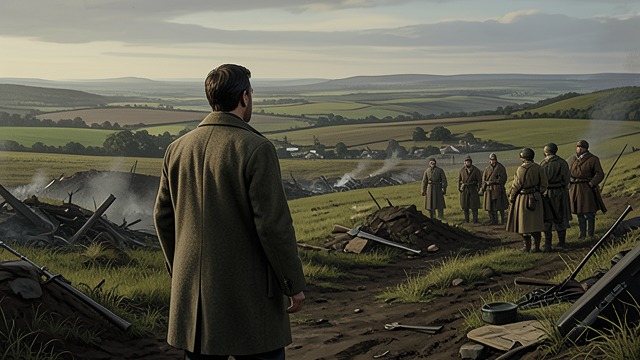
The Peaceful Victory
Leaving the Battlefield
The Komani withdrawal ends the immediate fighting, but the political settlement remains unfinished. Shinar has won time and agency rather than complete independence.
Emil Vorgens departs to argue before the Imperial Senate. His final victory is the creation of a process in which Shinar can speak for itself.
Beyond Conquest
The novel defines victory as the preservation of choices. A society survives when it can still decide what kind of future it wants.
during the Mobile Force breakout from Carmeer
during the Battle of Katan
at the end of Star Watchman
