
The Star Watch as Peacekeeper
WatchmenThis flow examines the Star Watch’s changing role from military arm of empire to instrument for limiting war and preserving political choice.
increasing Bearing strength in each event
 decreasing
Bearing strength in each eventdecreasingImperial Military Arm
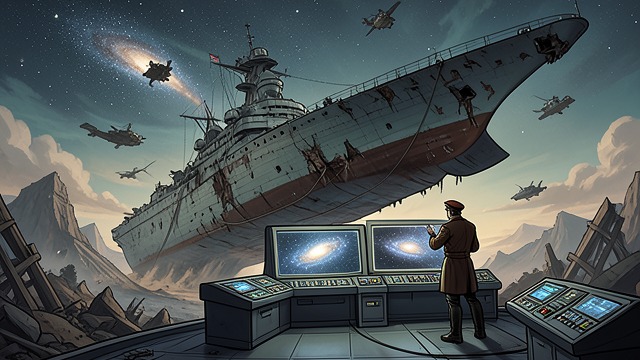
Imperial Military Arm
Inherited Authority
The Star Watch predates the Terran Empire and helped defeat the Masters. Its success made it part of the machinery that governs half the galaxy.
The Imperial Marines handle planetary fighting, while the Star Watch controls interstellar routes and strategic authority.
A Complicated Legacy
The organization protects order, but its officers can become agents of cultural domination. Vorgens must decide whether serving the Star Watch means defending the Empire or correcting its failures.
Jurisdictional Conflict
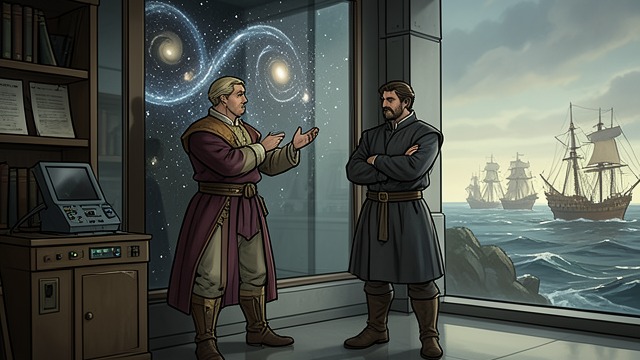
Jurisdictional Conflict
Orders in Conflict
Emil Vorgens receives orders to negotiate with the Komani, while Brigadier Aikens orders him to gather reinforcements for battle. Both commands are legal within different chains of authority.
The dispute exposes an institution designed for centralized control but confronted by local uncertainty.
Law as Resistance
Vorgens uses the Star Watch’s jurisdiction not to expand violence, but to prevent a local commander from turning a strategic crisis into catastrophe.
Peacekeeping Mission
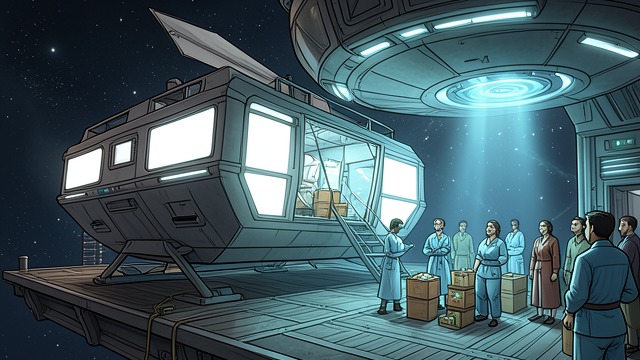
Peacekeeping Mission
Authority Reimagined
The Star Watch’s limited relief fleet helps convince the Komani that continued war will not produce glory. Its presence functions as deterrence rather than conquest.
Vorgens also uses Imperial communications and supplies to support Shinarian institutions, including the hospital at Matara.
An Unfinished Institution
The Star Watch remains part of the Empire, but its best representatives show that authority can be exercised with restraint. Peacekeeping becomes a test of legitimacy.
during the historical background of Shinar
during the command dispute before Carmeer
after the Komani withdrawal from Shinar
