
The Rejection of Assassination
WatchmenThis flow traces the moral argument against revenge killing from Hector’s refusal through Odal’s survival and Kanus’s lawful removal.
increasing Bearing strength in each event
 decreasing
Bearing strength in each eventdecreasingThe Revenge Demand
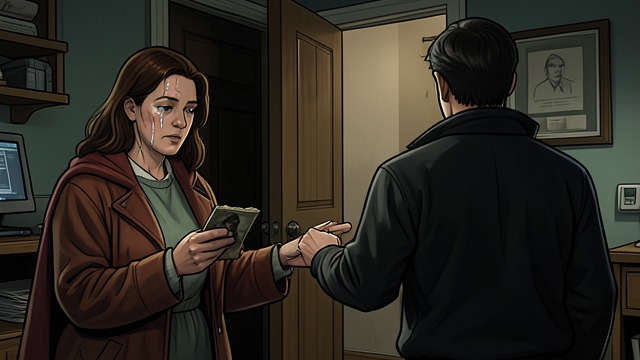
The Revenge Demand
Geri’s Grief
Geri Dulaq asks Hector H. Hector to kill Major Par Odal for murdering her father. Her demand is emotionally comprehensible because legal institutions appear unable to punish the architect of the crime.
Hector feels the pressure of love, duty, and fear. He could become a hero by committing the act she wants.
The Refusal
He rejects revenge because Odal’s death would make him another deliberate killer. His decision costs him intimacy before it restores their relationship.
Mercy Under the Gun
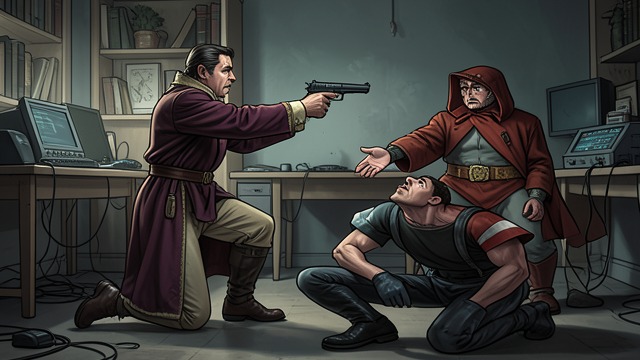
Mercy Under the Gun
The Open Opportunity
Hector obtains a gun while Odal is vulnerable and could kill him without a duel. Geri urges him to act immediately before guards arrive.
Hector lowers the weapon and orders Odal to stand. He chooses restraint even while knowing that Odal may remain dangerous.
Moral Independence
The decision proves that Hector’s earlier refusal was not hesitation. He will not allow another person’s grief to determine his ethics.
Lawful Deposition
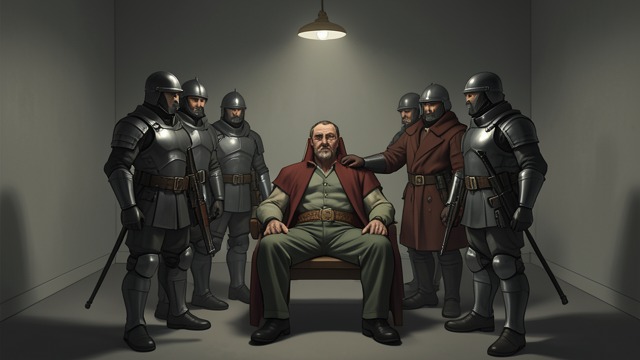
Lawful Deposition
The Dictator Captured
Romis prevents his followers from shooting Chancellor Kanus because an execution could create a civil war and a martyr. The conspirators instead demand surrender.
Kanus is placed in psychonic treatment rather than killed. The response rejects the logic that every political threat must be eliminated physically.
A Difficult Justice
The settlement is not sentimental forgiveness. It is an attempt to replace personal vengeance with institutions capable of containing a dangerous man.
after the first Hector–Odal confrontation
during the tri-di studio confrontation
during the Kerak Coup against Kanus
