
The Logic of Deterrence
WatchmenThis flow follows the use of limited demonstrations and credible threats to prevent larger wars in Shinar and Acquatainia.
increasing Bearing strength in each event
 decreasing
Bearing strength in each eventdecreasingThe Relief Fleet
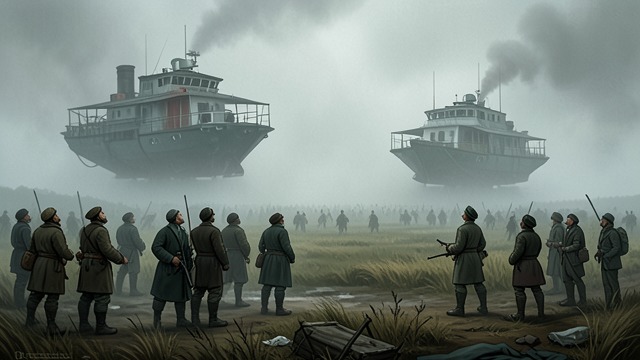
The Relief Fleet
A Small Arrival
Star Watch Headquarters sends only a minimal relief fleet to Shinar. The force is too small to guarantee victory, but its arrival signals that the Empire has not abandoned the planet.
Emil Vorgens uses shuttling landing ships and careful presentation to make the reinforcement appear more substantial.
Strategic Signal
The fleet’s value lies in perception. It gives the Komani reason to doubt that a successful war on Shinar would remain local.
Frontier Presence
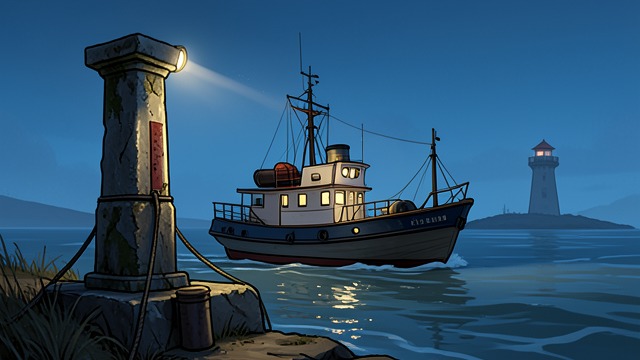
Frontier Presence
A Diplomatic Pretext
Sir Harold Spencer asks permission to position a small Star Watch survey fleet near the Acquatainian frontier. General Martine accepts because the deployment can be explained without admitting dependence.
The maneuver creates a tripwire. Kerak cannot attack freely without risking immediate Commonwealth involvement.
Peace Through Uncertainty
Deterrence succeeds because Kanus cannot calculate whether the fleet is a harmless survey force or the beginning of intervention.
The Threat of War
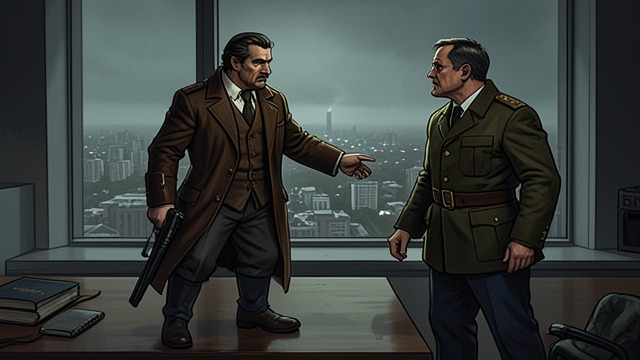
The Threat of War
Hostage and Red Line
Sir Harold Spencer warns Romis that harm to Hector H. Hector will trigger an invasion of Kerak. The threat is explicit because ambiguity would encourage the factions to gamble.
Romis understands that the Star Watch is trying to prevent war, but will not sacrifice an officer to preserve procedural neutrality.
Contained Crisis
The warning gives Romis room to overthrow Kanus without fearing immediate Imperial interference. Deterrence becomes the condition that allows internal change.
after the Battle of Katan
after General Martine’s private decision
after Romis’s warning to Spencer
