
Food, Care, and the Blackwood Household
We Have Always Lived in the CastleThis flow traces food as a language of care, a source of vulnerability in the poisoning, and a practical basis for survival after the fire.
increasing Bearing strength in each event
 decreasing
Bearing strength in each eventdecreasingConstance’s Kitchen Work
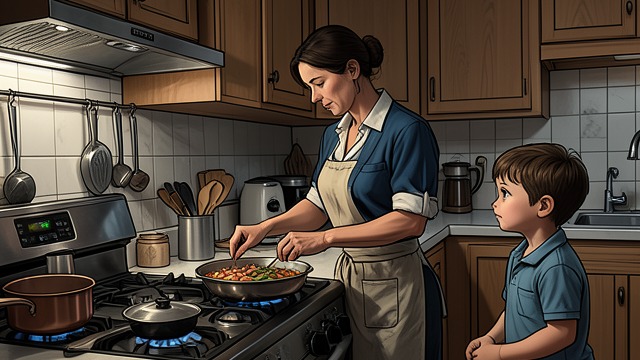
Constance’s Kitchen Work
Care made edible
Constance plans meals for Mary Katherine and Julian, handling ingredients with respect and adapting dishes to Julian’s needs. Food gives shape to the sisters’ ordinary days.
Skill and authority
Constance controls cooking, while Mary Katherine is not allowed to prepare food or gather mushrooms. This division reflects both protection after the poisoning and the household’s inherited rules.
The kitchen is a place where care is expressed through labor. It is also a place where access and trust are carefully regulated.
The Poisoned Sugar
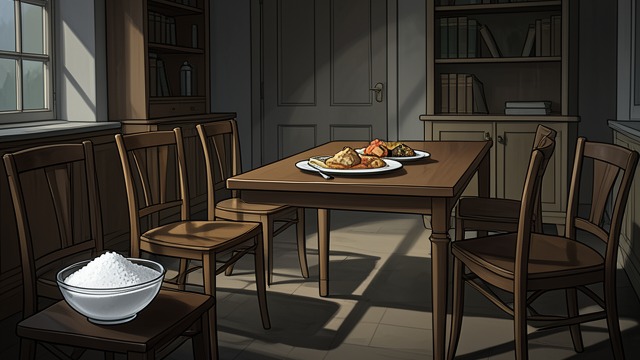
The Poisoned Sugar
A meal becomes lethal
Arsenic is placed in the sugar used at the family dinner. Several members of the Blackwood household die, while Constance and Julian survive.
Ordinary food made suspect
The poisoning turns a familiar table into the scene of an enduring crime. Even years later, questions about the sugar bowl and the menu remain charged.
Food is no longer only sustenance or affection. It carries the possibility of betrayal, and the surviving household must keep eating within that history.
The Visitors’ Tea
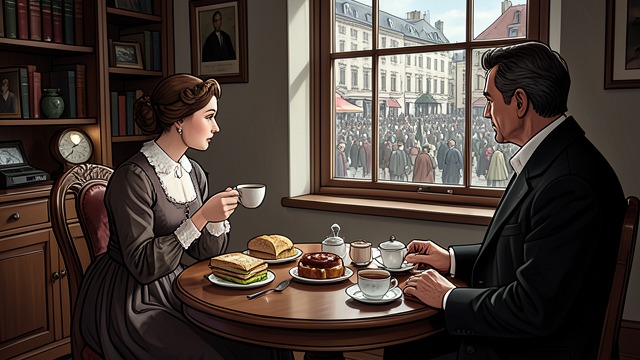
The Visitors’ Tea
Politeness meets appetite
Constance serves sandwiches and rum cakes to Helen Clarke and Mrs. Wright. The visitors’ manners are strained by their curiosity about the poisoning.
Hospitality becomes performance
Julian recounts the family tragedy while Mary Katherine watches the guests react. The tea table holds both genuine food and a carefully staged social encounter.
The scene shows that the Blackwoods can offer hospitality without surrendering control of their story. A meal becomes the means through which curiosity and intimacy collide.
Food Left on the Doorstep
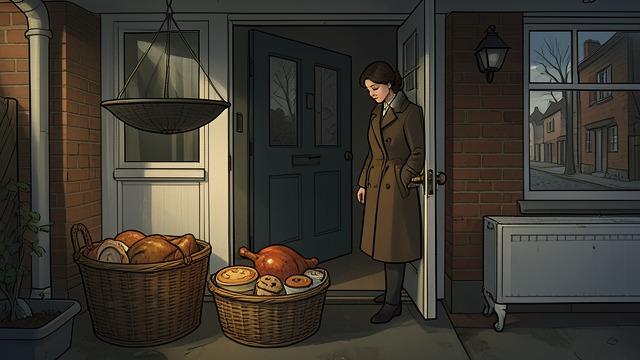
Food Left on the Doorstep
An indirect apology
Villagers leave roasted chicken, pies, cookies, and preserves at the sisters’ front door, often with short notes of apology. The gifts arrive without requiring the sisters to meet their neighbors.
Care on guarded terms
Constance assesses the food and compares it with her own cooking. The sisters accept the provisions while maintaining locked doors and avoiding face-to-face contact.
Food becomes the narrow channel through which the community can express regret. It does not erase the violence or compel forgiveness, but it sustains the secluded household.
Salvage and New Meals
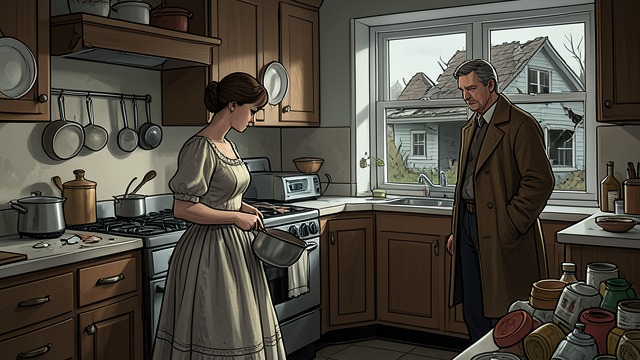
Salvage and New Meals
The kitchen survives
The sisters find that the cellar food has not been touched and recover flour, potatoes, eggs, and other supplies. Constance begins preparing breakfast among broken dishes and scattered provisions.
A new domestic pattern
They sort salvageable utensils, choose separate cups, and build routines around what remains. The kitchen’s condition is changed, but its work continues.
Food makes survival concrete rather than abstract. By cooking and eating again, the sisters begin to inhabit a future inside the damaged house.
In the household routine before Charles arrives
The family dinner six years before the opening
During Helen Clarke’s last tea visit
Several weeks after the village attack
The morning after the fire
