
The House as Castle
We Have Always Lived in the CastleThis flow traces the house’s changing status from inherited domain to vulnerable target and finally to a secluded stronghold chosen by the sisters.
increasing Bearing strength in each event
 decreasing
Bearing strength in each eventdecreasingA Family Domain
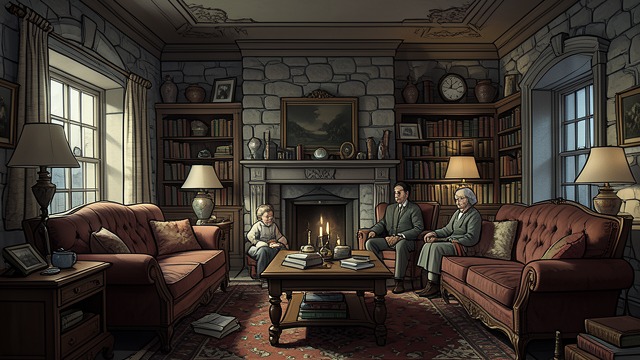
A Family Domain
Generations in one place
Mary Katherine describes the house as built up with layers of Blackwood possessions. The family’s history is embedded in rooms, furnishings, and repeated household arrangements.
A defended identity
The private land and closed gates distinguish the estate from the Village. The house functions as a claim to permanence as well as a place of shelter.
Its security depends on inherited wealth and controlled access. The home’s castle-like quality is therefore both emotional and social.
Behind the Stern Front
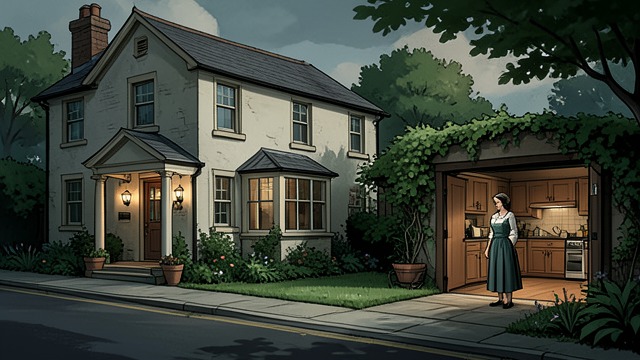
Behind the Stern Front
Public face and private rooms
The front of the house turns toward the highway, while the sisters spend most of their time at the back, near the garden and kitchen. Their life is arranged to remain unseen.
A protected interior
The sisters use the back lawn and rooms as a private world, while the formal rooms remain carefully maintained for visitors. The house separates social performance from intimate routine.
The building organizes the family’s contact with the world. Its layout gives physical form to a life divided between courtesy and withdrawal.
The House Exposed
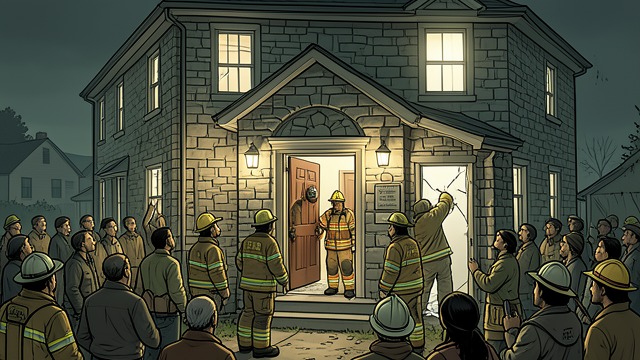
The House Exposed
Light on the estate
Fire engines and cars illuminate the house, making its front visible as never before. Firefighters cross the threshold and the crowd gathers around the structure.
A castle breached
Once the fire is under control, villagers break the tall windows and enter the rooms. The house’s protective separation collapses under the combined force of emergency access and deliberate vandalism.
The exposure is both physical and symbolic. The family’s hidden world is made public, then violated by people who had long resented its privacy.
The Roof Open to the Sky
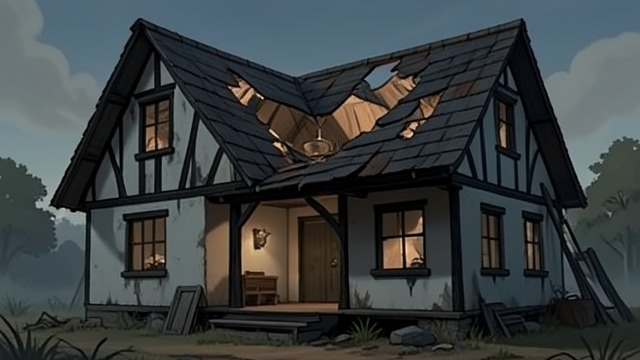
The Roof Open to the Sky
A structure altered
The sisters see that the upper house is gone, with blackened beams and fragments of windows remaining. The roof no longer separates their rooms from the sky.
A new vulnerability
Mary Katherine recognizes the house as a castle open overhead, beautiful in its ruined shape but exposed to forces she cannot barricade. The old shelter has become an uneasy mixture of refuge and danger.
The image captures a loss that practical cleaning cannot repair. The sisters can secure doors and windows below, but the damaged upper structure remains part of their life.
A Castle Behind Boards
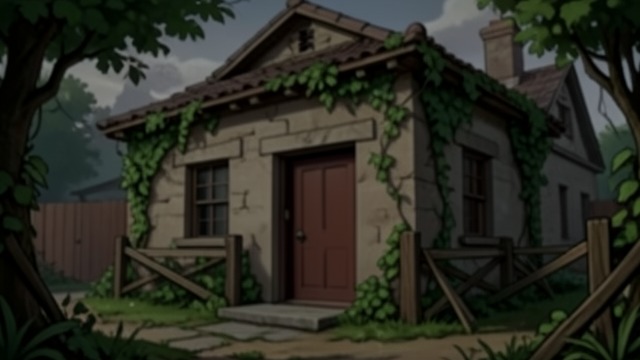
A Castle Behind Boards
The threshold remade
The sisters lock the doors, cover the windows, and build barricades along the house. Strangers see a vine-covered ruin rather than the sheltered domestic space within.
Seclusion made livable
The sisters eat, sleep, and keep house in the surviving rooms. Their home is no longer grand, but it is once again shaped around their chosen boundaries.
The castle has become less a structure than a relationship between the sisters and the outside. Its security lies in their control of access and their willingness to remain together.
Before the poisoning, recalled early in the story
During Mary Katherine’s early description of daily life
On the night of the fire and village attack
The morning after the fire
In the final weeks of the story
