
Helen Clarke’s Failed Outreach
We Have Always Lived in the CastleThis flow traces Helen Clarke’s efforts to draw Constance back into society and the growing distance between her concern and the sisters’ refusal.
increasing Bearing strength in each event
 decreasing
Bearing strength in each eventdecreasingA Regular Visitor
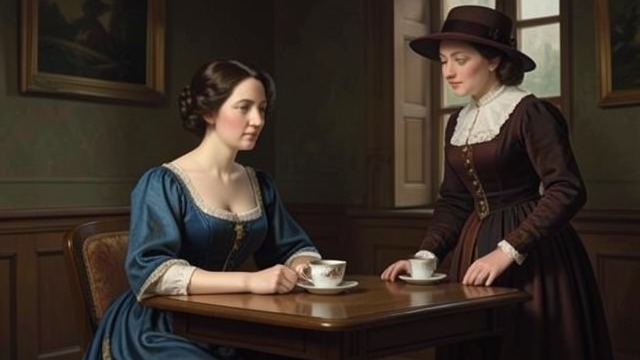
A Regular Visitor
Polite contact
Helen Clarke visits Blackwood house for tea and behaves as one of the few people still maintaining a social connection with the family. Constance receives her within the drawing room but does not return her visits.
Care within limits
The visits follow established rules: guests stay in public rooms and leave by the main drive. Courtesy keeps the relationship possible without requiring the sisters to enter village life.
The arrangement is friendly but carefully bounded. It gives Helen access to the household while leaving the sisters in control of its thresholds.
The Spring Advice
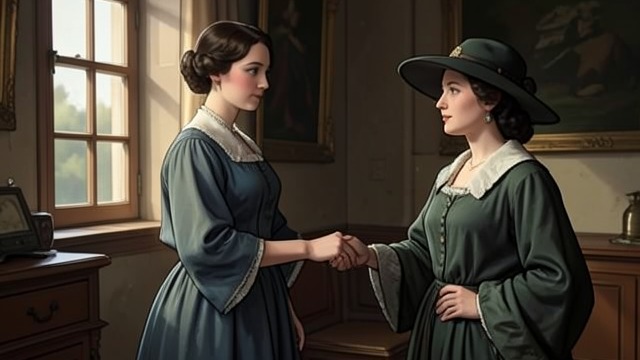
The Spring Advice
A call to rejoin society
Helen tells Constance that she is young and has a right to happiness, urging her to resume visits and outings. She frames the advice as the counsel of a close friend.
A fragile opening
Constance listens and says she will have to think. Mary Katherine hears the change as a threat and tries to interrupt the conversation by leaving the room.
Helen’s advice makes a previously unspoken option explicit. Her good intentions cannot prevent the suggestion from destabilizing the sisters’ shared life.
The Night of Public Shame
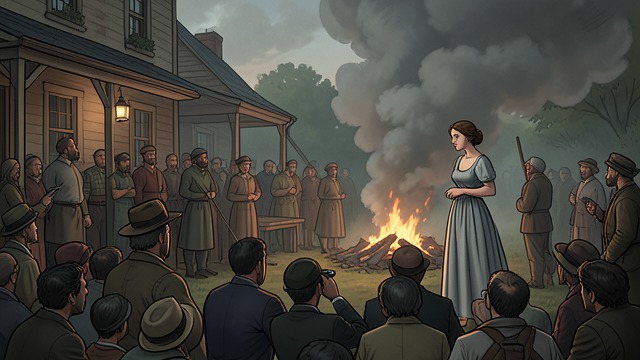
The Night of Public Shame
A witness to the mob
Helen arrives with Jim Clarke after the fire has drawn the Village to the estate. She sees the crowd’s destruction and is horrified by the spectacle.
Concern after violence
When the sisters flee, Helen remains near the house, crying and asking to go home. Her distress shows that she recognizes the mob’s cruelty but cannot undo the harm.
The earlier friend’s advice to return to the world is overtaken by the world’s violent behavior. Helen is now a witness to why the sisters may refuse contact.
An Unwanted Rescue
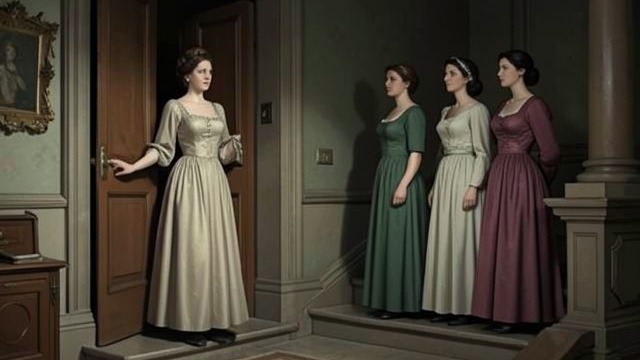
An Unwanted Rescue
A visit at the kitchen door
Helen comes with Jim Clarke and Dr. Levy, saying that she wants to take the sisters to her home. The sisters hide on the cellar stairs and refuse to answer.
Care meets refusal
Jim Clarke tells Helen to leave them alone, but Helen argues that isolation is bad for them. Her concern does not give her the authority to decide what they need.
The visit redefines friendship as a boundary dispute. The sisters’ silence is their clearest available answer to an offer they experience as intrusion.
The Last Unanswered Calls
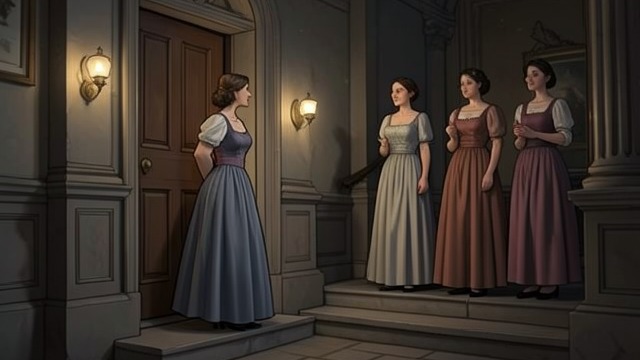
The Last Unanswered Calls
Repeated approaches
Helen returns to the door, calling for Constance and asking the sisters to come out. The sisters remain inside and wait for her to leave.
The relationship closes
When she finds the routes blocked and receives no answer, Helen eventually stops coming. The earlier pattern of tea and polite conversation is replaced by distance.
Her outreach cannot overcome the sisters’ need to control access. The relationship ends not in reconciliation but in a quiet, enforced separation.
Before the story’s central disruption
At Helen Clarke’s last successful tea visit
On the night the Village attacks the house
The day after the fire
In the weeks after the fire
