
Constance and Julian’s Care
We Have Always Lived in the CastleThis flow follows Constance’s attentive care for Julian, the challenge Charles poses to that arrangement, and the rituals through which Julian is remembered.
increasing Bearing strength in each event
 decreasing
Bearing strength in each eventdecreasingMeals Beside the Kitchen
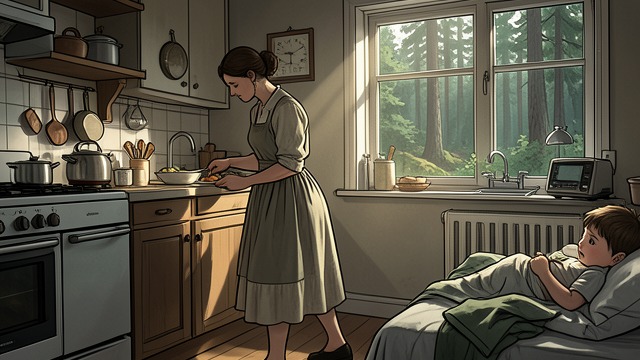
Meals Beside the Kitchen
Care as routine
Constance prepares Julian’s food in small portions and brings it to his room when he is unwell. She tracks his comfort closely, from warm milk to the shawl he needs outside.
Dependence without spectacle
Julian’s needs are part of ordinary household life rather than an occasional crisis. Constance’s work gives him companionship as well as physical care.
The relationship demonstrates how domestic routine sustains the remaining family. Its quietness can conceal how much effort and responsibility it requires.
A Difficult Morning

A Difficult Morning
Illness and confusion
Julian mistakes Constance for Dorothy and asks after John. Constance answers gently, giving him milk and redirecting him without humiliating him.
Attention as reassurance
She stays close when he is tired and makes plans to take him into the sunshine if he improves. Her patience helps preserve a sense of continuity through his confused memories.
Care here means accepting repetition rather than demanding accuracy. Constance maintains a relationship with Julian even when he cannot reliably place her in the present.
A Visitor Questions Care
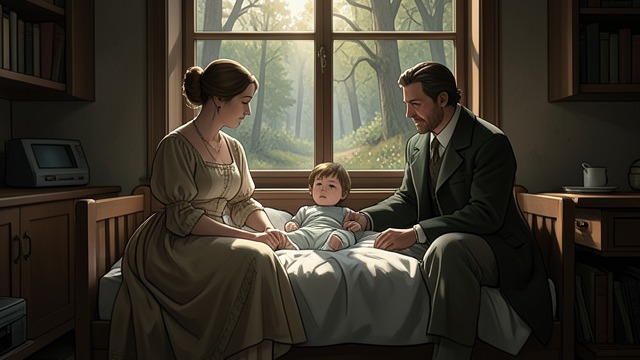
A Visitor Questions Care
Charles’s criticism
Charles questions why Julian eats with the family and mocks his difficulty at meals. He treats visible dependence as a problem Constance should correct.
Constance’s divided response
Constance continues to care for Julian but begins to wonder whether she has kept him from appropriate help. Her sense of duty is recast as possible failure.
The criticism changes the emotional meaning of care. What once seemed a loving routine now becomes a question Charles can use to press for broader change.
The Last Request

The Last Request
Papers before safety
When the fire starts, Julian wants to collect the notes that record his life’s work. Constance tries to guide him through the emergency while the house and family are in danger.
Care reaches its limit
Julian dies after the mob leaves, despite Constance’s years of attention. Dr. Levy identifies his failing heart as the cause, not the accusation the crowd briefly raises.
His death is not a failure of Constance’s affection. It marks the limit of what care can preserve when illness has already run its course.
Preserving His Place

Preserving His Place
Practical remembrance
Constance keeps Julian’s papers in a box, while Mary Katherine buries his pencil and Constance plants a yellow rose where he once sat. Each act gives loss a place within the estate.
A changed household
Julian’s room is cleaned and can be used, but the sisters remain attentive to the traces he left. They do not turn remembrance into a public performance.
Care continues after death as an arrangement of objects and spaces. The sisters’ rituals express attachment while allowing the surviving household to go on.
At the beginning of the story
On the Saturday before Charles arrives
During Charles’s first week in the house
On the night of the fire
In the weeks after Julian’s death
