
Merricat’s Making and Unmaking of Safety
We Have Always Lived in the CastleThis flow follows Mary Katherine’s protective imagination as it turns mundane objects into defenses, fails to prevent disruption, and adapts to the ruined house.
increasing Bearing strength in each event
 decreasing
Bearing strength in each eventdecreasingBuried Safeguards

Buried Safeguards
A landscape of charms
Mary Katherine checks buried silver dollars, a doll, and a notebook nailed to a tree. She believes the objects bind the land into a protective web around her family.
A private system
Her weekly checks give shape to fear by converting it into actions she can perform. The charms are not shared with Constance as a practical plan; they belong to Mary Katherine’s inward world.
The ritual reveals a mind seeking control in circumstances it cannot master. Safety depends on signs that only Mary Katherine knows how to read.
Three Unspoken Words

Three Unspoken Words
Protection through language
Mary Katherine chooses MELODY, GLOUCESTER, and PEGASUS as words that must not be spoken aloud. She believes their silence can hold off the change she senses approaching.
A fragile defense
The rules give her a momentary sense of command while Constance and Julian’s health and habits remain uncertain. Yet the words cannot prevent Charles from reaching the house.
Her magic is both play and serious coping strategy. Its limits become visible when external events move beyond the protections she invents.
The Fallen Notebook

The Fallen Notebook
A warning discovered
Mary Katherine finds that John Blackwood’s notebook has fallen from its tree. She decides it may no longer protect the family and plans to replace it.
A missed opportunity
Charles has already reached the house by the time she understands the danger. Mary Katherine later blames the lapse for the breach, linking a practical accident to her larger magical system.
The fallen object gives the arrival an omen-like frame without actually causing it. It shows how Mary Katherine turns coincidence into a language for approaching threat.
The Room of Debris
The Room of Debris
An attempt at expulsion
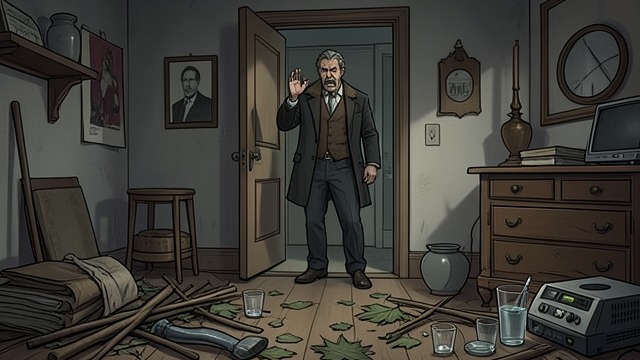
Mary Katherine empties Charles’s room, replacing familiar objects with sticks, leaves, glass, and water. She believes that denying him the room’s recognizable shape will force him to leave.
A warning ignored
Charles treats the act as an offense and demands an explanation. Constance’s willingness to excuse Mary Katherine does not end his influence over the household.
The ritual gives Mary Katherine a direct way to resist, but it cannot control Charles’s choices or Constance’s shifting loyalties. Her private defenses intensify the conflict rather than closing it.
A Fortress of Boards
A Fortress of Boards
Practical protections replace charms
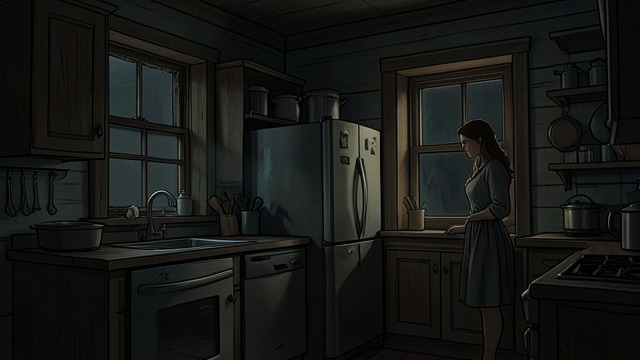
Mary Katherine boards windows, bolts doors, and blocks routes around the house. These measures answer the physical vulnerability left by the fire and the villagers’ destruction.
Safety with costs
The boards darken the kitchen and limit what the sisters can see. Mary Katherine accepts that loss of light as the price of controlling who can look inside.
Her methods have changed from secret symbolic acts to visible household defenses. Both express the same desire: to make the home a place that cannot be entered without permission.
Before Charles arrives, on Mary Katherine’s weekly rounds
On the Saturday before Charles’s arrival
The Sunday Charles arrives
Several days into Charles’s stay
In the days after the fire
