
Stasis and the Fear of Change
We Have Always Lived in the CastleThis flow traces the Blackwoods’ attachment to fixed routines, the disruption brought by Charles and the fire, and the new habits that preserve their preference for stasis.
increasing Bearing strength in each event
 decreasing
Bearing strength in each eventdecreasingThings in Their Places
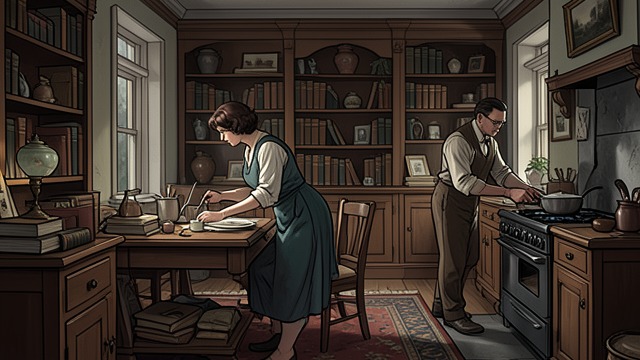
Things in Their Places
A stable interior
The Blackwoods rarely move possessions, and the house is maintained with care. Books, furniture, and inherited objects remain where family habit has placed them.
Stability against the world
Mary Katherine describes the accumulated property as a foundation that holds the household steady. Constance’s cleaning and cooking renew that order without changing its basic shape.
The routines make the past feel continuous with the present. They also restrict the family’s capacity to respond to change without experiencing it as danger.
The Weekly Pattern
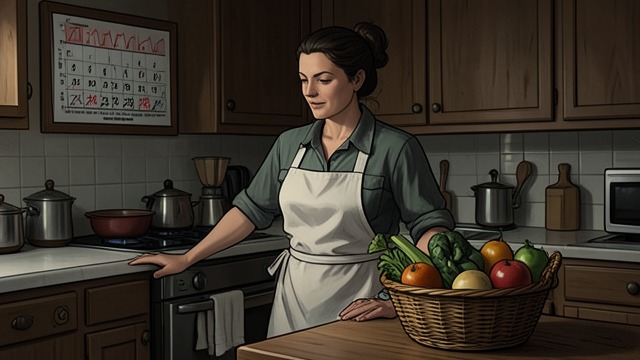
The Weekly Pattern
Days assigned meanings
Mary Katherine gives each weekday a task: errands, checking fences, burying or inspecting safeguards, and neatening the house. Repetition makes time predictable.
Ritual as defense
The schedule turns small actions into guarantees that the household remains safe. Even leisure is structured through habits that keep objects and boundaries in place.
The pattern offers comfort but narrows the future to a repetition of familiar days. A disruption is therefore felt not as ordinary adjustment but as a threat to the system itself.
A New Footstep Upstairs
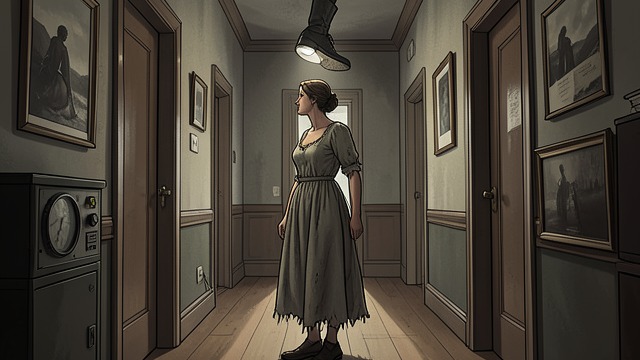
A New Footstep Upstairs
An unfamiliar sound
The sisters hear Charles walking overhead, a heavy footstep unlike Constance’s quiet movements or Julian’s stillness. The sound makes his physical presence impossible to ignore.
The house changes meaning
A room that had been fixed in family memory is now occupied by a visitor. Mary Katherine experiences this ordinary use as an alteration to the entire household.
The disturbance is small in scale but powerful in implication. The old home cannot remain unchanged once another person begins to inhabit it differently.
Fire as Irreversible Change
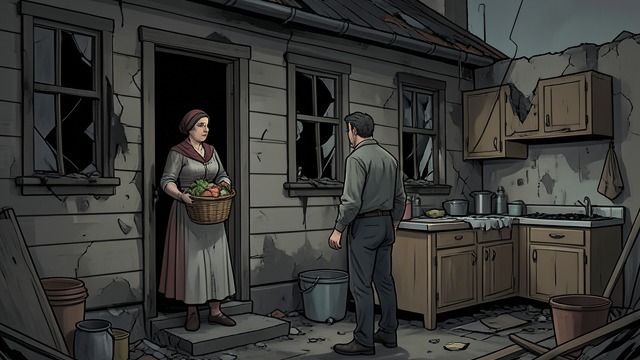
Fire as Irreversible Change
The old house is broken open
The fire consumes the upper rooms, and the villagers’ vandalism destroys much of what the family had preserved. The sisters cannot restore the house to its former condition.
Mourning the lost pattern
Constance laments the kitchen and the home’s damage, while Mary Katherine recognizes familiar rooms only through fragments. Their old routines no longer fit the altered space.
The fire makes change undeniable. Rather than returning to the previous order, the sisters must decide which parts of their life can survive in a different form.
A New Order of Seclusion
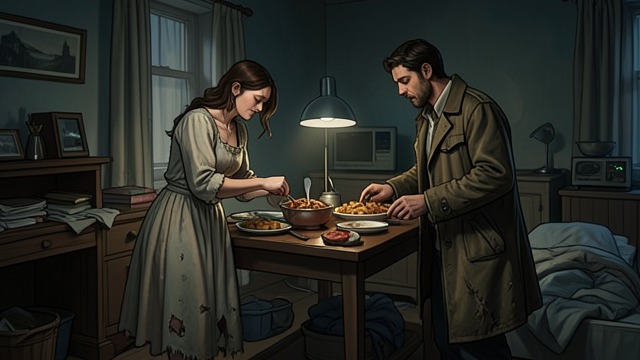
A New Order of Seclusion
Habits rebuilt from salvage
The sisters arrange surviving food and dishes, establish sleeping places, and create new protections. The routine is different, but its purpose remains to make the household predictable.
Change contained
They accept a limited trickle of food from villagers without reopening the house to visitors. The sisters adjust the practical details of daily life while resisting broader social change.
Their ending combines adaptation with refusal. They can change what the house requires without changing their commitment to a secluded life together.
Before Charles arrives
In the weeks before Charles’s arrival
The morning after Charles’s first night
On the night of the fire
From the first post-fire morning to the ending
