
Mary Katherine and the Village
We Have Always Lived in the CastleThis flow traces the conflict between Mary Katherine and the Village as social hostility becomes persecution, physical destruction, and a wary post-fire distance.
increasing Bearing strength in each event
 decreasing
Bearing strength in each eventdecreasingInherited Separation
Inherited Separation
Property and privilege
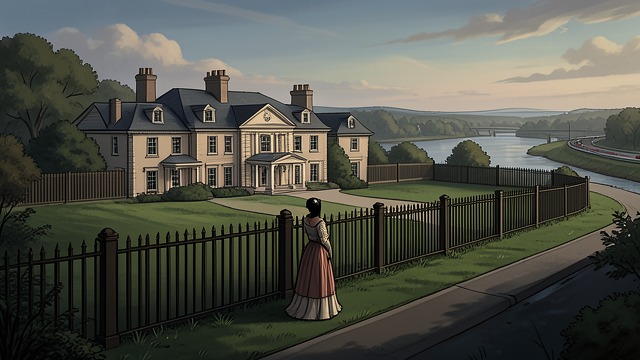
The Blackwoods live on land that stretches between the highway and the river, while their father fenced the estate and closed a path used by villagers. The family’s privacy rests on both wealth and exclusion.
Mutual contempt
Mary Katherine sees the Village as ugly and hostile, while the family’s habits and property mark them as separate. The boundary is therefore social as well as physical.
The later persecution does not begin in a vacuum. It grows within an older relationship shaped by class, access, and reciprocal judgment.
The Shopping Route
The Shopping Route
A public gauntlet
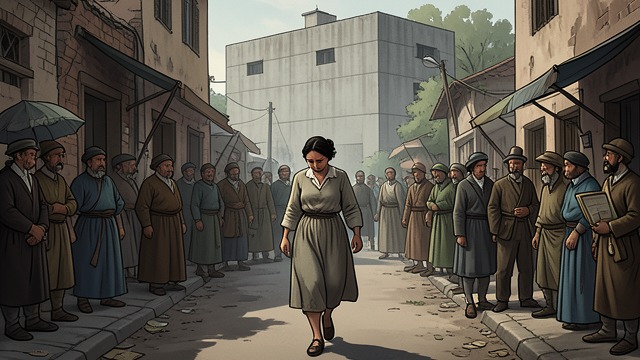
Mary Katherine crosses Main Street, shops for the household, and passes the men outside the general store. She expects hostile glances and measures her progress as if moving through a dangerous game.
Everyday intimidation
The villagers seldom need to threaten her directly; watching, gossip, and children’s taunts keep the pressure constant. Mary Katherine responds by imagining their deaths and retreating inward.
The errand turns a town’s ordinary spaces into sites of conflict. Her exposure is limited in time but repeated often enough to shape her worldview.
A Visitor Tests the Boundary
A Visitor Tests the Boundary
An unexpected entrance
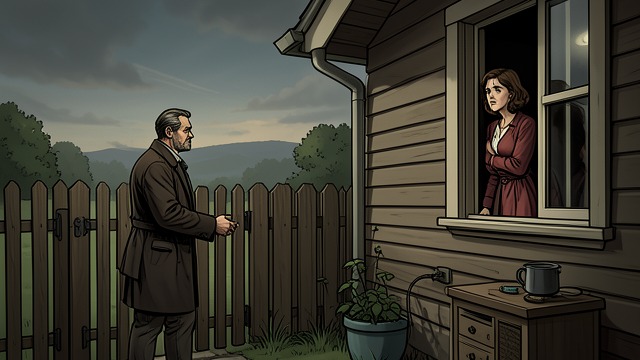
Charles reaches the Blackwood property and gets into the house after Constance lets him in. Mary Katherine experiences his arrival as a breach in a boundary that the villagers have respected mainly because it was forbidden.
Old fears return
She remembers earlier visitors who demanded access to Constance, photographed the family, and treated the house as a curiosity. Charles’s presence brings the history of intrusion back into the household.
The conflict shifts from taunts across the Village to competing claims inside the home. The family’s own guest becomes a route through which outside values enter.
The Crowd Breaks In
The Crowd Breaks In
A gathering turns violent
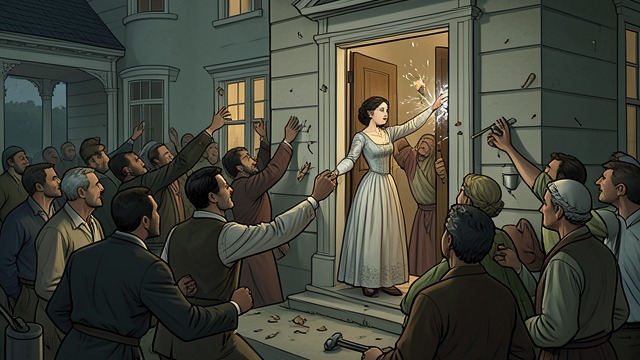
The Village arrives in response to the fire, but after it is under control the crowd begins smashing windows and throwing household objects. Jim Donell leads the first overt act by breaking a tall window with a rock.
Private history weaponized
The villagers repeat the rhyme about Mary Katherine and threaten the sisters while they try to leave. Their violence fuses resentment, curiosity, and the old poisoning scandal.
The crowd does more than damage property. It demonstrates how quickly a community’s familiar mockery can become collective physical aggression.
Distance After Violence
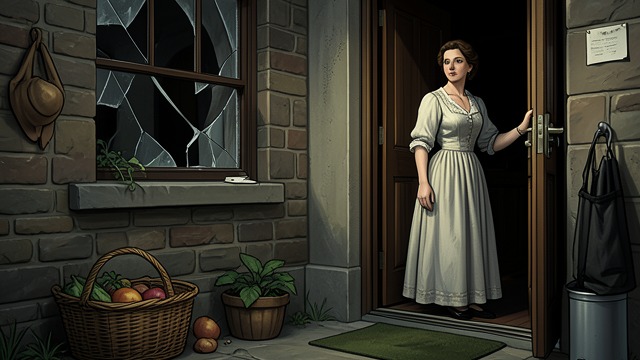
Distance After Violence
Help without restoration
Villagers begin leaving meals and apologies on the doorstep, often under cover of darkness. Their offerings acknowledge harm without asking the sisters to trust them face to face.
The threat persists in stories
Strangers still stare at the ruin and children repeat frightening tales about the ladies inside. The sisters remain objects of curiosity even when the immediate mob has dispersed.
The conflict softens but does not disappear. The sisters accept food while maintaining the boundary that prevents reconciliation from becoming another intrusion.
Before the poisoning, recalled early in the story
At the start of the novel
On the Sunday Charles arrives
On the night of the fire
From the morning after the attack to the ending
