
Class Pride and Mutual Contempt
We Have Always Lived in the CastleThis flow traces how the Blackwoods’ sense of distinction and the Village’s resentment reinforce one another, complicating the sisters’ claim to victimhood.
increasing Bearing strength in each event
 decreasing
Bearing strength in each eventdecreasingThe Estate Above the Village
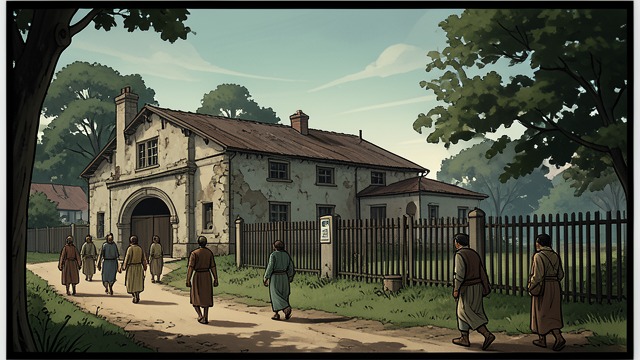
The Estate Above the Village
Property as distinction
The Blackwoods own extensive land and maintain a private fence, while villagers live and work along the main road. Mary Katherine measures local status through homes, travel, and access to goods.
A superior self-image
She regards the Blackwood house as belonging to a finer world and the Village as naturally ugly. Her contempt makes separation seem deserved rather than merely defensive.
The family’s privilege is part of the conflict, not a neutral backdrop. It shapes how both sides interpret privacy, entitlement, and grievance.
A Closed Path
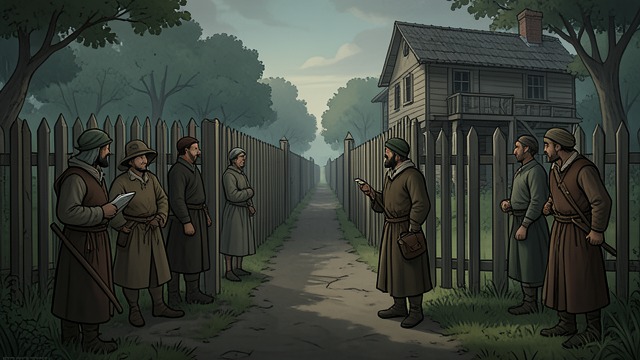
A Closed Path
Privacy enforced
John Blackwood fences the estate and closes a shortcut villagers had used to reach the highway. The family’s front door is declared private, and access becomes a matter of permission.
Resentment embedded in space
The path’s closure saves the household from unwanted passersby but also makes the family’s authority over land visible. Physical separation encourages both suspicion and resentment.
The boundary therefore protects and provokes at once. Its history complicates any simple account in which hostility comes from only one side.
Public Charity and Private Scorn
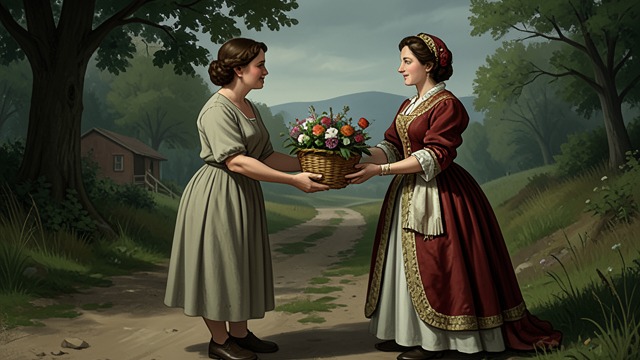
Public Charity and Private Scorn
Courteous visits
Helen Clarke and other local acquaintances bring flowers, offer rides, and ask whether the sisters need help. They maintain polite contact without entering the most private parts of the estate.
Asymmetrical pride
The Blackwoods describe these visitors as friends but never return their calls. Mary Katherine also notices that Constance refuses requests for assistance, preserving the family’s independence.
Goodwill coexists with class distance. The sisters benefit from the visitors’ care while maintaining a sense of superiority over the community offering it.
Resentment Turns to Violence
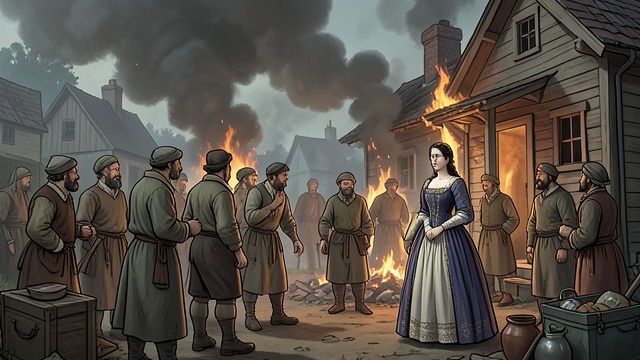
Resentment Turns to Violence
A target becomes available
The fire gathers villagers at the estate, where the home’s wealth and separation are suddenly visible. Once the emergency passes, resentment finds an outlet in breaking and ransacking the house.
Shared guilt and victimhood
The villagers’ violence is indefensible, but the sisters’ awareness of their own pride remains part of the story. Their persecution does not erase the class boundary that helped shape village hostility.
The attack exposes how social grievance can become cruelty. It also makes the sisters’ experience of injury inseparable from the privilege that set them apart.
Gifts at the Threshold
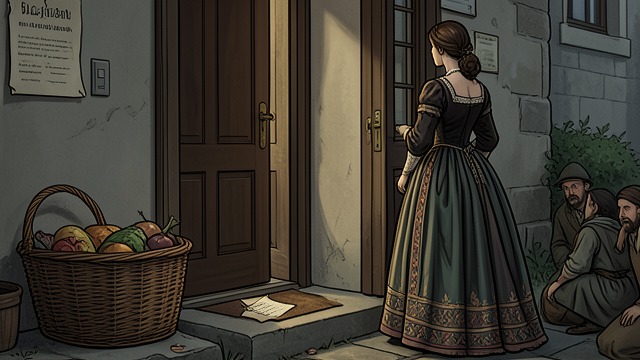
Gifts at the Threshold
Apologies without encounter
Villagers leave food and notes at the doorstep, sometimes acknowledging damaged objects or broken furniture. They give without requiring the sisters to welcome them indoors.
A new unequal exchange
The sisters accept what is offered but remain concealed, preserving the separation that the gifts might otherwise soften. The villagers’ shame and the sisters’ distrust coexist at the door.
The doorstep becomes a compromise between hostility and reconciliation. It allows material care to pass while keeping social access closed.
During Mary Katherine’s early description of home
In Mary Katherine’s childhood memories
During the visitors’ conversations before Charles arrives
On the night the villagers attack the house
In the weeks after the house is damaged
