
Merricat’s Village Errands
We Have Always Lived in the CastleThis flow follows Mary Katherine’s increasingly strained relationship with the Village, from necessary errands to a final refusal of ordinary contact.
increasing Bearing strength in each event
 decreasing
Bearing strength in each eventdecreasingTwice-Weekly Necessity
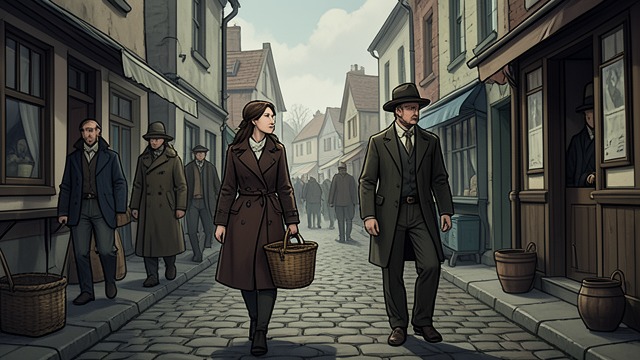
Twice-Weekly Necessity
Books and provisions
Mary Katherine goes into the Village on Tuesdays and Fridays because someone must obtain books and food. Constance rarely leaves the garden, while Julian cannot manage the journey.
A self-imposed test
Mary Katherine tells herself that pride keeps her from avoiding Stella’s shop, though fear of seeming afraid also drives her to enter. The trip becomes a test of whether she can keep moving under scrutiny.
This routine shows the isolation is not complete. The sisters remain connected to village commerce even while treating the Village as an enemy.
The Store’s Cold Audience
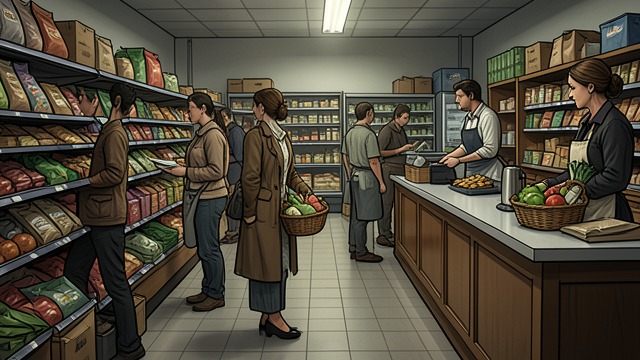
The Store’s Cold Audience
A public humiliation
At the grocery, Mary Katherine orders food while shoppers watch and whisper. Mrs. Donell’s remark about the Blackwoods’ fine table turns the purchase into an occasion for communal mockery.
Private retaliation
Mary Katherine imagines the shoppers dying and herself stepping over them to take what she needs. She does not act on the fantasy, but it gives her a temporary sense of power in a setting where she is exposed.
The scene makes the Village’s hostility feel routine rather than exceptional. Her violent daydreams are part of how she endures that routine.
Jim Donell’s Taunt
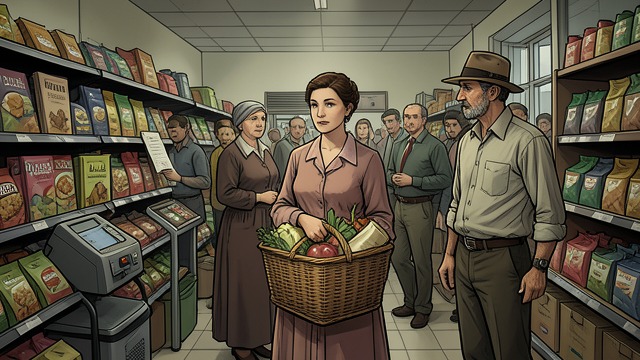
Jim Donell’s Taunt
A rumor as a weapon
Jim Donell claims that the Blackwoods are moving away, then draws others into the exchange. His teasing uses the family’s isolation and history as public entertainment.
A forced exit
Stella tells Mary Katherine to leave rather than remain trapped beside the men. The encounter confirms that even a supposedly friendly shop can become an arena of intimidation.
Mary Katherine retreats into images of a home on the moon. Imagination helps her leave physically without conceding the inner ground to her tormentors.
The Children’s Rhyme
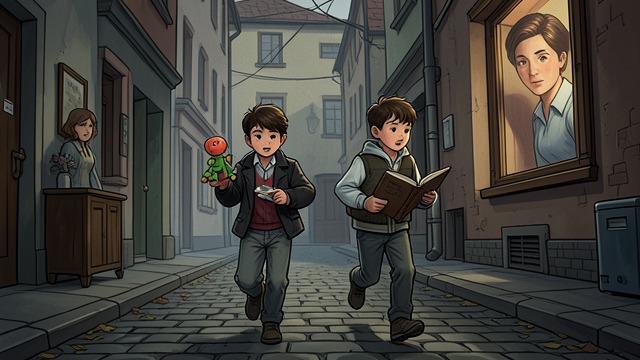
The Children’s Rhyme
A family history made into a chant
The Harris boys call Mary Katherine by name and recite the poisoning rhyme. Their words reduce a family catastrophe to a taunt that can be repeated for amusement.
An adult’s consent
Their mother watches, gives a token instruction, and laughs rather than stopping them. Mary Katherine recognizes the performance as part of a broader permission to ridicule the Blackwoods.
The rhyme follows the sisters beyond the original tragedy. It turns public memory into a continuing instrument of exclusion.
The Path Becomes Public
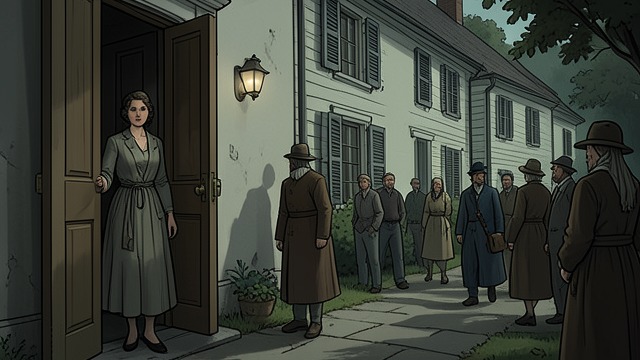
The Path Becomes Public
A boundary altered
With the estate no longer maintained as before, strangers and children begin using the path near the house. Mary Katherine watches them from behind the door and reads their presence as another threat.
Distance without contact
The passersby mostly fail to see the sisters, who remain hidden behind shutters and boards. The route is no longer Mary Katherine’s private passage, even though she can still observe it.
The change shows that the sisters cannot restore every old boundary. Their survival depends instead on shaping what outsiders can see and reach.
Early in the story, before Charles arrives
On a Friday morning before the visitor’s arrival
Later that same Friday, in Stella’s shop
During Mary Katherine’s walk home from the Village
In the weeks after the house fire
