Dorothy
We Have Always Lived in the CastleDorothy is a largely absent but consequential figure, reconstructed through Julian Blackwood’s memories of their life in his brother’s household and of the morning before she died. The portrait and domestic details preserve her as an individual, while the poisoning that killed her makes her one of the family’s central losses.
Identity and remembered portrait
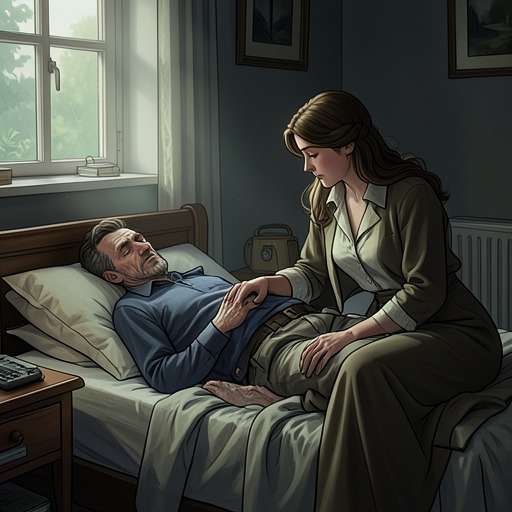
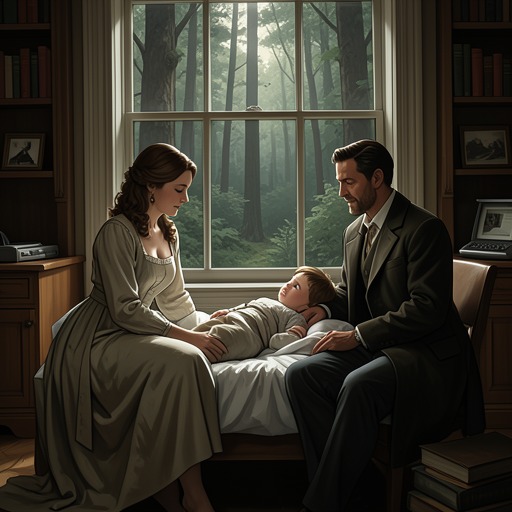
Dorothy was Julian Blackwood’s wife. He describes her as having joined her life to his, and recalls her portrait in the drawing room, emphasizing the delicate line of her jaw beneath the skin. His description imagines her as a woman born for tragedy, while also allowing that she could be a little silly. The portrait offers a lasting image, but the account is Julian’s: Dorothy does not speak in these recollections, and her personality reaches the reader through her husband’s affectionate, sometimes self-conscious framing.
That framing is marked by absence. Julian remembers what Dorothy looked like and what she did, but his account gives few words or opinions of her own. The difference between the composed portrait and the practical particulars of her life is telling: she appears as an image in the drawing room, then as a wife who wakes, dresses, helps in the kitchen, and takes her place at the family table. The narrative makes these small acts carry much of what can be known about her.
Life in the household
Dorothy lived with Julian Blackwood in the home of his brother’s family. On the morning of the poisoning, the brother’s whistling and noise woke Julian and Dorothy. Julian told his wife to get dressed and go downstairs to help Constance Blackwood in the kitchen. He recalls that she did as she was told, and generalizes that their wives always obeyed their husbands. That remark gives a glimpse of the household’s gendered order, but it is also Julian’s retrospective formulation; the evidence establishes Dorothy’s obedience on this occasion, not the full range of her character or choices.
The breakfast that followed is remembered through food and household rank. Dorothy came downstairs before Julian and ate a generous portion of homemade sausage made by Constance Blackwood. Julian says he discouraged his wife from eating heavily because they were living with his brother. He also remembers that his brother watched Dorothy as she ate, and that Julian thought the brother might speak to her. Julian insists that his brother was just and did not stint their food so long as they did not take too much, yet his own description shows how carefully he and Dorothy measured their place as guests in the household.
Years later, Julian returns to the meal with regret. He thinks that, had he known it was Dorothy’s last breakfast, he would have let her have more sausage. He is glad the breakfast was particularly good, and recalls that his wife helped wash the dishes afterward. The ordinary sequence—food, concern over how much could properly be taken, then washing up—becomes poignant because Julian knows what the people eating could not know: it was their last morning together before the poisoning.
The poisoning and death
Dorothy was among the family members poisoned at dinner. Julian remembers her as seated at the table and says that she had arsenic on her blackberries. His account places her within the family gathering rather than at its margins: she was there beside the household members whose deaths would become the defining catastrophe of their shared history. The surviving evidence does not give Dorothy a separate account of the meal or describe her final words; her death is conveyed through Julian’s reconstruction of the family scene.
The poisoning is also associated with the heavy silver sugar bowl, which Constance Blackwood emptied and scrubbed with boiling water before the doctor or police arrived. Constance later said there had been a spider in it, the explanation she gave to the police. That detail belongs to the handling of the suspected poison and to the family’s wider tragedy; it does not establish that the sugar bowl was the means by which Dorothy’s blackberries were poisoned. Julian’s recollection instead specifies arsenic on the blackberries, and the distinction matters when the narrative moves between the family’s deaths and the objects left behind in the kitchen.
Narrative afterlife
Dorothy’s presence continues through Julian’s repeated acts of remembering. He reconstructs the family table, notices what people ate, recalls the morning sounds that woke them, and returns to the small domestic decisions that seemed unremarkable at the time. His memory of allowing too little sausage becomes a measure of how the catastrophe has changed the meaning of an ordinary meal. What was once a matter of household propriety becomes, in retrospect, an irreparable loss.
The account also makes clear how little can be separated from Julian’s point of view. His imagined possibility that Dorothy remained in bed because she had a premonition is speculation, not evidence that she foresaw her death. His portrait of her as delicate and inclined to silliness, his broad claim about wives obeying, and his later remorse all reveal as much about his manner of remembering as about Dorothy herself. She remains a person in the story, not merely a victim: a wife with a place in the household, a participant in its everyday routines, and the absent figure whose last breakfast Julian cannot stop revisiting.