Jonas
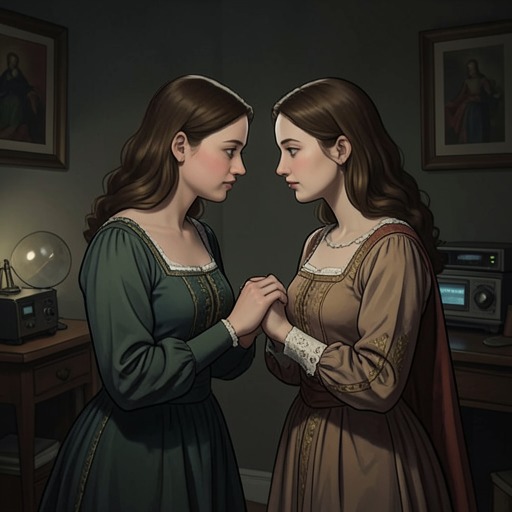
We Have Always Lived in the CastleJonas, Mary Katherine Blackwood’s cat, is her closest animal companion and a steady presence in the secluded life she shares with Constance Blackwood. He follows her between the house and the grounds, joins her in hiding places, and remains beside her when Charles Blackwood’s arrival makes home feel unsafe. His own habits and independence distinguish him from a mere pet: he accompanies Mary Katherine, but chooses his own paths and returns on his own terms.
Identity and Place in the Household
Mary Katherine regards Jonas as her cat and speaks to him as a trusted companion. When she sits with him on her knee, she imagines that he will catch her a mouse; his place in the household is intimate and familiar, woven into the small comforts of daily life. Constance Blackwood also treats him as part of their shared home, and his presence belongs to the domestic world the sisters have made for themselves.
Jonas accompanies Mary Katherine across the lawn and garden and follows her into the long field, where she watches him disappear into the grass and make his own crooked movements through it. Their companionship is not simply obedient: when she runs, he runs, but when she stops, he may glance at her and briskly head elsewhere before sitting down to wait for her to move again. This pattern gives their closeness a distinct rhythm—he stays near without surrendering his independence—and makes his return a reassuring part of Mary Katherine’s familiar landscape.
Hiding Places and Protective Companionship
Near the creek, Mary Katherine Blackwood has made a concealed shelter by clearing low bushes, smoothing the ground, and disguising its entrance with a drooping branch. Leaves and branches form a bed, and Constance Blackwood has given her a blanket. On a Sunday morning Mary Katherine lies there with Jonas, listening to what she imagines as his stories. The shelter is a place she values for being impossible to find, and Jonas shares its quiet seclusion with her.
When Cousin Charles’s arrival makes the house feel unsafe, Mary Katherine runs to the creek, where Jonas eventually finds her. They lie together under the close trees, sheltered from the rain, while she tries to restore her sense of security by imagining that there is no intruder inside. Jonas stays with her as she falls asleep, but his companionship does not erase his independence: he leaves to hunt during the night and returns later, pressing against her for warmth. His purr greets her when she wakes, making his return a small, tangible reassurance amid her fears.
During the House’s Crisis
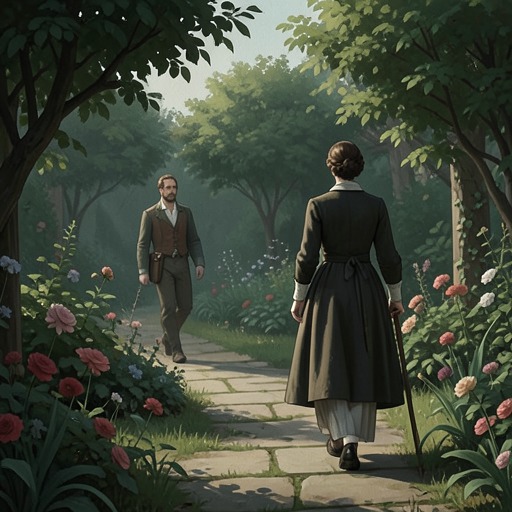
When Cousin Charles Blackwood approaches, he notices Jonas and asks whether the handsome cat has a name. Mary Katherine Blackwood answers with Jonas’s name, choosing this familiar fact as the safest thing to offer the newcomer. The exchange makes the cat a small point of contact between them, but does not soften the hostility that follows: later, while Charles shouts in the kitchen, Jonas watches him from beside Mary Katherine, who keeps her gaze on the cat rather than on Charles. Charles lowers his voice when he sees her, then threatens that she will remember whatever he decides to do with her. Jonas is present as a quiet witness to the menace in the house.
After Mary Katherine runs into the tall grass to hide, Jonas finds her there and sits with her where no one can see them. Later, as the house burns, she asks Constance where he is. Constance explains that Jonas went out the back door while she took Julian Blackwood in to retrieve his papers. The exchange confirms that he has escaped the fire, even as Mary Katherine and Constance remain outside amid the people and commotion. Jonas has found his own way out rather than staying with the humans through the emergency.
When the sisters flee into the woods after Julian Blackwood’s death, Jonas is already waiting in Mary Katherine’s concealed shelter. She leads Constance inside, settles her on fresh leaves, covers her with Julian Blackwood’s shawl, and hears Jonas purring from the corner. His return helps make the hiding place a refuge for all three: the cat’s familiar presence joins the sisters’ effort to secure themselves beyond the reach of the crowd.
Domestic Life After the Fire
In the sisters’ later domestic routine, Mary Katherine imagines training Jonas to bring back rabbits for stew. Constance doubts that a cat accustomed to cream, rum cakes, and buttered eggs would catch even a grasshopper, and Mary Katherine replies that she would not want grasshopper stew. The exchange places Jonas within their renewed household life, where practical plans and teasing restore a measure of ease. He remains a companion rather than a dependable provider: the prospect of hunting is playful speculation, while his established role is to accompany the sisters and return to their shelter.
Narrative Function and Animal Presence
Jonas’s significance also lies in the difference between what Mary Katherine Blackwood observes and what she makes of it. She imagines his movements as a game and listens to his supposed stories, yet the cat also acts according to needs of his own: he hunts, chooses when to follow, and returns to seek warmth. That gap lets him remain both a companion within Mary Katherine’s private imaginative world and an independent creature whose behavior is not wholly governed by it.
The contrast gives Jonas a quiet narrative function amid the household’s fears. His purr, his presence beside Mary Katherine, and his return to the shelter are concrete signs of continuity, while her accounts of his intentions belong to her intensely personal way of interpreting the world. The narrative does not make him a solution to the sisters’ dangers; instead, his unforced companionship gives their secluded life a small, living presence beyond the human conflicts surrounding it.