Merricat’s hiding place
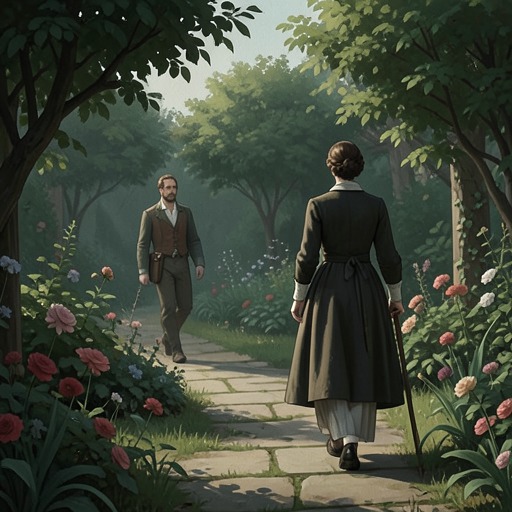
We Have Always Lived in the CastleMerricat’s hiding place is a concealed shelter in the Woods surrounding the house, where Merricat leads Constance Blackwood after the fire. Its importance lies in the double refuge it provides: a practical hiding place screened from people with lights, and an imagined moon on which the sisters can remain together while the Blackwood house and its familiar order have become unsafe. The shelter is small and improvised, but its leaves, blanket, and covering branches let Merricat turn concealment into care.
Location and Physical Form
The hiding place has an entrance among the trees and a corner where Merricat has made a fresh pile of leaves and laid a blanket. She has straightened and refreshed it in advance, thinking it should be pleasant for Constance. The evidence does not describe a built room or permanent structure; the shelter is defined instead by its tucked-away position, its soft bedding, and the care taken to make it usable. Merricat leads Constance inside and gently pushes her toward the leaves, then takes Julian Blackwood’s shawl from her and covers her with it.
Branches across the entrance complete the concealment. Merricat reasons that even people carrying lights will not see the sisters. Yet the shelter is not wholly sealed from the world: looking back, she can see two or three stars between the leaves and branches. Its protection depends on the covering trees, while that narrow view of the sky gives the enclosed space an opening onto the imagined refuge that follows.
Refuge After the Fire
Merricat brings Constance here as they leave the lawn and enter the woods in darkness. Once the trees close around them, she stops, embraces Constance, and tells her that it is all over and all right. The hiding place is therefore the first ground on which the sisters can pause after escaping the immediate scene of the fire. Merricat knows the route in darkness as well as light, and the shelter’s prior preparation allows her to receive Constance rather than search for a place to rest.
Jonas is already waiting in the corner; Merricat hears his purr when they enter. His presence makes the shelter part of a continuing household of sorts, though the house itself has been left behind. Merricat imagines covering Constance with leaves, keeping her safe and warm, telling stories, and bringing her fruit, berries, and water in a leaf cup. These plans recast the forest shelter as a place where she can provide for her sister when ordinary domestic care has been interrupted.
The Moon and the Night There
The shelter becomes a moon in Merricat’s account of the night. After Julian Blackwood is taken away by ambulance, the sisters remain hidden; Merricat sits by the creek and wishes she had been kinder to him. She wonders what kind of house they will have, imagining possibilities that range from returning to the Blackwood house to living elsewhere, and even fantasizing that the fire might destroy the village instead. Against these unsettled possibilities, the hiding place offers a present-tense answer: a space where the sisters can stay together until morning.
When Constance wakes among the leaves, Merricat tells her, “We are on the moon at last.” Constance first thinks she dreamed the events, then says she is glad to be there and thanks Merricat for bringing her. The image is both an imaginative transformation and a description of their actual separation from the house and the people outside. Constance has leaves in her hair and dirt on her face, a startling change for someone Merricat has never seen dirty before. When she asks what they will do, Merricat answers that they must neaten the house, even though it is not the usual day. The reply turns the moonlike refuge into a pause, not a replacement for the domestic world to which the sisters will return.
From Shelter Back to the House
In daylight the sisters leave the hiding place and come back to the Blackwood house. The kitchen door is obstructed by a table on its side; inside, broken dishes, food, and household possessions lie scattered or smashed. The rose-patterned Sugar bowl is among the wreckage, while the pantry has been searched and sugar lies on the gritty floor. The damage makes the shelter’s quiet, prepared corner sharply distinct from the violated domestic space the sisters encounter on their return.
Their subsequent movements show that the refuge’s role is temporary but consequential. Once they are safely settled in the house, Constance cleans Julian Blackwood’s room and washes his bedding. The sisters later leave the kitchen door open only when they can watch Merricat’s barricades, and they gather vegetables from the garden, though Merricat dislikes eating produce still dirty with ash. The hidden shelter has carried them through the first night and the loss of Julian Blackwood; afterward, the damaged house and its guarded routines again shape their lives.
Narrative Significance
Merricat’s hiding place translates her protective impulses into a physical arrangement: a prepared bed, a covering shawl, branches at the entrance, and Jonas waiting nearby. Its safety is real but provisional, dependent on concealment rather than walls. The stars visible through the branches also give the scene its distinctive tension: the sisters are hidden in the woods, yet Merricat describes their refuge as a distant, separate world.
That transformation does not erase grief or danger. Merricat’s wish that she had been kinder to Julian Blackwood, her speculations about what remains of the house, and Constance’s bewildered return to her kitchen all press against the fantasy of arrival on the moon. The hiding place matters because it holds these states together for a night: flight and care, loss and protection, the desire to escape and the eventual return to domestic life.