Merricat’s paranoid and magical worldview
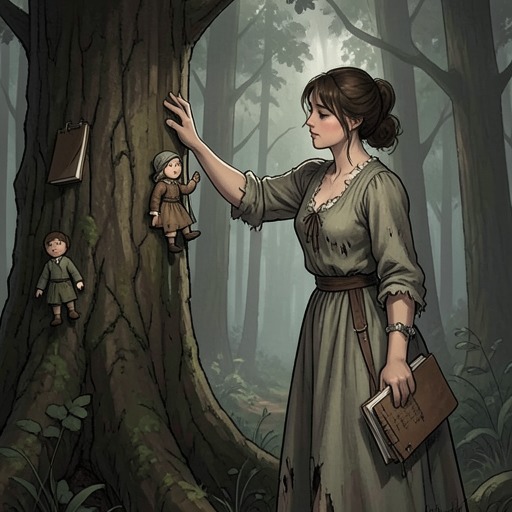
We Have Always Lived in the CastleMary Katherine Blackwood’s paranoid and magical worldview makes the world beyond the damaged Blackwood house seem at once watchful, hostile, and unable to penetrate the sisters’ refuge. She interprets children at the gate as possible agents sent to find them, strangers’ glances as surveillance, and locks and boards as magical safeguards. The viewpoint is fearful, but it is also practical: the house is exposed to visitors, and Mary Katherine Blackwood’s routines help preserve the secluded life she shares with Constance Blackwood.
Threat and Perception
When children appear on the front lawn after the gates have been opened and the path exposed to public use, Mary Katherine Blackwood cannot settle on an ordinary explanation for their presence. They may simply be playing, she admits, but she also imagines that they have been sent to explore the way and look for the sisters. Watching through the narrow glass pane, she judges their subdued voices and awkward movements as signs that they are not convincing in their pretence. Her attention turns to the possibility that they will creep onto the porch and press their faces to the shutters to peer inside.
Constance Blackwood looks out with her, but the sisters interpret what they see differently. Mary Katherine Blackwood tells her that the children are “the children of the strangers” and that “They have no faces.” Constance answers, “They have eyes.” The exchange exposes a central tension in Mary Katherine Blackwood’s outlook: she strips outsiders of ordinary individuality even as she imagines their gaze as a danger. She urges Constance to pretend that the children are birds, insisting that they cannot see the sisters and will never see them again. Her claim does not end the threat in her mind; she predicts that more strangers will come, but reassures herself that they cannot see inside.
Watching and Being Watched
The sisters’ daily habits give this suspicion a physical form. Mary Katherine Blackwood checks the front-door lock each morning, and the two women sit on either side of the entrance to watch passersby through small peepholes left in cardboard-covered glass. The restricted view is deliberate: they want to observe the people outside without allowing anyone to look in. Visitors’ averted or sideways glances do not reassure Mary Katherine Blackwood. She reads them as covert scrutiny, describing the strangers as having wide staring eyes and evil open mouths.
A group arriving on bicycles makes the house’s damaged condition visible to outsiders. Two women, a man, and two children rest on the lawn; one woman remarks that vines nearly hide the burn marks on the roof and recalls the house as a local landmark. Mary Katherine Blackwood registers the visitors’ angled looks rather than treating their conversation as neutral curiosity. The scene shows how her vigilance turns even an ordinary pause on the lawn into an encounter with an observing outside world. At the same time, the visitors’ comments confirm that the house is publicly visible and that its burning is part of what people notice.
That exposure is especially charged when one woman frightens the children with stories about the sisters. She claims they poison boys with candy, eat girls, and hunt children at night; another adult objects that she is terrifying them, while a man says he does not want the children going too near the house. These are reported accusations, not events the narrative confirms. For Mary Katherine Blackwood, however, the episode gives a concrete form to the menace she already attributes to outsiders: people can approach the house, speak about its inhabitants, and warn children away from it. The threatening story reverses the sisters’ position, making them the monsters in the strangers’ account.
Locks, Boards, and Magical Safeguards
Mary Katherine Blackwood’s sense of protection depends on repeated acts as well as imagined magic. After the fire, she is no longer allowed to go to the creek, where Julian Blackwood is, and she stays no farther away than the edge of the woods; Constance Blackwood goes only as far as the vegetable garden. Mary Katherine Blackwood may not bury anything more or touch stone. These limits narrow her movements and her former protective practices, but they do not remove the need to defend the household.
Instead, she makes the house’s barriers into a new system of safeguards. She checks cracks in the boards over the kitchen windows and nails on more boards. She checks the front-door lock every morning. Looking back on the six blue marbles she once buried, she wonders whether they protected a house that no longer exists and has no connection to the home where the sisters are now happy. The replacement protections are tangible: the lock, boards over the windows, and barricades along the sides of the house. Calling these her new magical safeguards joins practical security to magical thinking without making the two opposites. A board keeps out sight and entry; its place in her protective scheme also gives it ritual significance.
The sisters’ watchfulness continues after dark. Movement on the lawn and whispers prompt the exchange, “Don’t; the ladies might be watching.” When asked whether the ladies can see in the dark, the reply is that they see everything that goes on. The supposed watchers are themselves imagined through the same fear of unseen observation that shapes Mary Katherine Blackwood’s view of visitors. The scene blurs who is watching whom: the sisters observe passersby from behind the door, while people outside imagine the women watching from within.
Fear, Care, and Seclusion
Mary Katherine Blackwood’s suspicion is not simply a rejection of everyone outside. The sisters accept food left silently on the doorstep in the evenings, return the baskets to where they found them, and wait until it is dark and no one is near before opening the door. Notes sometimes accompany the gifts, including apologies about the dishes, curtains, or a harp. The deliveries show that fear and assistance coexist: people approach at a distance, while the sisters keep the exchange anonymous and tightly controlled. Mary Katherine Blackwood’s guardedness determines the terms of contact rather than making contact wholly impossible.
Her final comments turn the threatening stories back on the strangers. Wondering whether she could eat a child, she hears Constance Blackwood reply that she doubts she could cook one. Mary Katherine Blackwood then calls the strangers unfortunate because they have so much to fear. The joke momentarily reverses the outside world’s image of the sisters as child-hunting monsters, but it does not dissolve the division between the women inside and the people beyond the house. Constance Blackwood admits that she fears spiders; Mary Katherine Blackwood answers that she and Jonas will prevent any spider from coming near her. Her protective imagination, directed inward as well as outward, becomes an expression of attachment and care. The closing declaration that the sisters are happy holds that intimacy beside their continued confinement: safety depends on keeping the outside at a distance, while their shared routines make that enclosed life feel like home.