The Blackwood sisters’ isolation
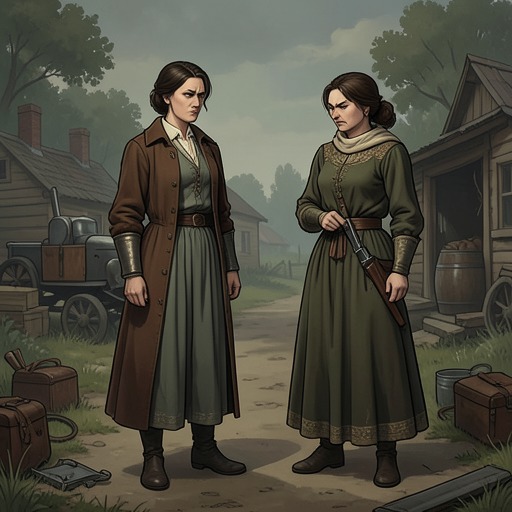
We Have Always Lived in the CastleThe Blackwood sisters’ isolation is both a refusal of outside contact and a practical remaking of home after fire, destruction, and loss. Constance Blackwood and Mary Katherine Blackwood close the damaged house to visitors, reinforce its boundaries, and narrow their movements, turning locks, boards, and familiar household rituals into protections. Their retreat is not absolute: villagers leave food at the door, but help reaches the sisters only on terms that preserve their distance from the people beyond it.
Decision and Immediate Boundaries
After Julian Blackwood’s death, Constance acknowledges that he and the others are gone and that she and Mary Katherine Blackwood are all that remain. Mary Katherine answers by proposing that they lock themselves in more securely than before. Constance’s decision not to receive Helen Clarke, who is due to come for tea, makes their new boundary explicit: an expected social visit is no longer treated as part of ordinary life but as contact to be prevented.
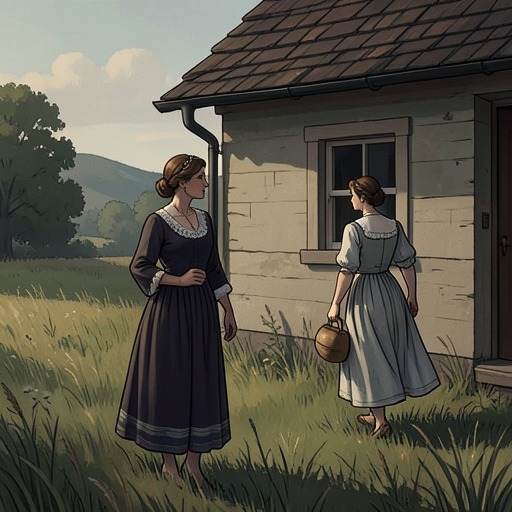
When Helen Clarke arrives, the sisters hold their breath on the cellar stairs, out of sight behind the kitchen door. Its glass upper half allows Helen to see into the kitchen, where something is cooking, but the locked door keeps her from entering. She calls for Constance and Mary Katherine, shakes the handle, and urges them to open up. The sisters do not answer. Their silence is active rather than accidental: they know Helen is there and remain hidden until the encounter passes without a meeting.
Helen Clarke tries again twice. By then, Mary Katherine’s barricade also prevents her from coming around the house. Helen eventually says from the front door that she will not return, and keeps her word. The severing of this relationship is therefore enacted through repeated refusals, a locked door, and a physical obstruction; the sisters do not need to argue their case or announce a broader break with society. They simply make entry impossible and withhold response.
Fortifications and Daily Practice
The sisters’ seclusion is maintained through repeated acts of checking and repair. Mary Katherine is no longer allowed to go to the creek, where she associates Julian Blackwood’s presence with the distance from Constance. She stays no farther away than the edge of the woods, while Constance goes only as far as the vegetable garden. Mary Katherine is forbidden to bury anything else or touch stone, further limiting the protective acts she had previously carried out beyond the house.
At home, she checks the boards across the kitchen windows each day and nails more over any cracks. Each morning she makes sure the front door is locked; Constance washes the kitchen. They spend afternoons on either side of the front door, looking through narrow glass panels mostly covered with cardboard. Each has a small peephole, allowing them to watch passersby while keeping the house’s interior concealed. These routines make isolation a continuing practice: the sisters inspect, cover, lock, and clean rather than merely withdrawing once and leaving their refuge unattended.
After the fire, those defenses also become part of the house’s changed appearance and meaning. The boards over the kitchen windows and the barricades along the sides are not only obstacles to entry; Mary Katherine regards them as new magical safeguards and as parts of the home they have remade. The burned building’s broken features become familiar landmarks. The remnant of the stairway, the boarded windows, their chairs, beds, and places beside the door organize a daily life shaped around what remains accessible and secure.
Contact Without Welcome
The sisters’ refusal of visitors does not prevent all aid from reaching them. Someone leaves baskets silently on the front doorstep in the evenings. The sisters wait until it is completely dark and are sure no one is nearby before opening the door; afterward, Mary Katherine checks that it is locked. Notes sometimes accompany the food, including apologies for the dishes, curtains, or Constance’s harp. Constance identifies differences between the cooks by tasting the food: one uses too much ketchup, another more molasses. The baskets reveal that people in the Village are helping, but the exchange is carefully separated from direct conversation or recognition.
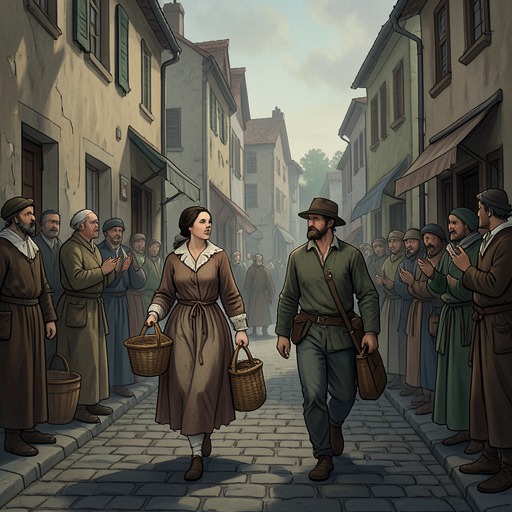
The difference between public attention and private assistance remains unsettled. The sisters imagine that those who bring food may wish not to be recognized, as if the act were shameful in public. Meanwhile, people pass the house, and some stop on the lawn. A group arriving by bicycle rests there while children run along the driveway and among the trees and bushes. From their comments, the sisters learn that vines are growing over the burned roof and nearly conceal the marks of fire. The onlookers regard the place from oblique glances; one describes it as a once-lovely local landmark. The sisters watch from behind their peepholes, unseen themselves.
The house’s position between the Village and the highway makes it a conspicuous point on the path, yet its overgrown, ruined appearance obscures the people living inside. The sisters learn that strangers see a structure barely recognizable as a house, not the eyes watching through the vines. Children turn that concealment into a frightening story, warning one another away from the steps because the ladies might get them. A boy dares to call the familiar rhyme about Mary Katherine and Constance before fleeing. That evening, a basket of fresh eggs and a note asking forgiveness appear on the doorsill. Even this brief trespass into the sisters’ attention is followed by indirect appeasement rather than a face-to-face encounter.
A Remade Home and Its Limits
The sisters’ retreat is not simply life in an unchanged house with its doors shut. The drawing room and dining room remain closed, with their mother’s broken possessions scattered inside and dust settling over them. The broken fragment of the stairway becomes as familiar through daily passage as the intact stairs once were. The boarded kitchen windows, formerly signs of damage and defense, become objects the sisters claim as their own and love. Their isolation thus changes what counts as home: not the restored family rooms, but the surviving spaces and protections they use together.
Domestic routine gives that reduced world continuity. Constance washes the tablecloth and Julian Blackwood’s shirts, which she wears; Mary Katherine wears a yellow-bordered tablecloth in the garden and keeps their mother’s brown shoes safely in her kitchen corner, though she goes barefoot in summer. Roses or daisies stand in a bowl on the kitchen table, but Constance never picks a rose from Julian’s rosebush. The rosebush, planted where he had been on the lawn, marks his absence within the sisters’ daily surroundings. Such gestures preserve care and memory without reopening the house to visitors.
Their contentment exists alongside signs of fear and restriction. Constance worries that one of their two cups might break, leaving one sister with a cup without a handle. Mary Katherine thinks of six blue marbles she can no longer retrieve from the long field and wonders whether they protected a house that no longer exists. Her new safeguards are material and immediate: the front-door lock, window boards, and barricades. The sisters have made a familiar pattern from the ruin, but that pattern depends on keeping the outside at a distance.
Significance of the Seclusion
The isolation culminates in a deliberately narrow, shared life rather than a return to the social world. The Carringtons stop outside after church and sit in their car, apparently supposing the sisters might come out if help were needed. They do not. The visitors’ presence offers a possible opening, but the sisters remain inside. Their refusal is consistent with Constance’s earlier rejection of Helen Clarke and with the careful routine by which they receive food without meeting its bearers.
The resulting refuge is both comforting and constricting. Constance says she is happy, and Mary Katherine recalls having told her that she would like life on the moon. At the same time, the sisters’ boundaries govern where each may walk, which rooms remain closed, and how every approach to the house is managed. The burned building, once exposed to the Village’s gaze, is now overgrown and guarded; the sisters can watch the path while remaining unseen. Their isolation makes this altered house a private world, sustained by mutual care and familiar rituals, but its security rests on continued separation from everyone outside it.