The moon as refuge
We Have Always Lived in the CastleThe moon in the novel is Mary Katherine Blackwood’s imagined refuge, a destination that turns fear and flight into a story of arrival. After the fire drives the sisters from the Blackwood house, she brings Constance Blackwood to a concealed shelter in the woods and tells her they have reached the moon. The fantasy gives their hiding place a shared meaning: they are not merely exposed survivors waiting for danger to pass, but companions in a safe world of their own. When they later return to the ruined house, the moon remains a measure of their chosen happiness and seclusion.
An Imagined Destination
For Mary Katherine Blackwood, the moon belongs to a system of protective imaginings through which she makes danger bearable. Her thoughts turn toward it when the world seems blackened and unsafe; the idea of going there offers a direction when ordinary home no longer feels secure. The moon is less a place described in physical terms than a name for distance from the people and events she fears. Its appeal lies in the promise that the sisters can be together somewhere beyond the reach of the Village.
That imaginative destination takes on particular force after Mary Katherine has spent years avoiding the Summerhouse. She remembers it as an ugly, wet, dark place, pressed in by trees and burdened by the family’s unhappy associations: their father’s plan for a nearby creek and waterfall came to nothing, and their mother had seen a rat at its doorway and would not return. The building has lost its chairs and table, leaving Mary Katherine on the stone floor. There she reconstructs the family’s places around the dining-room table, including her own rightful place between Constance and Julian Blackwood. This retreat into remembered domestic order contrasts with the refuge she later makes for Constance: rather than restore the old household in memory, she leads her sister toward a new shelter and calls it the moon.
Flight and the Shared Shelter
After Julian Blackwood’s death, Mary Katherine draws Constance away from the house and into the woods. She knows the darkness and the paths, and is glad that she has already straightened and refreshed her hiding place so that it can be comfortable for Constance. She imagines covering her sister with leaves, keeping her warm, bringing her fruit and water, and someday taking her to the moon. The fantasy is joined to concrete acts of care: Mary Katherine leads Constance inside, settles her by a fresh pile of leaves and a blanket, and covers her with Julian Blackwood’s shawl. Jonas is already waiting in the corner.
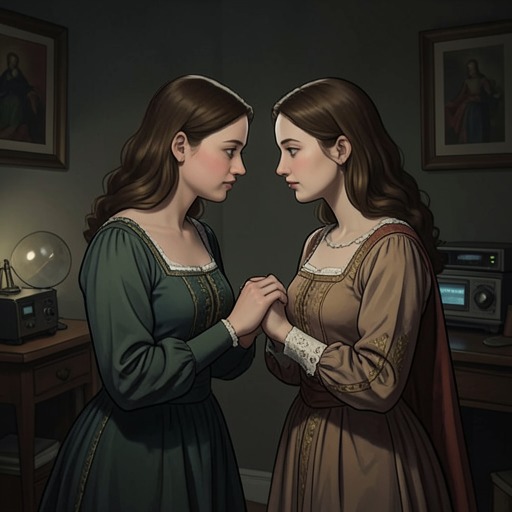
Mary Katherine then lays branches across the entrance so that people with lights will not see them. The hiding place is small and concealed, but her description enlarges it into a refuge beneath the trees and stars. At dawn she goes in to be beside Constance as she wakes. Constance first looks up at the trees, then at Mary Katherine, and smiles. Mary Katherine tells her that they have reached the moon at last. Constance says she thought she had dreamed everything; Mary Katherine insists that it really happened. The exchange makes the fantasy relational: Constance is not simply being hidden by her sister but is invited to share the meaning Mary Katherine has given their escape.
The shelter also holds grief and uncertainty. Constance remembers Julian Blackwood, and Mary Katherine explains that he was taken away during the night while they stayed on the moon. Constance is glad to be there and thanks her sister for bringing her. Yet the dirt on Constance’s face, the leaves in her hair, and Jonas’s surprise at seeing her dirty make clear that this refuge is no longer an untouched domestic interior. It is safety under improvised conditions, not a return to the life they had before.
From Hiding Place to Ruined Home
The sisters eventually leave the woods and return to the Blackwood house, where the kitchen reveals the extent of the destruction. The kitchen table has been turned on its side; chairs, dishes, glasses, food boxes, and jars have been smashed or scattered. The sink is filled with broken glass, and drawers of silverware and cooking utensils have been pulled out and broken. Generations of household work are visible in the damage: inherited silverware lies bent on the floor, and tablecloths and napkins made, mended, and cherished by Blackwood women have been dragged across the kitchen. The little rose-covered sugar bowl lies near Mary Katherine with its handles gone, recalling the earlier poisoning and Constance’s hurried washing of the heavy family sugar bowl before the doctor or police arrived. Domestic order, once a source of safety, has been violated in the objects through which it was maintained.
The damage is not total. Constance finds that the preserves in the cellar remain untouched; in the pantry, flour, salt, and potatoes have escaped discovery as well. Sugar, by contrast, has been found, and Mary Katherine imagines the intruders scattering it while taunting the Blackwoods. That association gives the ruined kitchen a history as well as a present: food is both the substance of family care and the means through which the family poisoning became known. Constance responds by returning to practical care, beginning with breakfast and then bringing up vegetable soup, strawberry jam, chicken soup, and pickled beef from the cellar.
The return does not restore the former house. Mary Katherine and Constance barricade its vulnerable sides with broken boards and furniture taken from the pile left on the porch, while boards nailed over the kitchen-door glass make their defense visible. They watch for anyone approaching and gather food from the garden, bringing in lettuce grey with ash, radishes, tomatoes, cucumbers, berries, and melons. Mary Katherine dislikes eating produce still dirty with ash; although much of the soot has blown away and the garden air is fresh, she thinks the smoke remains in the ground. Their new safety is therefore made from damaged materials and cautious routines, not from forgetting what happened.
A Private World and Its Meaning
The moon persists as a shared name for this altered life. When Constance asks what Mary Katherine is laughing about, Mary Katherine says she is thinking that they are on the moon, though it is not quite as she had imagined. Constance answers that it is a happy place. Their conversation holds the difference between fantasy and fact without dissolving either: the house is barricaded, the garden carries ash, and their surroundings bear the damage of violence, yet the sisters can still recognize their life together as happiness. Constance’s wish to store more food securely and Mary Katherine’s playful promise to bring back spices and cabbages on a winged horse place practical preparation and magical language side by side.
At the end of Charles Blackwood’s visit, Constance is happy, and Mary Katherine reminds her that she had said Constance would like it on the moon. The remark turns the image into a private refrain: the moon does not require the sisters to leave the house or erase the ruin. Instead, it names their decision to inhabit the damaged home on their own terms. Their familiar chairs and beds, the boards across the windows, and the daily care of food and clothing become landmarks in a new pattern of life. The moon is consequently both refuge and interpretation. It makes the sisters’ retreat imaginable as arrival, while the surviving domestic details show what that arrival actually consists of: guarded space, shared routines, and a happiness secured by staying together and keeping the outside world at a distance.