Action
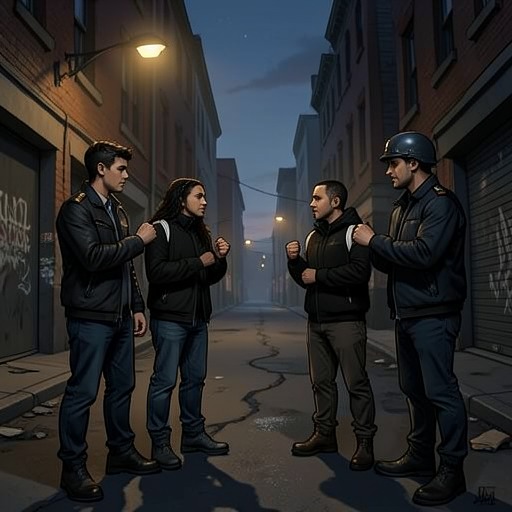
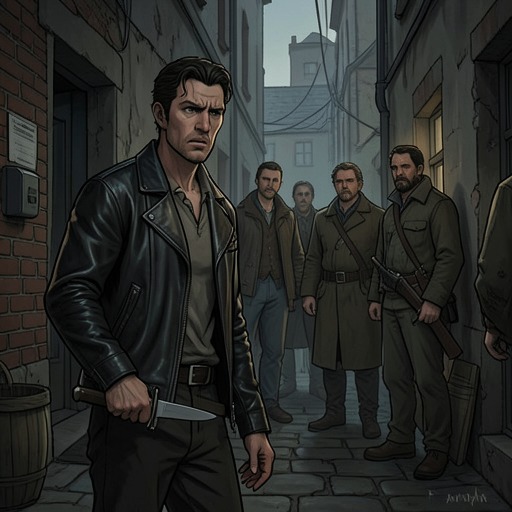
West Side StoryAction is a Jet lieutenant whose ambition, combative instincts, and fierce sense of gang ownership shape his role in the group. He wants the authority of leadership but initially prefers the freedom to criticize from the sidelines; after Riff’s death, that distinction disappears, and Action takes command of the Jets as they decide what to do about Tony.
Identity and Position
Action announces himself with a mock-urgent demand to know when the Jets will act and what they can do that night to tarnish the city’s reputation. The joke suits his impatience, but it also gives him a recognizable public posture: he pushes the group toward action and presents himself as someone ready for conflict. He is not the gang’s leader at this point. Riff holds that position, and Action’s influence comes partly from being the lieutenant who can question him.
Action’s view of the Jets extends beyond immediate fights. He believes the group has become cohesive because Riff must keep proving his worth as leader, and he takes pride in the fact that other white gangs avoid them. He also believes Black groups have learned to keep their distance. In his view, however, the growing number of Puerto Ricans nearby changes the balance: if the police, the mayor, and other authorities will not intervene, the Jets will. His claim that the gang is filling a civic vacuum turns territorial hostility into a supposed duty. The fantasy of the mayor awarding the Jets medals, followed by their imagined insult to the officials, exposes the bravado and contempt beneath that justification.
Ambition and Riff’s Leadership
Action increasingly considers challenging Riff for control of the Jets. Yet he recognizes the cost of winning: as leader, he would have to give orders and take responsibility for carrying them out. Remaining Riff’s lieutenant lets him criticize each decision and force Riff to work harder to demonstrate that he deserves command. Action’s ambition is therefore real but qualified. He wants influence without yet accepting the obligations that come with the title.
That arrangement has consequences for the group. Riff’s effort to meet the challenge keeps the Jets tightly united, and their reputation discourages rival gangs from confronting them. Action is not simply an outside critic undermining Riff; his pressure helps sustain a leadership contest that, for a time, strengthens the gang’s cohesion. The arrangement also depends on Riff being alive to answer him. When Riff is gone, Action can no longer exert power by making the leader prove himself. He has to decide whether to assume the responsibilities he had once preferred to leave to someone else.
Conflict with Other Jets and Tony
Action’s authority is tested in smaller confrontations as well. When Anybodys slips into a Jets meeting and asks why she was not told about it, Action springs up and proposes throwing her out of a window. His reaction is openly hostile: he treats her presence as an intrusion rather than as a claim to membership. Anybodys answers by threatening the group with the broken handle of a mug and asking what she must do to prove she belongs. Action’s impulse is to exclude her; her response makes the dispute a direct challenge to who gets to decide membership in the Jets.
He also responds physically when Tony challenges the Jets’ nerve. After Riff mentions knives and guns, Tony mocks the group as a collection of cowards. Action immediately steps forward, face-to-face with him, and demands that he identify whom he has insulted. Bernardo moves up as well, turning the verbal provocation into a confrontation between the opposing sides. Action’s quick movement shows how readily he makes an insult a matter for physical redress, and how the group’s readiness to defend its pride can draw it closer to violence.
Action’s attitude toward Tony is not simply personal loyalty. In the aftermath of Riff’s death, Diesel argues that without Tony, Riff would still be alive and Diesel would have beaten Bernardo. Action does not answer that accusation directly. Instead, when he learns that Chino has a gun and may be pursuing Tony, he rejects the idea of letting the Sharks take him. He insists that if anyone catches Tony, it must be the Jets, not their rivals. The distinction does not erase his lack of affection for Tony; Action says plainly that he has none. It reveals that gang rivalry and control matter more to him than settling the question of Tony’s guilt by leaving him to the Sharks.
Taking Command After Riff’s Death
At the late meeting, the Jets wait at the back of a truck, sitting on cushions salvaged from other cars. Anybodys circles around a crowbar she has found, explaining that it could force windows and doors and also serve as a weapon, but the others are focused on Action. They wait for him to finish his cigarette and announce what comes next. The improvised setting and the practical weapon contrast with the formal act of succession about to take place.
Action counts the group as eight or nine Jets, depending on whether Anybodys is included. He crushes his cigarette on the truck floor, says they should begin because some of them may have been picked up, and asks whether anyone objects to his taking charge. Mouthpiece agrees; after the others murmur their assent, Action proceeds as their leader. This is a marked change from his earlier position. He had considered challenging Riff while avoiding the burden of command; now he openly asks for authority and receives it from a group whose former leader is dead and whose members may be in danger.
The change does not make the Jets unanimous in purpose. Anybodys proposes saving Tony because people are looking for him. Diesel wants to escape arrest and says he hopes Tony is found, blaming him for Riff’s death. Action initially allows the disagreement to stand while asking who is pursuing Tony. Once he hears that Chino has shown the gun, however, he stands up and rebukes any suggestion that the Jets should let their rivals take Tony. He then goes from one Jet to another, watching for a sign of dissent. The gesture turns his claim to leadership into a test of allegiance: the Jets are expected to carry out the decision whether or not they like it.
Leadership and Narrative Role
Action’s arc is a shift from influential subordinate to acting leader, but it is not presented as a conversion away from the Jets’ combative code. As lieutenant, he helps keep Riff under pressure, treats challenges as occasions for confrontation, and frames the growing conflict with Puerto Ricans as a threat the gang must answer. As leader, he applies those same commitments to a new decision: the Jets will search for Tony themselves rather than allow the Sharks to capture him.
His command also exposes the limits of unity. The Jets can agree to follow Action while disagreeing sharply about whether Tony deserves help. Anybodys’s rescue proposal, Diesel’s resentment, and Action’s insistence on keeping Tony out of the Sharks’ hands arise from different positions, but the new leader converts them into a single course of action. His importance lies less in resolving those differences than in enforcing a boundary around them: the Jets may argue over Tony, but their rival gang will not decide his fate first.