Diesel
West Side StoryDiesel is a physically formidable member of the Jets whose role in the gang’s conflict with the Sharks reveals both his confidence in violence and its limits. He presents himself as ready for a fight, becomes Riff’s chosen champion against Bernardo, and later blames Tony for Riff’s death. Yet in a confrontation with Anita, Diesel first encourages A-Rab’s aggression and then tells him to stop. These actions make him a revealing figure in the Jets’ shifting boundary between bravado, loyalty, and restraint.
Place among the Jets
Diesel appears among the Jets as one of the gang’s forceful, physically self-assured members. On a night he considers dull, he balances upside down and wonders aloud whether anyone wants to go to an all-night movie. Riff rejects the suggestion, decides the group should go out and see what happens, and assigns others to keep watch. Diesel’s restlessness belongs to the same street culture as Riff’s decision to patrol: inactivity is not an end in itself, and the gang’s presence in its territory is asserted through movement and readiness for trouble.
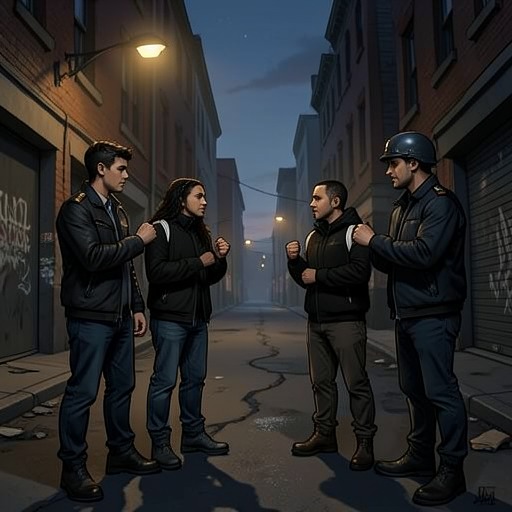
At the meeting where the Jets consider how to face the Sharks, Diesel and Action are already on their feet, shouting their eagerness to charge. Around them, the others mime knife attacks, turning the prospect of violence into a performance the group can share. Baby-John, by contrast, trembles and argues for fists or stones rather than knives or guns, proposing a fair fight. Diesel responds by covering Baby-John’s face with his palm and pushing him back. The gesture dismisses the appeal without debate; within this gathering, reluctance does not have the same force as the group’s collective display of readiness.
The duel with Bernardo
When Bernardo challenges Tony to fight beneath the overpass, Riff makes clear that the Jets’ leaders decide whether to accept. Although Bernardo indicates that he is ready to fight immediately, Riff corrects the terms: Diesel is the Jets’ best man, and the encounter will take place the following night. Bernardo’s visible disappointment at being denied a contest with Tony underscores that the choice of opponent is part of the confrontation, not a minor logistical matter. Diesel is being placed forward as the gang’s representative fighter.
When the confrontation begins, Diesel faces Bernardo in poor light. He outweighs Bernardo and believes he can take the other man’s blows, but he is cautious because Bernardo has a reputation as a strong street fighter. The narration also notes that Bernardo’s talent might make him a capable professional boxer if he could set aside his hatred and fight calmly. The contrast helps define Diesel’s confidence: he is not simply careless, but evaluates Bernardo as a dangerous opponent and tries to use the difference in their size to his advantage.
Diesel opens with a tentative left. Bernardo steps back and counters with his own left, which Diesel deflects. Diesel tries again, feints with his right, and moves his head just in time to avoid Bernardo’s punch. He anticipates that Bernardo will seek a knockout rather than work the body, and imagines answering with a forceful body blow followed by a punch to the mouth. The plan exposes the tactical imagination beneath his swagger, but it remains a plan: the fight’s terms collapse when Riff intervenes.
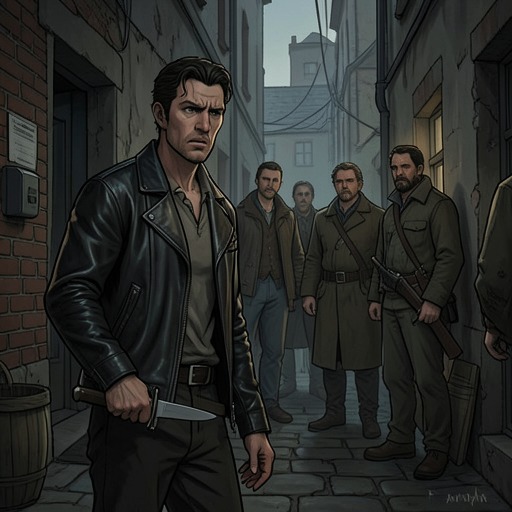
After Bernardo mocks Tony, Riff shoves Tony aside and attacks Bernardo. Bernardo hits back, and the confrontation escalates as both leaders draw knives. Diesel and Action restrain Tony when he tries to rush in. As Riff and Bernardo circle and close the distance, the surrounding group tightens around them; Diesel and Action briefly loosen their hold, allowing Tony to break free. Diesel’s part in the duel therefore changes from designated fighter to one of the people physically preventing Tony from interrupting the leaders’ knife fight, before that restraint gives way.
Loyalty and the aftermath
After Riff’s death, the Jets gather and acknowledge Action as their leader. Anybodys proposes saving Tony because people are looking for him. Diesel rejects that course: he argues that the gang should leave before the police catch them and take them downtown for photographs, and says he hopes Tony is found. He spits as he calls Tony a traitor, directly linking his hostility to two losses he sees as connected: without Tony, Riff would still be alive, and Diesel himself would have knocked Bernardo out.
That claim about Bernardo is counterfactual, not an outcome of the duel. The fight did not proceed to Diesel’s imagined finish; Riff’s intervention redirected it, and the knife confrontation that followed brought fatal consequences. Diesel’s resentment compresses those complications into blame. His words show how grief and anger are expressed through the Jets’ familiar language of combat and loyalty, while his concern about arrest makes clear that the gang also faces immediate consequences from the violence.
The confrontation with Anita
Diesel’s later encounter with Anita brings another side of his conduct into view. Anita comes to the Jets’ gathering with a message for Tony. Diesel cuts her off by saying Tony is not there and orders her to leave. When she insists that she knows Tony is present and asks to deliver the message, Diesel directs A-Rab to stop her. A-Rab insults and threatens her, and Diesel encourages him, framing the intimidation in terms of an American confronting a Puerto Rican woman and telling him to let her carry the story back to Chino.
The episode does not leave Diesel’s role at that encouragement. As A-Rab’s attack escalates, someone pulls at his shirt, and Diesel tells him to let Anita go. The shift is stark: Diesel has helped prevent her from delivering the message and has urged A-Rab on, but then intervenes to stop the assault. The evidence does not explain his change of action, so it is best understood as a contradiction in his conduct rather than proof of a settled motive. Together with his dismissal of Baby-John’s appeal for a fair fight and his own readiness to meet Bernardo, the scene shows Diesel repeatedly acting within the Jets’ aggressive group culture while not carrying every confrontation through to its worst possible end.