Doc
West Side StoryDoc is the proprietor of Doc's drugstore, an employer to Tony, and one of the few adults who tries to meet the young people around him with both candor and care. His small acts of protection—offering Tony work, challenging Riff's claim over him, intervening when Anita is attacked, and accompanying her to Tony's mother after his death—give him a steady presence amid the gangs' escalating violence. Yet Doc's help remains limited: he can offer refuge and human comfort, not prevent the catastrophe gathering around them.
Identity and Work
Doc is physically slight, shorter than usual, and thin. Thick glasses keep slipping down his nose; his white coat is sweat-stained beneath the arms, and his loose clogs hurt his feet because they give his arches no support. The details place him in the labor of the shop rather than above it: he counts pills for a prescription, holds the number in his head while speaking, and continues attending to the work at hand. He is not presented as an imposing authority. His influence comes instead from being present, responsible for the store, and willing to speak plainly to the boys who enter it.
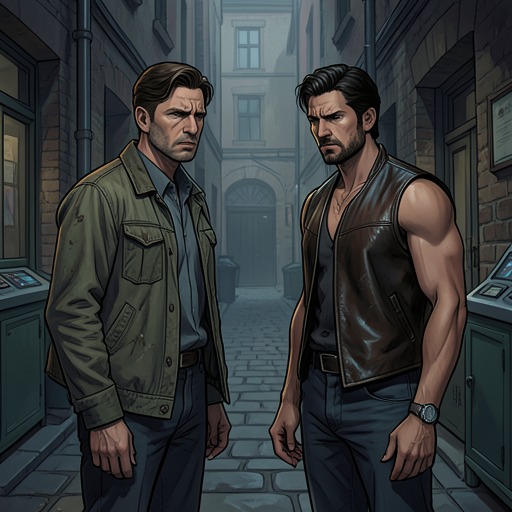
Tony works for Doc in the back of the shop. When Riff arrives looking for his friend, Doc confirms that Tony is there, then asks why Riff wants to see him. Riff answers that Tony is his friend and dismisses Doc's interest in the matter; he also asks how much Doc pays Tony. Doc refuses to treat Tony as someone Riff can simply claim. He tells Riff that Tony's work and their relationship are between Tony and Doc, then offers Riff the possibility of a job like Tony's if Riff is genuinely interested. Riff rejects the offer and leaves by the back door. Doc's proposal is practical, but it also exposes a choice the gang's language obscures: work is available as a relationship based on responsibility, not possession.
A Witness to the Neighborhood
Doc's concern does not make him blind to the danger around his business. As the hot day gives way to evening, he tells Tony that the employees' work is over, that anything unfinished can wait until morning, and that Tony should lock the cellar door before coming for a cold drink. He predicts that the night will be hotter still, as will the following day. The exchange makes the shop a modest place of shelter and routine, set against an environment that seems to be tightening around its inhabitants.
The storefront also needs iron shutters lowered in front of its windows. Doc laments that a shop should have to close itself off this way. Tony blames the Puerto Ricans; Doc answers with an ironic reminder that Riff and the trouble around him are part of the problem too. His response refuses Tony's one-sided explanation without pretending the danger is imaginary. Doc says he will handle the shutters himself, releases Tony from worrying about them, and tells him to be careful that night. The concern is genuine, but it is also a warning: Doc understands that the threat does not stop at the shopfront or belong neatly to only one group.
Intervention and Care for Anita
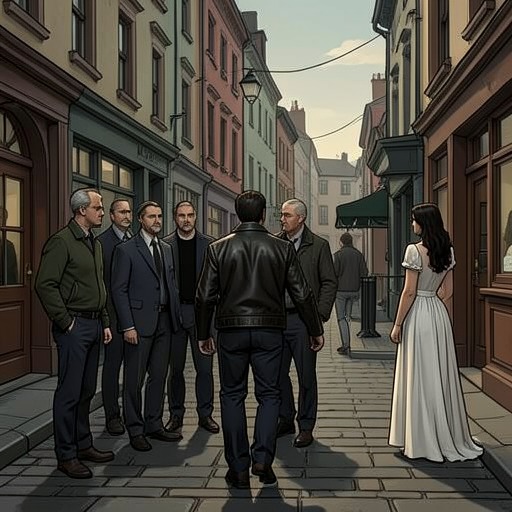
Doc's concern becomes action when he comes upstairs and finds Anita under attack by A-Rab. Diesel has already urged A-Rab to stop, and Doc's arrival forces A-Rab to get up and let Anita regain her feet. Doc looks at her in shock, then turns on the boys, condemning them and warning that they will pay for what they have done. His response sharply breaks with the Jets' effort to treat the assault as an occasion for mockery or coercion: he recognizes the harm and holds the attackers responsible.
Afterward, Doc asks Anita if she is all right. She clutches the torn edges of her dress and struggles to hold back tears; rather than accepting comfort easily, she looks at A-Rab and declares her hatred of the boys, invoking Bernardo's judgment of them. Doc gently advises her to go home. A-Rab immediately objects that she must not be allowed to leave because she may tell Chino that Tony is involved in something. The interrupted warning shows the boys' anxiety about what Anita might reveal, while Doc's priority is her safety. Anita's cold look at Diesel and A-Rab closes the moment on her refusal to soften what they have done.
Loss and the Limits of Help
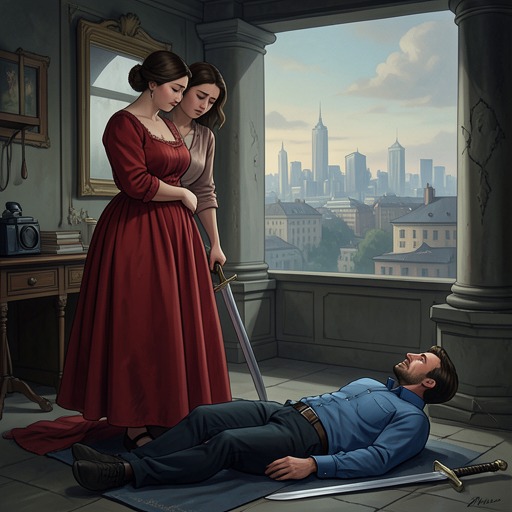
After Tony's death, Anita raises the gun and points it at Chino, asking how many bullets remain and whether one is left for her. She also turns the weapon toward Anybodys and declares that they all killed Tony, naming herself, Bernardo, and Riff rather than Chino alone. Doc approaches, places a hand on her shoulder, and speaks quietly. He proposes that they go together to Tony's mother, Mrs. Wyzek, because she needs a woman's comfort, especially from someone who loved her son. In this moment Doc does not argue Anita out of her grief or try to erase her accusation. He redirects her from the gun toward the immediate human obligation of telling a bereaved mother.
Doc's actions form a consistent, limited kind of resistance to the violence around him. He offers Riff a route into work, disputes Tony's attempt to place all blame on the Puerto Ricans, protects Anita when the Jets turn on her, and stays beside her when Tony's death leaves her armed and grieving. None of these acts restores what has been lost; the city's brief, incomplete reports and the indifference of most of New York underline how little the tragedy alters ordinary life. Doc's significance lies instead in his refusal to regard the young people as merely gang members or threats. He keeps responding to particular people and needs, even when the care he can offer arrives too late to save them.