Maria Nunez
West Side StoryMaria Nunez is a young Puerto Rican newly arrived in New York, where family protection, ethnic prejudice, and a crowded life press in on her at once. Her defining struggle is to claim a future of her own: she resists an arranged marriage to Chino Martin, loves Tony Wyzek, and rejects the idea that Puerto Ricans are strangers in the country they have made their home.
Identity and Migration
Maria’s family migration left her childhood divided between Puerto Rico and New York. When her parents emigrated two years earlier, Maria and her sisters remained with relatives on the island; only her brother, Bernardo, went with their parents while they tried to establish themselves. By the time Maria arrived, her parents seemed younger and more confident than she remembered from their departure. She soon understood why Bernardo had not met her at the airport: his bitterness toward Americans had become difficult to conceal.
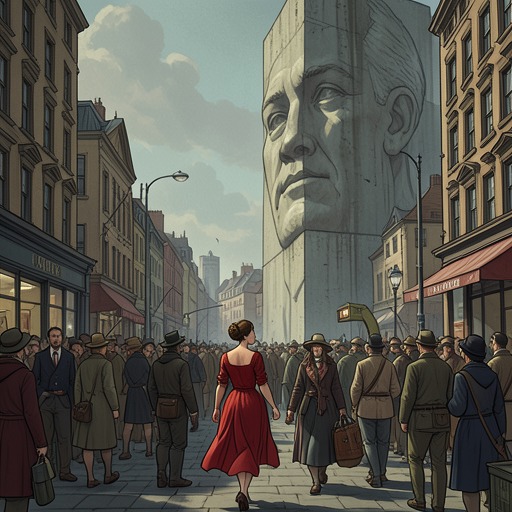
The city offered a startling contrast to the Puerto Rico Maria remembered. From a rooftop, she looked toward Central Park and the illuminated windows of buildings less than a kilometer away, yet felt that this world was farther from her than the distance she had traveled in the previous week. New York’s wealthy buildings suggested a life of comfort unlike the island’s poor, often unpaved streets and houses without running water. The view enlarges her sense of possibility, but does not erase her awareness of what poverty has shaped.
Her new home is also a place where Puerto Ricans are blamed for conditions they did not create. The surrounding account describes overcrowded housing, landlords who profit by subdividing apartments, and West Side residents left without meaningful political representation. In that climate, the claim that Puerto Ricans arrived uninvited turns displacement into an excuse for hostility. Maria’s insistence that people who come to live in America are American directly contests that exclusion.
Confinement and the Future Others Choose
In the family’s cramped apartment, Maria avoids the crowded kitchen by climbing the fire escape and ladder to the roof. There she can look across the city and be alone rather than make conversation with her parents, two uncles, two aunts, and family friends squeezed into a small room with one window. The rooftop offers a brief physical escape from a household where her movements and prospects are closely managed.
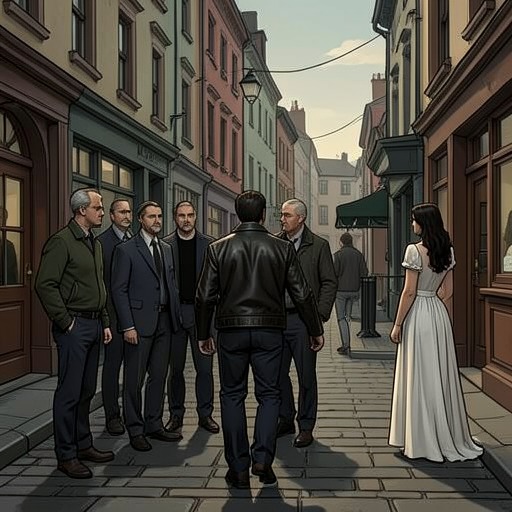
That management is visible in Bernardo’s routine of accompanying her. A month after arriving, Maria complains that he still walks her to the store each morning and comes back to escort her home whenever Chino cannot. Her days, she says, consist of sitting to sew and sitting idle in the evening—much like her life in Puerto Rico. Bernardo presents this supervision as protection; to Maria, it repeats the limits she hoped migration would leave behind.
Marriage makes the contradiction sharper. Her family has arranged for her to marry Chino, yet Maria questions how she can be treated as a child while decisions about her adult future are already being made. At the wedding shop, she is having a white dress altered for a dance, an evening she imagines as the true beginning of her life as a young American. Her excitement is not simply about the party: it is a claim to experience, movement, and a self-defined future.
Love and Choice
Maria’s connection with Tony Wyzek begins to unsettle the marriage plan. Anita Palacio reports that the pair danced and that Maria seemed a little shaken, but that nothing more happened at the dance. Chino, by contrast, is a prospective husband selected by the family. When Maria kisses him on the cheek while dreaming of the evening ahead, the narration distinguishes the warmth of his skin from any deeper feeling: the contact is pleasant, but no more than that.
Her response to Tony is different. After they kiss, Maria insists that they belong together, then tells him to leave so she can think through what they must do. The moment combines certainty about the relationship with a practical recognition of danger: she wants him, but also understands that their surroundings demand deliberation. Her choice is neither passive surrender to romance nor simple obedience to family expectations; she tries to make room for love while deciding what action it requires.
Family, Prejudice, and Agency
Bernardo’s hostility toward Tony is bound up with his fear that Puerto Ricans will lose their place in the neighborhood. He gathers other Puerto Ricans on what he regards as his territory, while the conflict between the gangs turns housing and belonging into a struggle over who must leave. Maria sees where Bernardo’s bitterness leads and argues that Tony is not a foreigner merely because of his Polish background: if he was born in America, he is American, and even someone who came there to live should count as American. Her argument extends the claim she makes for her own family to the person her brother most wants to exclude.
Anita Palacio, who has promised Bernardo to look after Maria, becomes both her confidante and a defender of her freedom. She challenges Bernardo for questioning Maria after the dance and tells him to leave his sister in the care of Chino and their parents rather than treating her as incapable. In another exchange, Anita shields Maria’s ears before rebuking the men for assuming that Puerto Rican women who came to America with open hearts were sexually available. The gesture makes clear that Maria’s vulnerability is not only a matter of age or family control: ethnic hostility and sexual judgment converge around her.
Narrative Significance
Maria’s independence develops through modest but consequential acts: climbing to the roof, naming the monotony of her routine, anticipating the dance as a beginning, and speaking back when Bernardo casts Tony as an outsider. Her resistance is personal, but its terms are also civic. By insisting that belonging does not depend on ethnic origin, she opposes the logic that makes Puerto Ricans scapegoats and gang territory a test of who may remain.
The contrast between the man chosen for her and the man she loves gives that resistance its intimate stakes. Chino represents a future arranged around family expectation; Tony represents a bond Maria chooses, though she knows that their relationship requires thought and carries danger. In the scenes that establish her character, Maria is neither simply protected nor simply rebellious: she recognizes the constraints around her and repeatedly tries to turn hope into a decision of her own.