Racial and ethnic prejudice
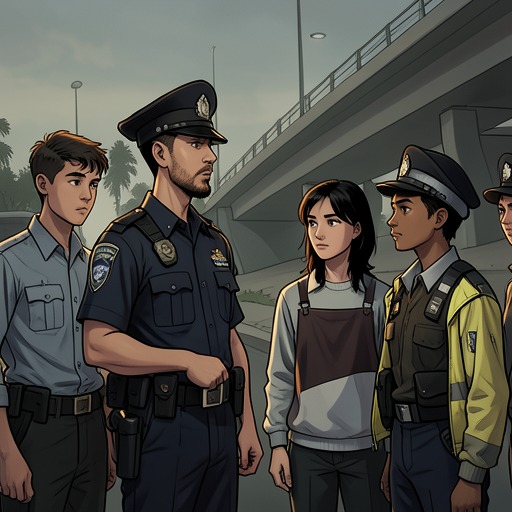
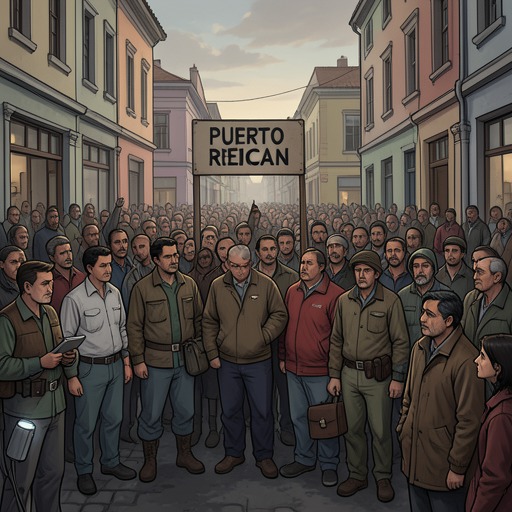
West Side StoryRacial and ethnic prejudice is a force that converts neighborhood anxiety into ethnic blame in West Side Story. On Manhattan’s West Side, the Jets treat Puerto Ricans as an invading population and the Sharks as rivals for territory; that framing makes violence seem defensive even as it gives the gangs a target for hostility that had previously been diffuse. The novel links such prejudice not only to gang rivalry but also to overcrowded housing, economic competition, and the question of who is entitled to call New York City home.
Territory and the Making of an Enemy
Before the Puerto Ricans become the Jets’ principal target, the gang’s violence has no stable object. The narration describes the Jets as hating everything and everyone in their path, attacking people or property without regard for whether they had been friendly with them moments earlier. Their indiscriminate destructiveness turns the city into a battlefield and leaves residents afraid. The arrival of Puerto Ricans appears to give that aggression a direction: the city becomes safer for others, the account bitterly observes, only because Puerto Ricans now bear the danger. This is not evidence that the newcomers caused the violence; it shows how the existing violence can be rationalized once prejudice supplies a scapegoat.
That scapegoating rests on a claim of prior ownership. The Jets believe that they fought to win their block and must defend it against people they regard as newcomers. Riff Lorton imagines the Sharks gathering Puerto Ricans under Bernardo’s leadership to take control, with the consequence, in his fearful account, that white residents would have to leave. His suspicion turns a contest over a neighborhood into an ethnic zero-sum struggle: one group’s presence is treated as proof that another group is being dispossessed. The novel presents this as Riff’s belief, not as confirmation that the Sharks intend to drive all white residents out.
The gang’s attitude also exposes how prejudice can serve practical purposes within a group. Action sees Puerto Ricans’ increasing numbers as a threat and imagines the Jets stepping in where police and city officials have not. Meanwhile, Riff knows that the second quiet night of patrol is testing his authority: idle members may turn against him, and Action is waiting for an opportunity to challenge his leadership. Riff proposes settling the territorial conflict in one large battle, rather than continuing to endure isolated attacks. Ethnic hostility thus supplies both a public justification for the Jets’ mission and a way to keep the gang active and cohesive.
Housing, Scarcity, and Exclusion
The narrative places these rival claims against a city where ordinary residents have little room to move. Affordable housing remains scarce decades after the Second World War. When a white tenant leaves an apartment, a landlord can quickly re-rent it at a higher price; landlords can also divide a three-room apartment into five, six, or eight rooms and pack in Puerto Rican tenants. The resulting overcrowding and neglect are described alongside the owners’ profits and their ability to spend much of their time in Florida or California. The contrast identifies material pressures behind neighborhood resentment while showing how property owners can benefit from the conditions that residents experience as conflict.
The Jets’ supporters use that deprivation to cast the newcomers as an imposed burden. No local tenants, they complain, were asked before Puerto Ricans were accepted into the country; politicians do not live in the West Side, and newspapers do not speak for its residents. In this account, the Jets’ voice and fists become substitutes for political representation. But the supposed defense of the neighborhood does not challenge the landlords’ power or the shortage of livable apartments. Instead, it redirects anger toward Puerto Rican residents, who are themselves shown living within the same exploitative housing system.
Belonging and American Identity
Maria Nunez offers a direct challenge to the idea that Puerto Ricans are foreign intruders. She has recently arrived in New York City after her parents emigrated earlier, while she and her sisters remained in Puerto Rico and Bernardo joined their parents before the rest of the family. As Maria studies English and compares the city with the poverty of the island, she recognizes the hatred around her but rejects it as a way of life. Her perspective makes clear that Puerto Rican migration is also a family history shaped by separation and the search for better circumstances, not simply the hostile incursion described by the Jets.
The dispute becomes explicit when Chino describes how a worker might advance from a laborer to a delivery worker and, eventually, into a union position. Bernardo counters that Tony Wyzek, because he is American, would pass Chino and earn more even if Tony were less qualified. Maria objects to both the ethnic slur directed at Tony and the assumption that birthplace determines who belongs: in her view, a person born in America is American, and a person who chooses to live there is not thereby an outsider. Her intervention brings the novel’s competing claims into focus. Bernardo sees discrimination against Puerto Ricans; Maria does not deny hostility, but refuses to answer it by declaring another person alien.
That disagreement echoes Maria’s earlier question about why the Jets want to hurt her community. Bernardo’s answer is that they believe the Puerto Ricans harmed them by coming there. The explanation reveals the circular structure of the prejudice: presence is treated as an injury, and that supposed injury is then used to authorize retaliation. Maria’s insistence on love rather than hatred offers a moral alternative, though the surrounding gang conflict makes clear how little power such a refusal has to stop violence by itself.
Violence, Fairness, and the Limits of Resistance
The language of fair fighting does not remove ethnic hostility from the conflict. When Riff asks whether the Jets are prepared for a battle that might involve bottles, knives, or guns, Baby-John argues for fists or stones instead. He believes that fighting cleanly would expose the Sharks as cowards if they used weapons. His appeal sets a limit on acceptable violence, but it remains framed as a way for the Jets to prove themselves against the rival gang. The proposed restraint moderates the means of conflict without questioning the assumption that the groups must fight over territory.
The novel’s treatment of prejudice therefore connects intimate judgments, group loyalty, and structural conditions without treating them as interchangeable. Maria challenges the exclusionary definition of American identity; the Jets’ territorial logic makes a whole community answer for supposed collective wrongdoing; and the housing account shows how scarcity and exploitation sharpen resentment while leaving its most powerful beneficiaries largely outside the gangs’ accusations. Prejudice gives the violence a target and a story about who started it, but the repeated struggle reveals that this story does not resolve the conditions producing hostility. It helps keep the conflict going.