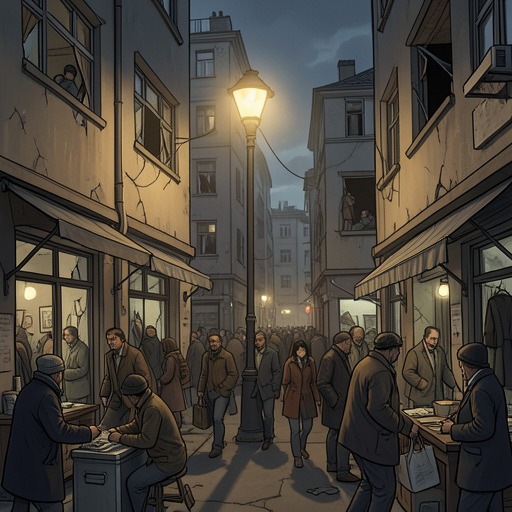
Saturday night
West Side StorySaturday night is the novel’s shared but uneven pause: a weekly occasion for letting go, while love, hatred, desire, hope, and death continue side by side. Its significance lies in the contrast between intensely lived private experience and a city whose ordinary life carries on with little awareness of it.
The Weekly Pause
The narration describes Saturday night as the one night of the week when people are expected to loosen their hold on everyday demands. That pause does not mean that everyone shares the same experience. Some people love, others hate; some desire or encourage. The night holds these divergent feelings together without resolving them into a common mood.
Lives Unfolding at Once
Release and pleasure coexist with death. People die in peace, in pain, or through violence, even as others spend the same night absorbed in their own pursuits. In the surrounding account, knowledge of the killings reaches only a limited part of the city; most residents remain unaware, and the few newspaper reports are brief and incomplete. Saturday night therefore places catastrophe within a larger field of simultaneous lives rather than making the whole city stop for it.
Private Wishes and the City's Continuity
The night also opens onto people looking toward the sky in loneliness, silently hoping that someone will hear them and that small dreams of trust and happiness may come true. Some wishes do, but their fulfillment makes no difference to the city itself: New York is built to outlast the lives of its inhabitants. Saturday night thus joins intimate possibility to urban indifference. A person's hope or loss may alter an individual life, while the city's larger duration proceeds beyond it.