Tony agrees to stop the gang duel
West Side StoryTony Wyzek’s agreement to stop the gang duel begins as a promise to Maria Nunez and becomes a test of what their relationship asks of him. He first decides not to attend the fight; when Maria makes clear that staying away is not enough, he promises to prevent it. The exchange shifts the scene from romantic reassurance to a concrete demand that he oppose violence.
Intimacy and Unease
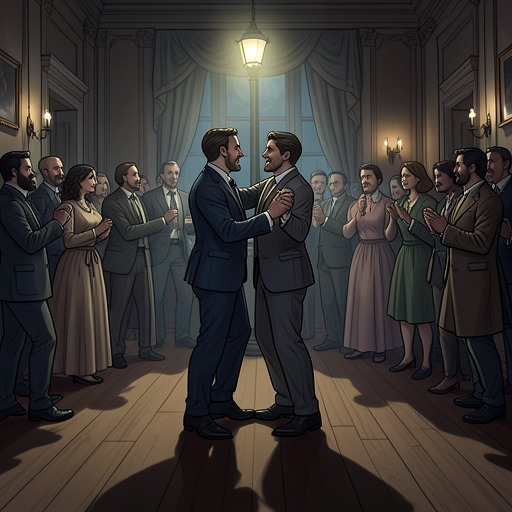
Tony describes himself and Maria as untouchable because they remain on a cloud, sustained by a magic that will not disappear. His hands rest gently on her shoulders, though they have suddenly grown damp, and he looks into her eyes. The confidence of his words is set against this bodily sign of strain: their love may feel protected, but the conversation is not free of fear.
Maria answers that magic can also be black and evil. She asks Tony to tell her the truth, and he assures her that he always will. Her request matters because it turns the intimate language of their romance toward a practical question: whether he will take part in the coming fight. The passage does not let their sense of enchantment settle into a refuge from the danger around them; Maria asks what that danger means for the choices Tony will make.
From Attendance to Refusal
Asked whether he will go to the fight, Tony sighs and shakes his head. He says that he had not made up his mind until Maria asked. His answer is now no: he plans to go home, get dressed, and come to collect her. This is a definite change of intention, not merely an assurance that he will be careful. For the immediate evening, he places their meeting ahead of attending the duel.
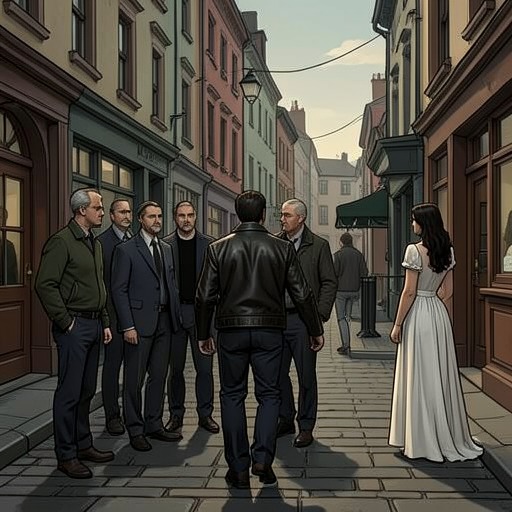
Maria sets out what must happen before they can leave together. She needs to speak with her parents, and Tony must stop the fight. He answers that he stopped it the previous night and describes what remains as no more than a bare-knuckle contest, in which Bernardo cannot be badly hurt. His account treats the reduced danger as evidence that the situation is under control. Maria rejects that measure: no fight, even one without weapons, can be good for them.
The Promise Becomes a Demand
Tony initially separates the duel from their relationship. He says he has been there longer than Maria and insists that the fight has nothing to do with them, that nothing will happen, and that she should smile for him again. His reassurance is not enough. Maria asks him to do this for them, explicitly saying that the request is not only for her. She makes preventing the fight a condition of their shared future rather than a favor that can be answered with comforting words.
Tony accepts that condition: because Maria asks for them, he will do it. She presses his fingers in thanks, then checks whether he really can prevent the fight. His response is deliberately emphatic. He boasts that she refuses even a bare-knuckle fight and declares that there will be none, presenting himself as someone who will obey her command. Maria applauds, delighted, and calls him a magician. The ending returns to the language of magic from the scene’s opening, but its meaning has changed: the promised wonder now depends on a specific act of restraint.
Significance
The exchange draws a distinction between avoiding violence personally and taking responsibility for stopping it. Tony has already decided not to attend, but Maria refuses to treat that private withdrawal as sufficient while the fight remains possible. Her insistence forces the promise to widen—from staying away to intervening—and Tony verbally accepts the wider obligation.
The decision is also framed as a choice between inherited gang conflict and the future the couple hopes to share. Tony first claims that the duel has nothing to do with them; Maria counters that any fight can harm what they are trying to build. The scene ends on his pledge, not on confirmation that the duel has actually been stopped. Its immediate outcome is therefore a commitment, made in response to Maria’s demand, whose practical fulfillment remains ahead.