Tony's estrangement after leaving the Jets
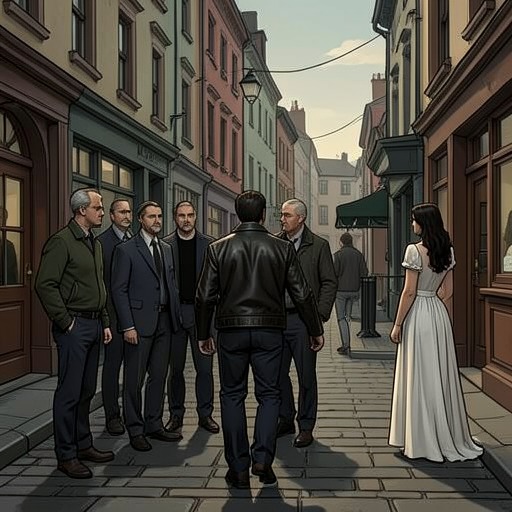
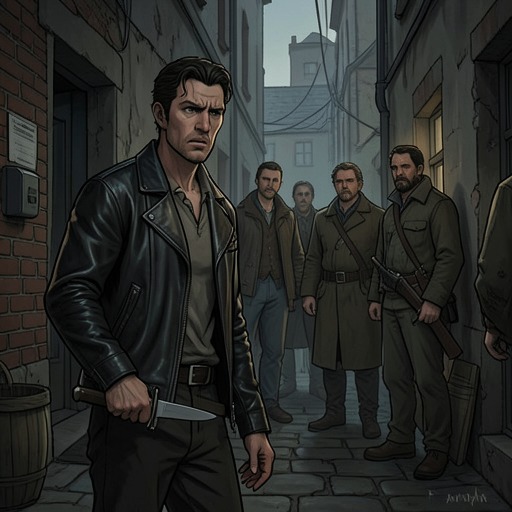
West Side StoryTony Wyzek’s estrangement from the Jets is a divided state rather than a clean break: he has left the gang and its leadership, but its friendships, loyalties, and expectations still claim him. His attempt to find a life beyond gang membership is real, yet Riff’s appeal and the approaching confrontation with the Sharks make separation difficult to sustain.
Departure and a New Routine
Tony’s decision begins not in a public dispute but during a solitary night on the subway. Even his position as leader of the Jets cannot quiet a persistent sense of inferiority. He sees himself as ignorant, and recognizes that the gang’s boasts about being the greatest cannot make him more knowledgeable or change the direction he is taking. The thought that there must be something better unsettles the identity that leadership had seemed to confirm.
He rides trains across Brooklyn, the Bronx, Queens, and Manhattan before returning to his neighborhood. There, he climbs the dark stairs of his building and sits on the roof until dawn. The night marks both his last as a Jet and his last as leader. The distance covered across the city ends in stillness above the neighborhood he is leaving behind: a private transition, not a triumphant departure staged before the gang.
The next morning, Tony looks for work, and Doc offers him a job at the drugstore. By the time of the later encounter with Riff, he has worked there for four months. Tony is uncertain whether Doc hired him because he would cost less than other potential employees, but the job gives his decision a daily form beyond simply declaring that he has quit. His mother is pleased with the change, and Tony feels ashamed that he has not done more to make her happy. This concern adds a personal reason to continue on a different path, one separate from the status and solidarity the gang offers.
The Pull of Belonging
Leaving the Jets does not resolve Tony’s feelings about them. He is reluctant to tell the former gangmates—or anyone else—how confused he has become, and takes the simplest way out by sending Riff, Ice, and Action away. The retreat protects him from explaining a change he has not fully sorted out, but it also leaves the friendship and the gang’s claims unsettled.
When Riff asks what could make him feel high, Tony searches for an equivalent to the feeling he had when he was a Jet. Riff answers that the pleasure comes from being friends, and Tony admits that seeing Riff makes him happy. But he draws a distinction between this bond and the gang as a whole: the thought of being a Jet no longer lifts him, and imagining a visit from other members does not produce the same response. His affection for an individual survives where his identification with the group has weakened.
Riff argues that life without a gang means being an orphan, and that belonging to the Jets places a person at the top. His appeal rests on the practical and emotional protection he believes the gang provides, as well as on their years of supporting one another. Tony cannot deny the sincerity of that history, and memories of their shared past crowd into his thoughts. Still, he tells Riff that he has had enough and is finished. The strained answer conveys the cost of refusal: he holds to his decision even as the closeness of their history makes it painful.
Friendship, Duty, and Reluctant Return
Riff does not accept Tony’s withdrawal as the final word. With the Sharks pressing the Jets, he says the gang must stop them or leave, and asks Tony for help. He wants him at the dance that evening, where the gangs are gathering. When Tony turns away and says he cannot come, Riff replies that he has already told the others Tony will be there. The assumption angers Tony; he is tempted to strike his friend for committing him without permission.
That anger gives way when Tony understands why Riff acted: Riff still regards him as his best friend. Tony may no longer feel toward Riff exactly as Riff feels toward him, but he recognizes that this difference does not justify abandoning his friend. His sense of obligation extends beyond Riff to the Jets and the neighborhood. He also remains hostile toward Bernardo and the Sharks, and believes the conflict has become a war whose origins cannot be dismissed. His reasons for involvement therefore overlap without becoming identical: loyalty to Riff and the Jets pulls him back, while his old antagonism toward the Sharks remains.
Tony also remembers that, on the night he left, he had wanted Riff to take the lead and had helped put him forward. Now he believes it is his responsibility to help Riff remain there. This reasoning turns departure into an unresolved obligation: Tony has relinquished command, but feels accountable for the friend who replaced him. He can refuse the gang identity while still feeling bound by the consequences of his former authority.
The Gang’s Expectations Reassert Themselves
The pressure returns in practical form on the day of the planned confrontation beneath the highway. At about three in the afternoon, Baby-John visits Tony at the drugstore to buy a comic book and reports that he speaks for the other Jets: they are glad Tony is back among them, even though Riff has not chosen him to fight Bernardo. The gang’s welcome treats his return as settled, while Tony’s own sense of separation remains unresolved. Riff wants him to meet the Jets beneath the highway at nine.
Baby-John is eager for violence. He says he has stolen another ice pick from a hardware store and made a sheath to wear around his neck and behind his back. He imagines the Sharks retaliating if Diesel defeats their fighter, and boasts about attacking Pepe and Nibbles. The weapon and the boy’s plans make clear what a return to the gang’s orbit entails: not simply companionship, but the impending escalation of a group conflict.
Tony gives Baby-John a free bottle of cold soda and tells him not to show up that night. He expects the warning to be ignored and knows Baby-John will instead repeat it to the Jets. Action and Diesel, in particular, may interpret Tony’s absence as proof that he has become a collaborator. Tony anticipates that Riff will face trouble as a result. In the end, he concludes that, for Riff’s sake, he has to go. The choice exposes the limit of his estrangement: he has not recovered his old appetite for gang membership, but neither can he keep his departure from being tested by friendship, reputation, and the danger gathering around the Jets.