
Hope, Futility, and Responsibility
What Are You Going ThroughThis thematic thread explores the novel’s refusal to equate honesty about catastrophe with either optimism or moral surrender.
increasing Bearing strength in each event
 decreasing
Bearing strength in each eventdecreasingThe Lecturer’s Despair

The Lecturer’s Despair
A catalogue of threats
The ex describes nuclear weapons, ecological collapse, disease, political extremism, and surveillance as converging dangers. He says society lacks the collective will to stop them.
Hope withheld
He refuses to soften his conclusions with a practical consolation. The audience’s confusion reveals the social discomfort produced by truth that offers no clear remedy.
Mindfulness Challenged

Mindfulness Challenged
Private calm, public crisis
The lecturer condemns mindfulness and self-care when they become substitutes for collective action. He argues that equanimity cannot right the ship of civilization.
Compassion remains complicated
His attack is not simply a rejection of individual care; it questions what care means when it retreats from shared responsibility. The book leaves open whether dread motivates action or merely exhausts people.
A Host Defends Hope

A Host Defends Hope
A moral objection
The narrator’s host objects to telling people there is no hope. She argues that love and care cannot be demanded after a speaker has extinguished every reason to act.
Hope without denial
Her objection does not refute the dangers described. Instead, it asks whether people need a future-facing possibility, however small, in order to accept responsibility for one another.
The Ex’s Grandchildren
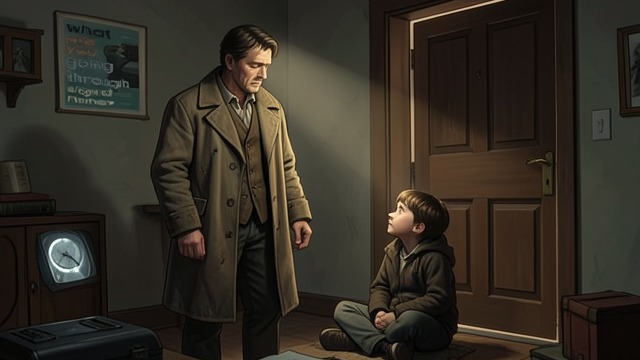
The Ex’s Grandchildren
Responsibility made intimate
The ex says he wants his grandchildren to know that he tried to warn them. He feels guilty about earlier inaction and angry at the forces that have worsened the crisis.
The need for forgiveness
He wants forgiveness from the children he fears will inherit a damaged world. His public fatalism and private hope coexist rather than cancel one another.
A Future That Still Matters

A Future That Still Matters
A contradiction admitted
The ex continues to speak even while claiming that people may not act in time. He wants future generations to hear the truth, not because he can promise rescue but because they deserve to know.
Responsibility without certainty
His position offers neither easy hope nor permission to stop caring. The novel preserves the contradiction between believing action may fail and refusing to let failure become an excuse for silence.
At the 2017 campus lecture
During the lecturer’s critique of self-care
The night after the lecture
At brunch after the conference speech
Near the end of the ex’s brunch conversation
