
The Portrait’s Changing Presence
What Are You Going ThroughThis subplot follows an imposing portrait that becomes a shared symbol of companionship before its mundane history dissolves the women’s imaginative shrine.
increasing Bearing strength in each event
 decreasing
Bearing strength in each eventdecreasingAn Unwelcome Image
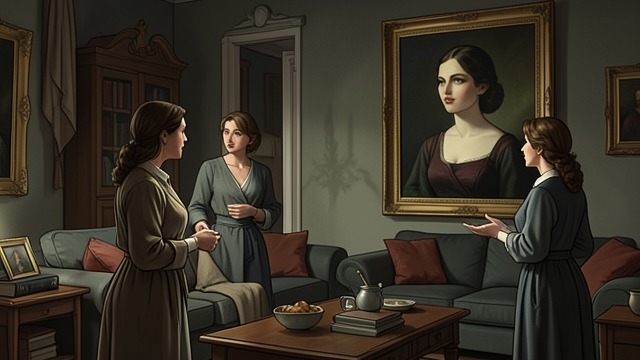
An Unwelcome Image
A striking portrait
The women find a life-size portrait of a youthful woman dominating the living room. Its erotic pose and austere styling make it feel less like a family photograph than a public performance.
Age and humiliation
They speculate that living with an image of one’s younger self might be painful. The conversation links the painting to the friend’s awareness of aging and the unstable relationship between a face and a life.
A Familiar Presence
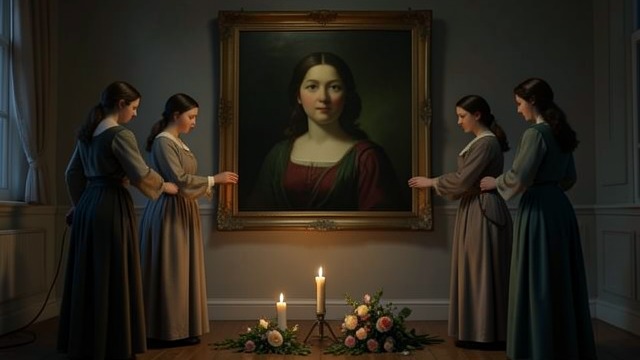
A Familiar Presence
The portrait softens
As the women grow used to the painting, they decide its expression seems gentler. It appears to accept them, becoming a comforting presence in the house.
A private shrine
The friend places a candle and wildflowers beneath it. Their playful talk of prayer turns the painting into a household saint for two women facing an uncertain future.
A Dream at the Bedside
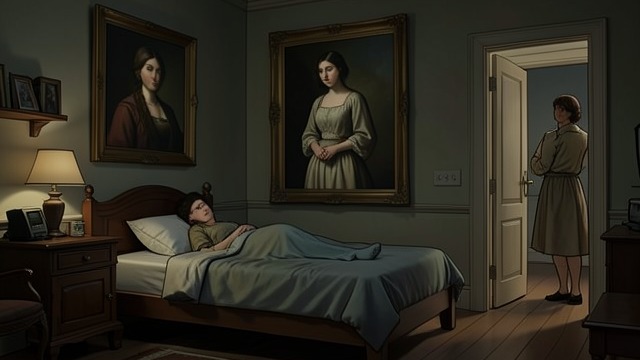
A Dream at the Bedside
The portrait enters sleep
The friend says she dreamed that the painted woman stood over her bed. The narrator replies that she saw her too, blurring dream, shared imagination, and possible vision.
Companionship made visible
The exchange gives shape to the intimacy the women have built in the house. The portrait seems to witness their days when neither can find language for what is happening.
A Last Gesture

A Last Gesture
The spell breaks
As they vacate the house, the friend gives the portrait the finger and jokes about its supposed watchfulness. Their irreverence releases the intensity they had invested in the image.
The owners’ account
The homeowner later explains that the painting came from an estate auction and never depicted his wife. The imagined personal history dissolves into an object’s ordinary provenance.
The Inspector’s Question
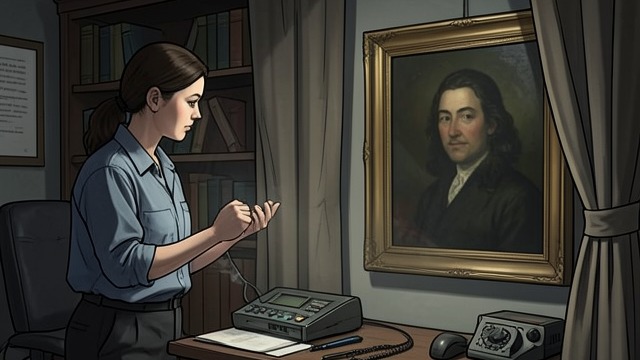
The Inspector’s Question
A painting survives the accident
When a water-damage inspector sees the portrait, he asks the narrator whether it is her. The question repeats the awkward social habit of treating an image as a person’s present identity.
Memory remains unsettled
The narrator remembers the painting as a temporary witness to the women’s stay. Its false intimacy does not make the experience false; it shows how people use images to hold what cannot last.
On the first afternoon at the rental house
After the women settle into the rental house
During the rental-house stay
When the women leave the rental house
After the bathtub accident
