
The Bulgarian-Born Patient’s Marriage
What Are You Going ThroughThis subplot follows a terminally ill woman’s unsettling reading of her husband’s relief and the care they continue to exchange.
increasing Bearing strength in each event
 decreasing
Bearing strength in each eventdecreasingA Marriage in Conflict

A Marriage in Conflict
A long shared life
A Bulgarian-born woman tells a cancer support group that she and her husband once loved each other. Over time, their home became a battleground and they began living separately within the marriage.
Vows and habit
They remain together partly because they are Catholic and believe divorce is not an option. Their commitment persists even as intimacy and daily conversation diminish.
A Diagnosis Changes the Room
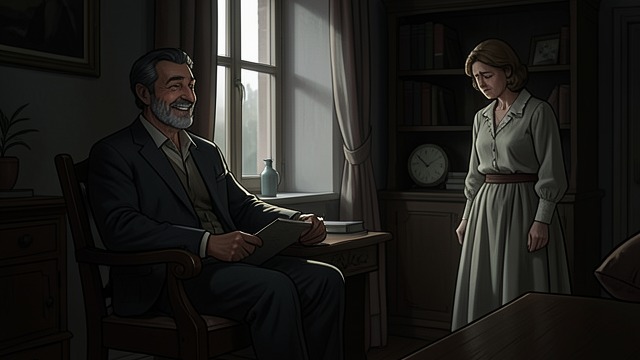
A Diagnosis Changes the Room
Irritation becomes brightness
At first the husband dismisses his wife’s symptoms as hypochondria. After the diagnosis of metastatic pancreatic cancer, she perceives him becoming unusually cheerful around her.
A troubling contrast
She compares his face with the sadness of other visitors and sees no fear or grief in him. His apparent relief unsettles her because she knows their history better than anyone.
A Smile at the Window
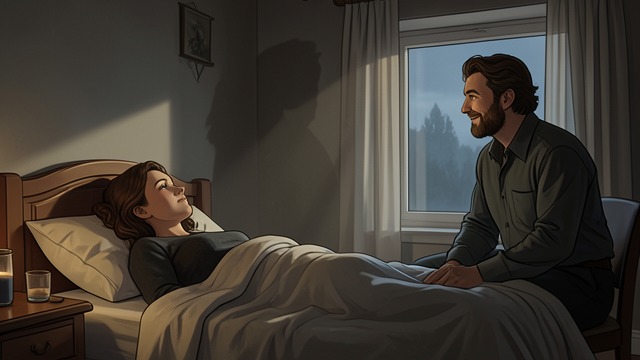
A Smile at the Window
A watched moment
The woman secretly observes her husband sitting by a hospital window while he believes she is asleep. He appears content, studies the ceiling, and finally smiles.
An interpretation takes shape
She hears his heart singing freedom. Her account makes the group confront the possibility that a caregiver can provide practical help while feeling relief at an ending.
The Group’s Reassurance
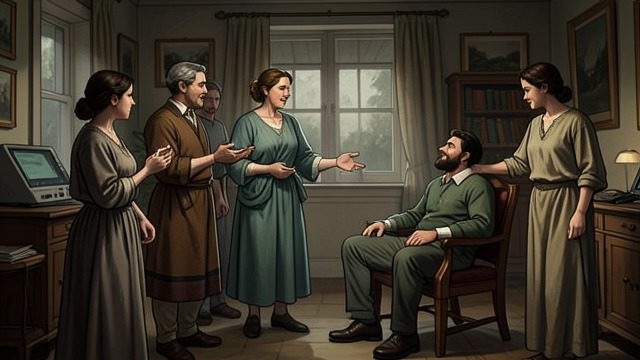
The Group’s Reassurance
A conventional explanation
Other patients tell the woman that her husband is putting on a brave face to protect her. They cite his attentive care as evidence that he loves her.
The truth dismissed
She does not argue, but knows what she saw. Her silence becomes a response to a group that cannot bear the interpretation she has offered.
A Story Remembered Too Late
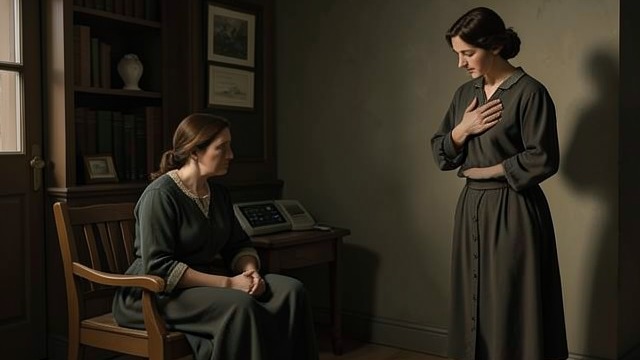
A Story Remembered Too Late
Shame after silence
The friend tells the narrator that she did not know how to comfort the woman and later felt ashamed. The group’s response repeated the denial she had encountered around her own family life.
The unanswered question
The narrator wonders whether anyone truly saw the woman before she died. The story remains unresolved, asking whether honesty without easy comfort can still be a form of care.
Before the woman’s cancer diagnosis
After metastatic pancreatic cancer is confirmed
During a hospital visit after the diagnosis
At the next cancer support group discussion
After the friend recounts the support-group story
