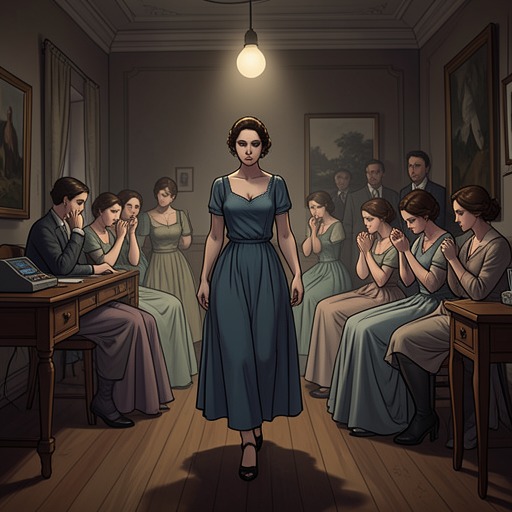
Dora Carrington’s Suicide
What Are You Going ThroughDora Carrington’s Suicide followed the death of Lytton Strachey, the man she had loved and served for seventeen years. In the account, her death is inseparable from that devoted, unconventional attachment, but its blunt physical details resist any transformation into a beautiful or consoling romantic ending.
Background and Relationship
Carrington was a painter, but the account observes that she is remembered less for her art than for her hopeless love of Strachey: how it shaped her life and, ultimately, caused her death. She knew he was gay, and he was thirteen years older. Their attachment was scandalous from the start, yet it endured for seventeen years.
Carrington married another man, but marriage did not separate her from Strachey. All three lived together; the husband, the account notes, was himself the object of Strachey’s desire. After agreeing to marry, Carrington wrote Strachey a poignant letter lamenting the fate that made it impossible for them to become husband and wife. The three then went to Venice together on honeymoon. These arrangements make the relationship’s terms visible without simplifying it into a conventional romance: Carrington’s devotion persisted within a household and marriage that could not give it the form she mourned.
Strachey’s Death and Carrington’s Final Days
Strachey died of stomach cancer. Carrington survived him by less than two months before shooting herself in the stomach. She was just short of thirty-nine, and this was not her first suicide attempt. The closeness in time between his death and hers gives the account its stark sequence: the loss of the person around whom she had organized so much of her life, followed soon after by her own death.
The day before, Carrington had told the Woolfs, “There is nothing left for me to do,” and, “I did everything for Lytton.” The statements frame her sense of purpose through her devotion to Strachey. They also lend the episode a painful finality, while the account’s mention of an earlier attempt makes clear that her death was not the first crisis of its kind.
The Borrowed Gun and the Meaning of the Account
Carrington had no gun at home, so she went next door and borrowed one, “like a cup of sugar.” It was a rabbit gun, the wrong weapon for the purpose: the shooting led to a long, slow, painful dying. The ordinary ease of borrowing the gun sits in terrible contrast with the suffering that followed. A neighborly gesture becomes part of the account’s unsparing record of how her death occurred.
Virginia Woolf’s parting impression of Carrington had been “Like some small animal left.” Recalled alongside the rabbit gun, the image deepens the account’s emphasis on vulnerability, but does not turn the death into a graceful emblem. Instead, the remembered phrases, the borrowed weapon, and the prolonged physical consequence keep the story grounded in the particulars of Carrington’s final act and in the unreciprocated or impossible shape of the love that preceded it.