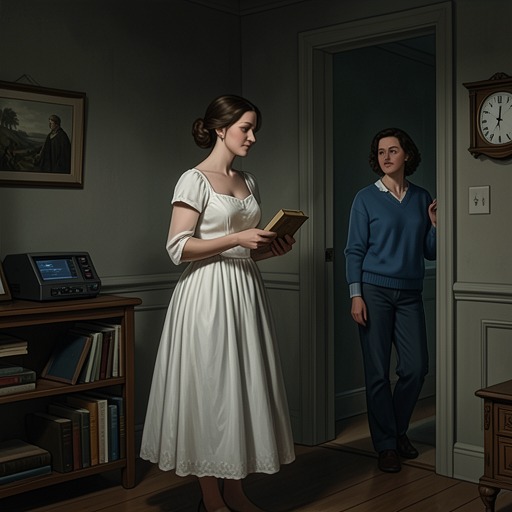
Forgetting the End-of-Life Medication and Returning to Retrieve It
What Are You Going ThroughForgetting the End-of-Life Medication and Returning to Retrieve It is the episode in which the friend, preparing with the narrator to end her life, discovers that she left the lethal pills behind and insists on going back for them at once. A packing mistake becomes a crisis of certainty: she needs to know that the medication still exists and is safe, while the narrator is forced to confront how little either of them can know about what the mistake means.
Background and Stakes
The incident occurs after the friend has decided that she does not want to endure the pain and humiliation she fears may accompany her terminal illness. She has already described her treatment as a terrible ordeal and regretted allowing herself to be sustained by false hope. Her idea of a good death is controlled and composed: free of agony, or at least not marked by convulsions, and retaining some dignity. She has also insisted that she will not die in mortifying anguish. The pills are therefore not simply another item to pack. They are the means by which she believes she can retain some control over the timing and manner of her death.
The narrator and her friend have arrived at a rented house to make preparations. The narrator has unpacked, written a grocery list, and briefly persuaded herself that she is calm. That composure lasts only until she sees her friend slumped at the kitchen table in tears. The narrator initially fears that her friend has changed her mind, or that she has taken the drug impulsively. Instead, the friend explains that she forgot the pills while packing. Her distress turns on the discovery that the object central to her plan is not where she expected it to be.
The Return Journey
The friend had hidden the pills in the back of a drawer in her bedroom. She remembers that she failed to take them out before leaving, and immediately says that they must go back. The narrator proposes returning the next morning, but the friend refuses to wait. She needs to confirm that the pills have not been lost, moved, stolen, or somehow imagined. Her insistence escalates as she tries to explain the fear: she must know they are still there, and she must know now.
The urgency changes the meaning of the trip. From the narrator’s perspective, the friend’s tears initially suggest a reversal of her decision; the forgotten medication reveals a narrower but no less intense alarm. The narrator is relieved that the pills have not been taken, yet that relief does not resolve the scene. The friend’s clutching at her hair and repeated demand to leave show how quickly a practical omission has become a threat to the order she was trying to secure. The return is not a new decision about whether to die. It is an attempt to restore certainty about the plan she has already made.
Later, after the pills are safe in a new hiding place in the friend’s room, the two eat at an exquisite fish restaurant for the second night in a row. The narrator cautiously suggests that leaving the pills behind might mean her friend is conflicted: she had remembered her many other medications, but not these. The friend angrily rejects the interpretation and says that the narrator has no right to make it. She identifies the cause as chemo brain rather than ambivalence. The exchange leaves a painful gap between the friend’s confidence in her explanation and the narrator’s private doubt.
Chemo Brain and the Unanswered Doubt
The friend describes chemo brain as memory lapses, difficulty sustaining attention, spacing out, and trouble processing information. She says these problems can continue after treatment ends, may worsen after treatment, and can last for years or even for the rest of a person’s life. Her explanation is grounded in ordinary errors that have made her question her own judgment: addressing a package to herself instead of its intended recipient, buying shoes and pants in the wrong sizes despite trying them on, and repeatedly losing her keys, wallet, and phone. She has also had to proofread her writing many times because each pass can reveal another mistake; even calculating a tip has become vulnerable to confusion.
Those examples make the forgotten pills credible as a symptom rather than proof of a hidden change of heart. But they also deepen the narrator’s dilemma. She wants to ask how her friend can trust a momentous decision if chemo brain might be affecting her judgment. She does not ask. The episode therefore supplies no definitive answer about whether the friend’s lapse reflects only cognitive dysfunction, or whether the narrator’s interpretation is fair. What it does establish is that the friend experiences the question as an unacceptable challenge, while the narrator continues to carry it silently.
Retelling and Narrative Significance
The narrator later recounts the return trip to her former partner while explaining the mixture of fear and absurdity that has accompanied her friend’s plans. She calls the forgotten pills one of several slapstick moments, but the comedy is inseparable from the stakes: the errand was triggered by an impending death, and the friend’s panic arose from losing track of the means she had chosen. The same tension appears in a separate morning scare, when the narrator sees her friend’s bedroom door closed and fears that she has taken the pills, only to discover that wind blew the door shut through an open window. The mistaken door and the forgotten medication are distinct incidents, but both show how ordinary contingencies can overwhelm the narrator with the possibility that death has already occurred.
The episode also gives the narrator a concrete story to tell when she cannot explain what she is going through. Its outwardly comic shape does not make the underlying question disappear. The friend insists that the omission has a medical explanation and that her decision remains hers; the narrator recognizes the possibility of cognitive error but cannot turn that recognition into a question without risking a breach of trust. The return secures the pills in a new hiding place, yet it cannot secure certainty about the mind that chose them. That unresolved distinction—between protecting a person’s agency and wondering whether illness has compromised it—is the lasting consequence of the errand.