Infinitely rich, infinitely beautiful
What Are You Going Through“Infinitely rich, infinitely beautiful” is a recurring expression for the beauty of a world that continues beyond an individual life. In the friend’s account, that beauty offers consolation but also sharpens the prospect of loss; in the narrator’s recollection of their evenings together, it becomes a momentary reprieve from fear and uncertainty.
The World as Consolation and Loss
The friend says she cannot find comfort in imagining that everything is horrible and the future wholly bleak. She cannot bear instead to think that she will be gone while the world goes on, “infinitely rich, infinitely beautiful.” The phrase holds two truths together: the world’s loveliness can console someone facing death, but attachment to that loveliness makes leaving it harder to accept. Its beauty does not settle the friend’s conflict or make her wish to die; it gives the loss a scale beyond the private experience of illness.
A Refrain in Shared Evenings
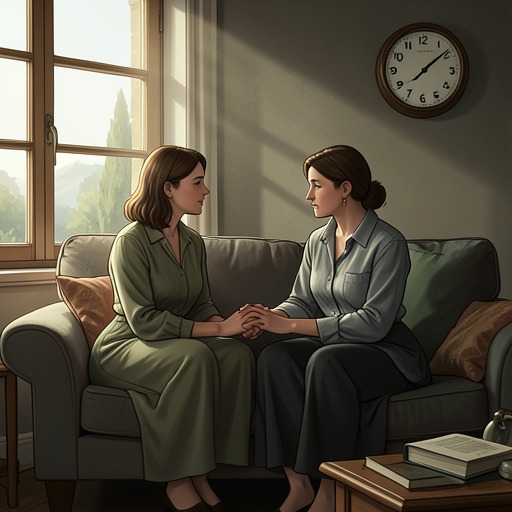
The expression returns in the narrator’s account of evenings when the changing sky made both friends still and dreamy. The scene is associated with the “Golden hour”: angled sunlight moves across the lawn and over their elevated feet, and the narrator feels briefly close to believing that everything is as it should be. The words “infinitely rich, infinitely beautiful” arise within that quiet, shared attention to the world. They are not presented as proof that the friends’ circumstances have become all right, but as a perception that can temporarily make such belief possible.
Beauty Beside the Ideal of a Good Death
The phrase’s consoling force sits beside the friend’s fear of dying in panic and her wish for a death marked by dignity, peace, and freedom from pain. She insists that she will not accept a death characterized by mortifying anguish. Yet the practical course of her end-of-life plans brings fear and disorder rather than the composed farewell she had hoped for. When she says that the situation has become a nightmare and a farce, the ideal of peace remains painfully distinct from what is happening.
Meaning and Limits
The expression does not resolve the tension between wanting an end to suffering and wanting to remain among the world’s beauties. Instead, its recurrence makes that tension visible: the same world that offers the narrator and her friend a brief, shared reprieve is also what the friend cannot bear to leave. The phrase therefore works as consolation without becoming reassurance. It can make a moment feel whole, but it cannot promise that everything will be all right.