Legal restrictions on assisted dying
What Are You Going ThroughLegal restrictions on assisted dying shape the friend’s end-of-life plan into a secretive undertaking rather than a formally supported medical choice. The account shows how legal risk reaches beyond access to medication: it governs what the narrator can know, how others prepare, and what they are advised to say afterward. Against this constraint stands the friend’s wish to retain composure and dignity, and the narrator’s insistence that dying people should be able to choose the end of their lives.
Secrecy and Precautions
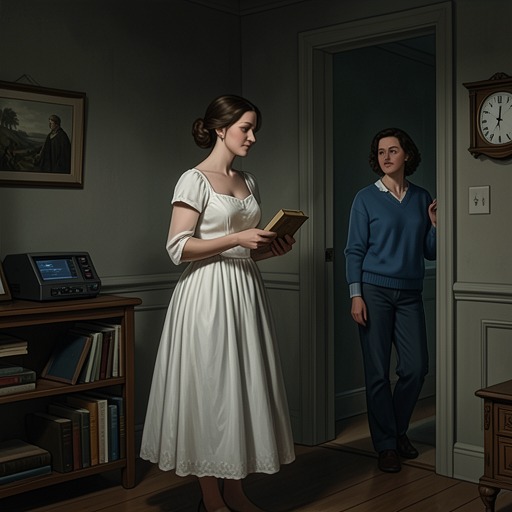
The friend does not intend to tell the narrator exactly when she will take Euthanasia medication. Instead, she has described a signal: the narrator will know something has happened when the friend’s bedroom door is closed. The door matters because the friend ordinarily sleeps with it ajar, a habit that began when she had Cats and that also helps her avoid feeling confined. A familiar domestic detail is thus turned into a private code, making the plan legible without direct notice.
The narrator describes how this arrangement affected her when she found the door closed early one morning while it was still dark. She panicked, became physically overwhelmed, and broke down at the kitchen table. The moment reveals a consequence of secrecy distinct from the legal exposure: even before anything has happened, the narrator is left to interpret an ambiguous sign and bear the uncertainty alone. The episode is later characterized as a kind of run-through, but it does not establish that the friend has taken the medication or that the plan has been carried out.
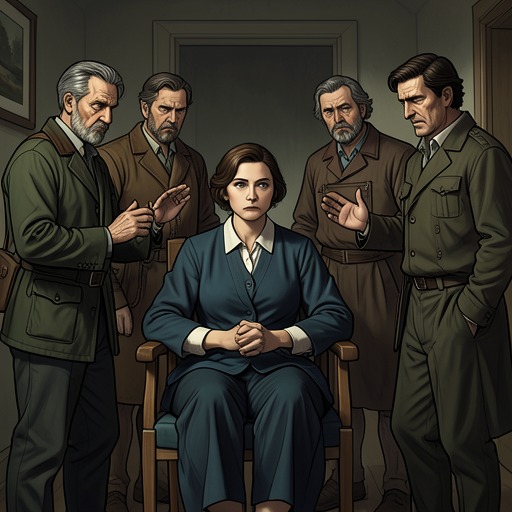
The precautions discussed with the narrator make the legal danger explicit. The friend is expected to leave The note, already composed and placed in a nightstand drawer, with only its date left to add. The narrator is also told to ensure there is no evidence that could suggest she participated or assisted, to keep the plan known only to the three people already aware of it, and to follow a prepared account if questioned. She is advised to call the police before contacting the person giving her these instructions. The planned death therefore entails not only private preparation but also an anticipated encounter with investigation and suspicion.
The Right to Choose and the Law
The narrator objects to having to manage the situation as if the people involved were criminals. Her protest centers on the principle that people who are dying should have the right to end their own lives. The exchange makes the restrictions feel less like an abstract legal rule than a force organizing the final stages of the friend’s life: access is clandestine, those close to her must take precautions, and the possibility of police questioning shapes their conduct in advance.
In response, the narrator’s former partner predicts that the situation may change when the number of elderly and terminally ill people places severe pressure on the health-care system. In that imagined future, a doctor would provide a prescription, it would be inexpensive and easy to obtain, and the process would be legal, eliminating the need to seek medication through the dark web. This is a prediction, not a description of a law already in force. Its bleak logic is that legal access might arrive not simply through recognition of personal autonomy, but when the existing system can no longer bear the cost of excluding it.
Dignity, Fear, and the Unavailable Ideal
The friend’s concern is not limited to legal access. She fears losing her composure and becoming overwhelmed by distress, and she wants to avoid what she understands as a degrading and painful end. Her idea of a good death is defined by freedom from severe pain, bodily control, and a measure of dignity. She doubts that such an outcome is common, and wonders why it should be so difficult to attain.
That ideal sharpens the contrast between the friend’s intended calm and the reality surrounding her plan. She wants peace, yet the secrecy, the narrator’s alarm, and the precautions against investigation turn the process into something she experiences as a nightmare and a humiliating farce. The narrative does not resolve that contradiction by presenting a completed death or a settled legal outcome. Instead, it shows how restrictions can undermine the very composure the friend hopes to preserve, while leaving the narrator to confront both the moral question of choice and the immediate burden of keeping the plan concealed.