Terminal cancer
What Are You Going ThroughTerminal cancer in What Are You Going Through is not an abstract prognosis but an illness that forces the friend and the narrator to confront the limits of treatment, the costs of hope, and the difficulty of imagining a dignified death. The tumors spread despite treatment, and the friend’s fear of pain and loss of control becomes inseparable from the question of how much time remains. The account resists both a heroic story of cancer and a serene ideal of dying: illness is painful, frightening, and often far from orderly.
Diagnosis, Treatment, and a Shortened Horizon
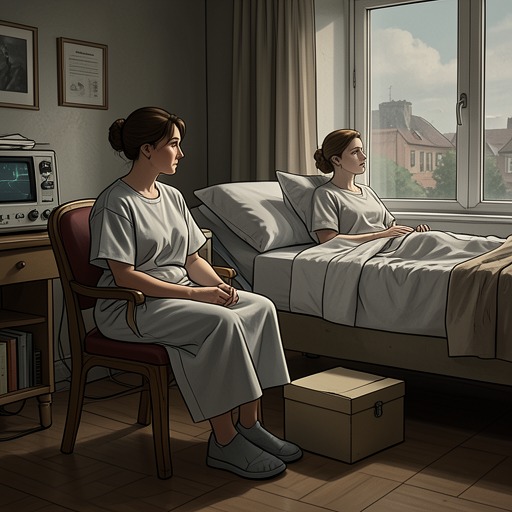
When the narrator visits again, the friend is back in the Hospital. Treatment has failed, the tumors have spread, and the change in her condition makes the remaining time newly concrete. She estimates that she may have months, perhaps a year at most, and probably less. The prognosis turns time from an assumed background into a limit around which decisions must be made.
The friend’s response includes anger, but she does not direct it at God or her medical team. She does not believe in God, and she says that she adores her oncologist and that the doctors and other medical staff did everything they could and treated her kindly. Instead, she is angry with herself for having accepted treatment. She recalls its vomiting, diarrhea, and fatigue as terrible suffering, and now judges that the hope attached to treatment may have prolonged distress without changing the outcome. Her regret is not a general rejection of care; it arises from the particular experience of undergoing treatment that ultimately failed.
That regret is sharpened by the friend’s sense that she had recognized the risk beforehand and should have trusted her own instinct. She describes her decision as surrendering to false hope and says she cannot forgive herself. The narrator’s account gives that self-reproach a bleak temporal edge: the word never sounds as if it could still refer to a long future, though the friend expects little time. Terminal illness thus alters not only the future she can imagine but also how she judges choices already made.
Pain, the Body, and the Ideal of a Good Death
The friend is explicit that she is not a stoic. Pain, especially excruciating pain, terrifies her because she believes agony would deprive her of the ability to think clearly or remain composed. Her fear is not simply of dying; it is of being reduced by pain to a state in which conscious agency and self-possession are no longer possible. She also worries that her strong heart may keep her body struggling for longer, extending suffering rather than protecting her from it. This is her fear, not a prediction that the narrative confirms.
Her idea of a good death is precise in its ordinary physical details: freedom from pain, or at least not convulsing in agony; some measure of poise and dignity; being clean and dry. She immediately questions how often such a death actually occurs, making the ideal feel less like a promise than a standard that reality may deny. Against this imagined composure, she describes trying not to panic and not wanting to die in rage, self-pity, or terror. Her efforts to keep her head do not make her fearless; they show how much work the prospect of dying demands from her.
The contrast between that hoped-for order and the body’s possible distress gives the illness its central tension. The friend does not claim that a good death can be guaranteed. Rather, she asks why freedom from extreme suffering and a little dignity should be too much to ask, while recognizing how uncertain those conditions are. The ideal both expresses her wishes and exposes the gap between a controlled image of dying and the unpredictable course of disease.
Choice, Care, and Uncertain Timing
The friend says she has researched what may happen if the illness runs its course. She doubts that palliative care can prevent all the decline she fears and does not want to linger in hospice as she becomes increasingly helpless and unable to care for herself. She frames her wish to determine the timing of her death as a way of resisting cancer, not as a claim that the disease can be cured. The distinction matters: her decision emerges from a terminal prognosis, fear of pain, and a desire to retain some control over what remains possible.
She has acquired Euthanasia medication and asks for someone who understands her decision and will remain with her, rather than interfere with it. She has considered asking another trusted friend, a doctor, but recognizes that the doctor cannot simply abandon her medical practice. The practical demands of employment and availability become part of the ethics of care: accompaniment depends not only on affection or agreement but also on whether another person can be present.
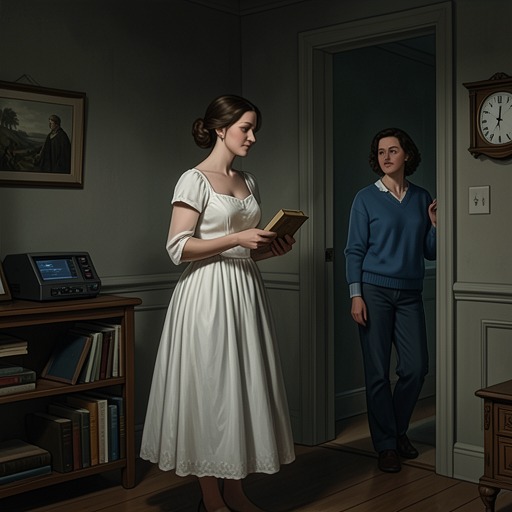
The arrangement makes the narrator’s daily experience precarious. The friend has said that she will not disclose exactly when she takes the medication and that the narrator will know because her bedroom door, normally left ajar, will be closed. One morning, the narrator wakes while it is still dark, sees the closed door, panics, vomits into the kitchen sink, and struggles to drink water. The friend then walks into the kitchen: an open window, unusual because she is often cold, has allowed the wind to shut the door. The incident does not change the prognosis, but it shows how the agreed sign turns an ordinary household sound into a possible announcement of death, and how uncertainty affects the person providing companionship as well as the person who is ill.
The Illness Beyond the Hero Story
The friend objects to the language commonly used around cancer, in which survivors become heroes, children become superheroes, and doctors are praised for heroic measures. She rejects the suggestion that cancer should be treated as a test of character or an opportunity for spiritual growth. For her, such formulas make other people’s expectations louder while leaving little room for the actual experience of treatment, fear, and approaching death. She has left social media partly to escape this noise, including clichés circulated within cancer-support communities.
Her preference for the word fatal over terminal further reveals how language can shape the experience without easing it. Terminal calls up bus stations, exhaust fumes, and men preying on runaways; fatal, by contrast, feels more direct to her. Neither word alters the disease, but her choice makes visible the associations and euphemisms carried by medical language. The narrative does not replace those words with an easy consolation. It stays with the friend’s attempt to describe what she fears and what she wants.
Later, the friend says that she wanted peace, control, and as little trouble for others as possible, but that events have become a nightmare and a humiliating farce. Her crying overwhelms her ability to speak, while the narrator understands the wishes beneath the broken words: strength, order, and a death on her own terms. That scene does not resolve the conflict between autonomy and bodily vulnerability. It makes the conflict felt. Terminal cancer in the book is therefore both a medical condition and a pressure on relationships: it narrows the future, strains the language available for suffering, and tests whether care can remain attentive when neither reassurance nor control can make the situation orderly.