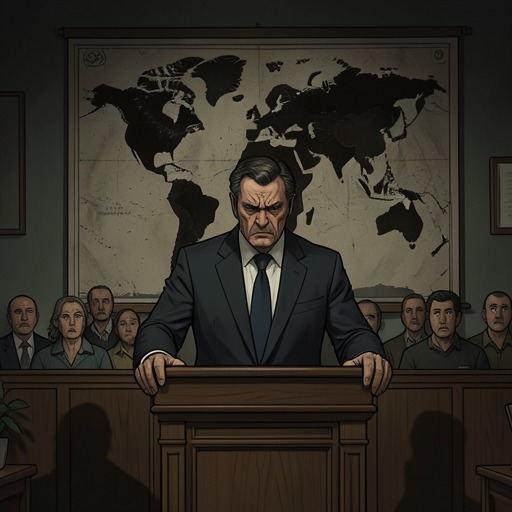
The 2017 apocalyptic lecture
What Are You Going ThroughThe 2017 apocalyptic lecture is a public address about the prospect of civilizational collapse, but its decisive turn is from prediction to obligation: if catastrophe can no longer be forestalled, the speaker argues, people must reckon with what they owe one another, to existing sufferers, and to the damaged world. The narrator hears it after spending the afternoon at the hospital with a suffering friend, and the speech’s bleak certainty meets an audience that has come prepared to discuss its ideas but is not given that chance.
Background and Setting
The speaker’s address largely follows a long magazine article that the narrator had read when it appeared. The narrator believes the article was familiar not only to the narrator’s own circle and the hospitalized friend, but to much of the audience. Some listeners, the narrator suspects, may therefore have come seeking questions and discussion of an argument they already knew. The speaker has chosen otherwise: he will take no questions, a decision the audience learns only after he has finished speaking.
The narrator is unusually distracted. Talks are difficult to follow even when attention is not strained, and this evening’s concentration has already been depleted by hours in the hospital and the effort of concealing dismay from the friend. This frame gives the lecture two concurrent pressures: the speaker addresses threats to human and planetary life on a vast scale, while the narrator is carrying the immediate knowledge of one person’s suffering. The account does not make the two losses equivalent; it places the public argument within the private burden through which the narrator hears it.
The Argument for Catastrophe
The speaker presents environmental ruin and political danger not as distant possibilities that confidence or ingenuity can easily overcome, but as the consequence of failures already accumulated. He declares that humanity has neither the collective will nor the social capacity to act in time. Society, he says, has become too fragmented and dysfunctional to repair its calamitous mistakes, while public attention continues to slip away even as extreme weather recurs and a million animal species face extinction.
Nuclear weapons sharpen the argument. Humanity has allowed weapons capable of killing everyone many times over to be made and to fall into the hands of people without empathy or conscience. The speaker connects the failure to control the spread of weapons of mass destruction with the failure to keep dangerous leaders from power, making apocalyptic war increasingly likely. He describes humanity as its own worst enemy and treats the possibility of self-destruction as a danger produced by human choices, not simply an external fate.
The lecture also attacks what the speaker sees as a misplaced response to crisis. He criticizes forms of personal therapy and pseudo-religious practice that recommend detachment, acceptance, and calm before a world in peril. Mindfulness and self-care, in his account, have become distractions from the collective emergency: private equanimity may help someone face danger, but cannot by itself prevent the danger. He insists that immense suffering lies ahead and that it cannot be escaped. His remedy is not individual serenity, but a collective and consuming attention to what is coming.
Children, Responsibility, and Atonement
The speech’s most disruptive extension is its question about whether people should continue having children. This subject had not appeared in the magazine article, and the narrator marks it as new. The speaker clarifies that he is not telling every woman expecting a child to have an abortion. Rather, he asks whether family planning should be reconsidered when children may spend their lives in a bleak, terrifying, or even unlivable world. To proceed as if that possibility barely exists, he suggests, may be selfish, immoral, and cruel.
He places that question beside the needs of people already alive. Children in danger need protection, he argues, and millions suffering through humanitarian crises are being forgotten by others who could attend to them. The emphasis shifts from an abstract debate over future generations to the claims of present sufferers: the world already contains people whose suffering demands notice and care.
The speaker then offers a last, limited possibility of moral repair. A civilization facing its end, he says, can learn to ask forgiveness and make some small atonement for the harm it has inflicted on human beings, other creatures, and the earth. It can try to love and forgive, and learn to say goodbye. This conclusion does not promise that repentance will avert collapse; its significance is that it gives ethical weight to action even when rescue appears unlikely.
Reception and Narrative Significance
The audience’s unease becomes visible when the speaker introduces the question of children: a murmur passes through the room, listeners shift in their seats, heads shake, and a woman laughs nervously from behind the narrator. These reactions interrupt the speech’s otherwise smooth surface. They register discomfort rather than settle the issue, and the narrator does not claim to know what individual listeners think.
At the end, the speaker takes his iPad from the lectern and walks quickly backstage. The rhythm of the applause suggests confusion: listeners cannot tell whether he will return. The woman who introduced him comes back instead, thanks the audience, and wishes them good night. The refusal of questions leaves the argument without the exchange some attendees may have sought; applause becomes the only immediate public response, and even that sounds uncertain.
The audience then moves out of the auditorium and into the crisp night air. The narrator notes the contrast between that seasonable temperature and a year that had so far been one of the warmest on record. The detail closes the lecture by returning its large claims to the weather outside: the speech has named environmental crisis, but the listeners leave into an ordinary evening whose conditions carry a quiet reminder of the warming it describes. In the book’s account, the event joins a personal scene of illness to a public argument about extinction, attention, and the responsibilities that remain when hope of prevention is faltering.