The beauty of the world as consolation
What Are You Going ThroughThe beauty of the world as consolation is a recurring idea in the narrator’s account of her friend’s approaching death: the world’s continuing loveliness offers comfort, but can also sharpen the pain of leaving it. Its force lies in that contradiction. Beauty does not undo illness or promise a peaceful ending; it makes life feel precious at precisely the point when its loss becomes unavoidable.
Beauty Against the Wish for an Easier End
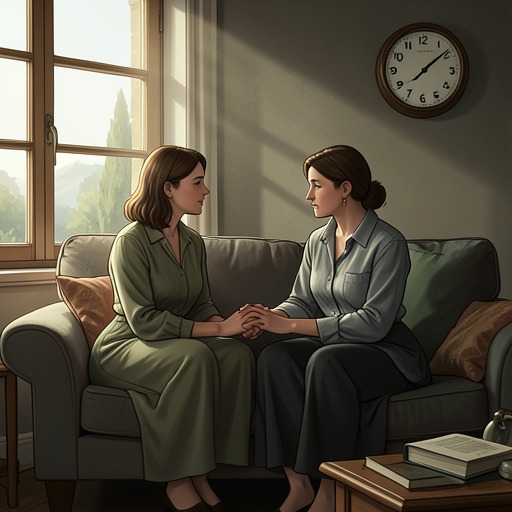
The friend observes that it might seem easier to leave life if she could persuade herself that everything was terrible and the future held nothing worth anticipating. She cannot make that case to herself. The thought that she will be gone while the world continues, rich and beautiful, is not a comfort that cancels grief. Instead, the world’s persistence gives her a reason to mourn what she must leave behind. Taking that beauty away, she says, would also take away consolation. Her reflection therefore resists the easy idea that despair about the future makes dying simpler: attachment to the world remains, even when death is chosen as an end to suffering.
The friend’s wish for peace makes this tension especially clear. She hopes to meet death without losing her composure or dignity, and imagines a good death as one free from severe pain and bodily distress. Her insistence on this ideal is not an abstract preference; she is frightened of dying in a state that feels uncontrolled and degrading. The narrator’s account thus places the beauty of the world beside another form of consolation the friend longs for: the hope that death itself might be peaceful. Neither is guaranteed. One belongs to the world she loves; the other is a hoped-for manner of leaving it.
A Recalled Image of Reluctance
The narrator connects her friend’s thought to a scene she remembers from an old film about the Brontë family. In her recollection, a dying sister says she has been afraid of life and therefore does not greatly fear departing from it. Yet, on a beautiful day, she admits that she would not mind living a little longer. The scene gives form to the same contradiction in the friend’s words: a person can be prepared for death and still feel the pull of a beautiful world.
The narrator is careful about the limits of this recollection. She had watched only that scene while channel surfing, and acknowledges that, because it was long ago, she may remember it incorrectly. Even so, this is the version that returns to her repeatedly. The uncertainty matters: the scene is not offered as a reliable record of the film so much as a remembered image through which the narrator understands the friend’s ambivalence. Its recurrence makes a brief, possibly imperfect memory into a witness to the persistence of attachment.
The Shared Evening and Its Reversal
That attachment also appears in the evenings the two women share. At golden hour, as the sky changes, they sometimes become still and dreamy. The sunlight moves across the lawn and over their raised feet; the narrator describes nearly believing, for a moment, that everything is as it should be. The moon and stars make the world’s continuity visible: they are present with or without any one person. Against the certainty of loss, this scale can console, but it can also remind the women of the life that will continue without the friend.
In these evenings, beauty is not a permanent answer but a temporary experience of relief. The narrator’s near-belief that all is well is immediately bounded by the circumstances the book has established. The friend’s death remains in view, and the serenity of the sky cannot settle what will happen. The repeated perception of an immeasurably beautiful world nevertheless gives the women a shared moment outside the immediate demand of fear. Its value is real even though it cannot change the outcome.
Beauty Under the Pressure of Events
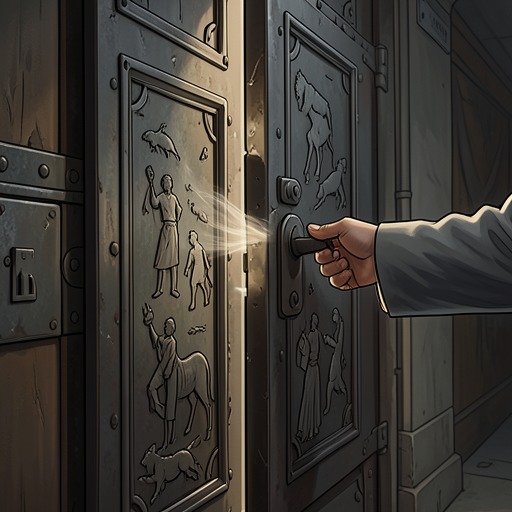
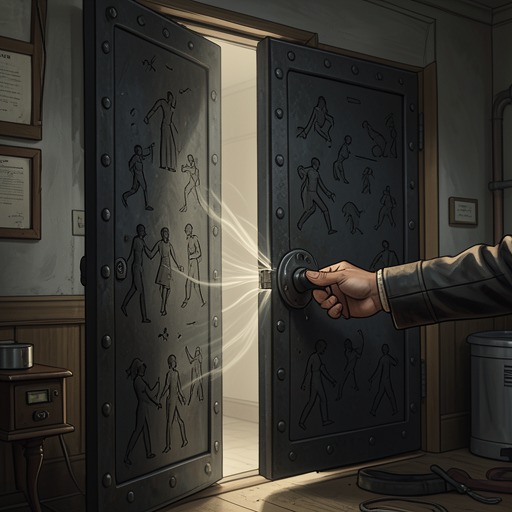
The contrast between this quiet consolation and the crisis of the friend’s planned death gives the motif its painful edge. The friend has told the narrator that she will not know the exact moment the pills are taken; a closed bedroom door is meant to signal that the act has occurred. One dark morning, the narrator wakes earlier than usual and sees that the door is closed. She panics, unable to drink the water she has poured, and breaks down at the kitchen table. The episode shows how a plan intended to preserve the friend’s control leaves the narrator exposed to dread and uncertainty. In that circumstance, the beautiful world is no simple refuge: the friend’s continuing attachment to it and the narrator’s fear of losing her occupy the same story.
Later, the friend says that events have become a nightmare and a humiliating farce rather than the peaceful death she wanted. The reversal exposes the distance between the ideal and the lived process without erasing the earlier moments of beauty. Near the end of the account, the narrator reflects that what happened had seemed unexpected yet, in retrospect, inevitable, as love can feel. The beauty-of-the-world motif does not explain away that ending. It gives language to what makes the loss matter: the world remains beautiful, and the friend’s knowledge of that beauty is both a source of solace and a reason that departure hurts.