The inability to forgive
What Are You Going ThroughThe inability to forgive is the friend’s name for a family wound that survives conflicting memories, the passage of time, and the approach of death. The book traces it to a disputed incident involving her adolescent daughter and one of her boyfriends, then shows how that grievance persists even when the friend recognizes the possibility of forgiveness in principle. Her refusal of a final contact with her daughter gives the wound a consequential ending without resolving whose memory of the past is correct.
The Incident and Its Lasting Mark
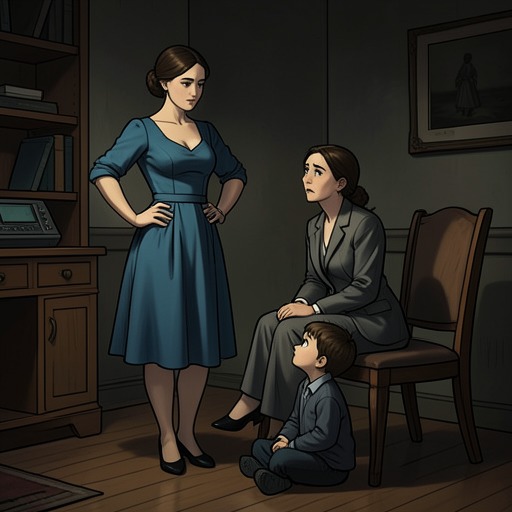
The friend recalls that, when her daughter was a teenager, the girl came between her and a man she was dating. In the friend’s account, her daughter pursued the boyfriend, who welcomed the attention. The friend ended the relationship and threatened to involve the police if necessary. She believed her daughter had not been deeply attached to the man and had acted to hurt and humiliate her mother. The episode is therefore remembered not simply as a romantic conflict but as an attack on the relationship between mother and child.
The friend identifies the incident as the point at which she understood how much her daughter hated her. That conclusion gives the memory its durable force: it becomes evidence, in the mother’s mind, of a more fundamental rejection. She describes the episode as a stain on her life and says its sorrow could return without warning, particularly in moments that were otherwise happy or peaceful. The past does not remain sealed in its original circumstances; it intrudes upon later moments and changes how the friend experiences them.
Two Accounts of the Past
The daughter’s recollection differs sharply. She considers herself a child at the time and assigns responsibility to the adult boyfriend, whom she regarded as inappropriate. In her account, her mother had been too infatuated with him to recognize the problem and was responsible for bringing him into their lives. These versions distribute blame differently: the friend remembers a deliberate injury by her daughter, while the daughter remembers a child caught in a situation created by adults.
The daughter’s account also shifts over time. Much later, she says that her mother overreacted, reasoning that an event of the importance her mother claimed would have remained in her own memory. Yet she cannot recall which of her mother’s boyfriends was involved. Later still, she says her mother had remembered the episode incorrectly and that nothing happened between her and the man. The book preserves these changes without establishing which account is definitive. The discrepancy itself becomes part of the conflict: the mother’s lasting certainty meets the daughter’s uncertain, altered, or rejecting recollection.
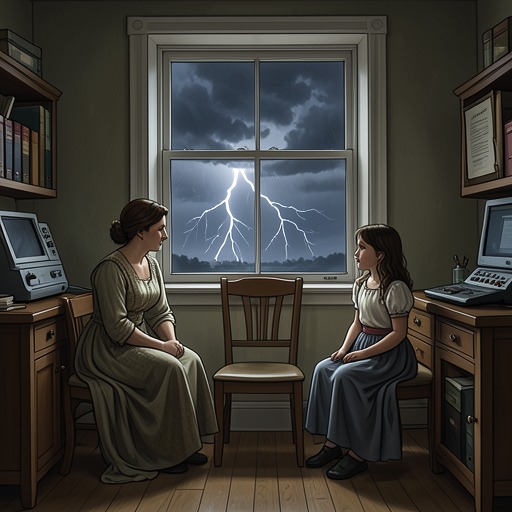
Their conversations do not bring them closer to a shared understanding. The friend says they got nowhere, and the daughter’s revisions do not release her mother from the injury she remembers. The account offers no independent resolution of the disputed facts. Instead, it shows how a grievance can persist when the people involved cannot agree on what happened, what it meant, or who bears responsibility.
Forgiveness Under the Shadow of Death
The friend distinguishes the general duty to forgive from the actual capacity to do so. She believes forgiveness is what a person ought to offer, but says that some injuries remain unforgiven even when death is near. In her formulation, the failure to forgive becomes an open wound in its own right: the original event continues to hurt, and the inability to relinquish it adds another source of pain.
This unresolved grievance stands beside the friend’s fear of losing control as she dies. She wants to meet death with composure and without severe distress, and insists that she will not accept an ending dominated by anguish. Yet the friend’s hoped-for peaceful death is repeatedly frustrated by events she experiences as a nightmare or farce. The unresolved relationship with her daughter makes clear that inward peace cannot simply be secured by deciding how death should look. The friend can state what kind of ending she wants while remaining unable to settle the history she carries into it.
The timing intensifies the contrast. The friend knows she is dying, but that knowledge does not automatically produce reconciliation or make the past feel finished. Her account treats mortality as no guarantee that old injuries will soften. The idea that death should inspire forgiveness collides with a particular history that the friend cannot set aside; the book neither turns that refusal into a universal rule nor presents it as a problem death itself can solve.
Refusal and the Unfinished Relationship
Near the end, the friend does not want to reach out to her daughter one last time. She accepts that they will remain unreconciled. This is not a reunion, a change of heart, or proof that the original dispute has been settled. It is an acknowledgment that reconciliation will not occur, made while the possibility of a final approach is still present.
That refusal gives the concept its clearest consequence. Earlier, the friend’s memory resurfaces unexpectedly and spoils otherwise peaceful moments; at the end, the estrangement shapes a deliberate decision about whether to make contact. The book leaves the daughter’s perspective and the future of their relationship unresolved. What it establishes is narrower and more painful: the friend carries her grievance into the last stage of life and chooses not to seek a final conversation. The inability to forgive is thus both a recurring memory and a boundary that determines what remains undone.