Two Minutes Before Midnight
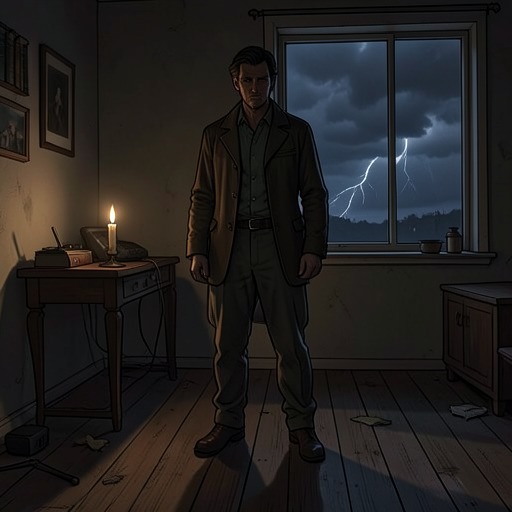
What Are You Going ThroughTwo Minutes Before Midnight names the book’s sense of living close to an ending: a phrase of apocalyptic warning that also resonates with the finite, uncertain time of a friend facing terminal cancer. It does not mark a literal countdown. Instead, it gathers the pressure of a threatened future and the intimate knowledge that there may be only months, perhaps less, into one image of time running out while daily life persists.
The Apocalyptic Clock
The phrase enters a book already shadowed by a lecture on civilizational collapse. Its speaker argues that humanity lacks the collective will to forestall catastrophe, and describes a world that will not endure because people have created dangers they cannot control. Against that account of a future narrowed by human decisions, Two Minutes Before Midnight sounds like a warning that the crisis is no longer remote. The phrase’s force depends on the gap between recognizing danger and acting in time.
The friend turns that public warning into an accusation about responsibility across generations. She imagines people suing their parents for bringing them into a world whose dangers had been scientifically documented and publicly warned about. Her question invokes the minutes-to-midnight image as evidence that the approaching crisis was visible: the warning had been given, but knowledge alone did not produce a different future. The apocalyptic scale therefore does not displace personal responsibility; it makes inheritance and choice harder to evade.
A Private Measure of Time
The phrase also meets the friend’s own terminal timetable. She estimates that she has months, perhaps a year at most, and fears the pain and loss of control that might accompany dying. Her wish is not simply for more time, but for a death free of agony and humiliation: what she calls a good death would be peaceful, composed, and as dignified as circumstances allow. The imagined nearness of catastrophe thus has an intimate counterpart in the anticipated limits of one body.
Her decision to possess euthanasia medication gives that pressure a practical consequence. She insists that she will not die in mortifying anguish, yet she keeps the exact timing of taking the pills from the narrator. A morning when her bedroom door is unexpectedly closed brings the narrator to panic: she vomits into the kitchen sink, cannot drink the water she pours, and breaks down at the table before discovering that wind blew the door shut through an open window. The episode turns a small accident into a sudden rehearsal of the ending both women know is approaching. The abstract question of how much time remains becomes a door, a glass of water, and the few moments before the friend appears.
The Work of the Remaining Time
The book places such anticipatory fear beside ordinary tasks rather than treating life as a single uninterrupted vigil. At the hospital, the friend’s daughter phones to say her plane has landed and asks whether she should pick anything up on the way. The narrator uses the interruption to steady herself with deep breathing; outside, snow catches the pink color of the setting sun. The practical question, the effort to regulate emotion, and the friend’s attention to the snow occupy the same brief interval. Time is at once measured by illness and inhabited through small encounters.
The narrator’s repeated grocery lists make the same contrast material. She writes a list after unpacking, sits at a desk in a wedge of sunlight, and takes comfort in believing herself calm; moments later, she finds her friend in tears at the kitchen table. Elsewhere, the narrator recalls how modest routines once helped her endure anxiety and depression: completing a small chore or eating a packed sandwich and piece of fruit could make another day possible. These acts do not answer the catastrophe or cure grief. They mark the scale at which a day can still be lived.
The friend remembers childhood as a time when one wish could fill the horizon. She recalls the concentrated anticipation of a birthday and the happiness of receiving exactly the desired gift, and contrasts that completeness with adult life, in which one can never want just one thing. In the frame of Two Minutes Before Midnight, this memory offers a different measure of time: not the countdown toward an ending, but a childhood moment in which expectation and fulfillment briefly seemed to contain everything. Its recollection makes the loss of that unfractured happiness part of the book’s account of growing older and facing mortality.
After the Ending
After the friend’s death, the narrator sits in a park with grocery bags containing eggs, bread, salmon, kale, and ice cream—food the friend will never eat. The provisions have passed from an ordinary errand into an inventory of absence, and the narrator recognizes that she will eat them herself, even as grief drives her to keep eating beyond fullness. The scene brings the approaching end back to daily life through things bought for a future that the friend did not reach.
The narrator’s attention shifts among the bags, a neighborhood volunteer sweeping litter, and a woman who comes each day to feed squirrels and birds. She fears that she has become the figure of a distressed older woman on a park bench, and, when the others move on, feels the story’s brief period of closeness beginning to pass. Two Minutes Before Midnight holds together these incompatible durations: the public future that seems perilously short, the private time remaining to the dying, and the ordinary present that continues after loss. Its central pressure is not that the end can be precisely timed, but that warnings, errands, memories, and love all take place before it.