Women’s stories and their devaluation
What Are You Going ThroughWomen’s stories are treated in the book as both a necessary way of attending to women’s lives and a category used to diminish them. The narrator follows how stories of women’s emotional turmoil, desire, aging, and constrained social positions are marked as trivial or specialized, while arguing that their apparent intimacy does not make them insignificant. Ingeborg Bachmann’s fiction and the history of Dora Carrington’s love for Lytton Strachey reveal the cost of reducing women’s lives to familiar plots; the narrator’s reflections on writing, meanwhile, expose how difficult it is to make experience legible without falsifying it.
A category that diminishes its subjects
In the narrator’s account, the classification of a book as women’s fiction can itself shape who is expected to read it and how seriously it is received. A group of men on a stage may be taken simply as a group of men, she observes, while a group of women is treated as a subject category: put women together in a book and it becomes women’s fiction, a genre shunned by almost all male readers and by many women too. The asymmetry makes women’s experience seem particular and limited, while leaving male experience unmarked and available to stand for the general human condition.
Bachmann’s reception gives that classification a concrete literary history. Although she had been renowned for poetry from an early age, her stories were dismissed by critics as Frauengeschichten, or stories about banal and insignificant matters, of possible interest only to other women. The label did not merely describe their subject matter; it pre-judged its importance and audience. The narrator notes that Bachmann first imagined her collection as a kind of homage to the women of her native Austria, a purpose at odds with the critical tendency to treat women-centered fiction as negligible.
The collection Three Paths to the Lake, published in 1972, contains five stories about five women. Each is suffering some form of emotional turmoil and feels trapped, isolated, anxious, and confused about her place in patriarchal society; each also struggles to find language for what she is going through. These are not interchangeable instances of a supposedly banal female concern. The shared pressure links their stories, while the difficulty of expression makes the struggle to speak part of what the stories are about. The collection appeared a year before Bachmann died of burns suffered in a fire, a biographical fact the narrator places beside the work without making it a substitute for its literary significance.
Women’s experience and the supposedly universal story
The narrator tests the category against her own interests. She does not like the romance genre commonly called women’s fiction, but she is fascinated by stories of women in love when the love is unconventional, difficult, hopeless, or even apparently irrational. Her imagined title for such a collection, Women in Strange Love, shifts attention away from romance as a predictable genre and toward the peculiar forms desire can take. The distinction matters: women’s stories are not defended by declaring every story about women admirable, but by refusing to let a dismissive label settle in advance what those stories can mean.
Dora Carrington’s life makes the stakes of that refusal especially stark. The narrator presents Carrington’s love for Lytton Strachey as scandalous from the start: Carrington knew he was gay, he was thirteen years older than she was, and he had once proposed marriage to Virginia Woolf. For seventeen years Carrington remained devoted to him. Her marriage to another man did not separate them; all three lived together. The husband she married was himself the object of Strachey’s desire, and Carrington, having agreed to the marriage, wrote Strachey a letter lamenting the fate that made it impossible for them to become husband and wife. The three then went to Venice together on honeymoon.
The narrator emphasizes the troubling imbalance between Carrington’s art and the story by which she is remembered: it is not her painting but her endless, hopeless love for Strachey, and the way it shaped her life and caused her death, for which she is known. After Strachey died of stomach cancer, Carrington survived less than two months before shooting herself in the stomach. She was just short of thirty-nine, and this was not her first suicide attempt. The day before, she had told the Woolfs that she had done everything for Lytton and had nothing left to do. Without reducing her death to a simple explanation, the narrator shows how the story of a woman’s life can be organized around devotion to a man until her own work and person recede from view.
Gender, power, and the limits of a single explanation
Bachmann’s account of relations between men and women gives the discussion a more explicitly political vocabulary. According to the narrator, Bachmann regarded fascism as the primary element in the relation between a man and a woman. The narrator immediately calls this overstated, then places it beside Angela Carter’s assertion that a woman behind a great man is dedicated to his greatness, while a man behind a great woman is dedicated to bringing her down. The qualification matters: the book does not present one formulation as a complete explanation of every relationship. It stages a disagreement about the power built into gender relations while retaining the force of the underlying problem—women’s ambitions and stories can be shaped, obstructed, or interpreted through men.
The brief exchange about ladies’ novels makes the dismissal sound almost casual. A novelist asks a female colleague whether she writes ladies’ novels; the narrator reacts to the direction the conversation has taken. The remark reduces a writer’s work to a gendered shelf before its substance has been considered. Elsewhere, the narrator recalls a question Elizabeth Hardwick wrote in a novel in progress around the time Bachmann’s collection appeared: whether the listener knows a happy woman. Placed alongside the five women in Bachmann’s book, the question refuses the reassuring assumption that women’s stories naturally resolve into happiness. It also sharpens the contrast between the complexity of women’s lives and the narrow expectations by which their stories are judged.
Telling women’s stories without claiming mastery
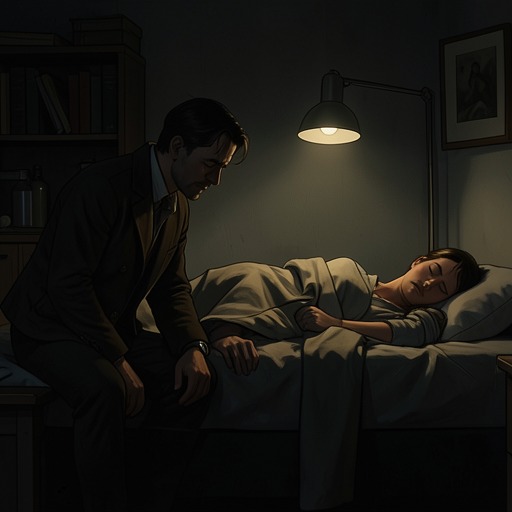
The book’s defense of women’s stories does not assume that experience can be perfectly preserved by writing. In a later reflection, the narrator describes beginning and almost immediately abandoning a journal intended to record her friend’s last days. She did not save the few pages she had written. The attempt felt like a betrayal, not of her friend’s privacy, but of the experience itself: whatever the narrator could describe would fall beside the reality rather than capture it. She compares that failure to a cat slipping unseen through an open door. The image makes absence structural: by the time language tries to hold an experience, the experience has already escaped its grasp.
This difficulty complicates, rather than cancels, the claim that women’s lives need to be told. The narrator says that words placed one after another cannot reproduce life or death, and that the language of finding the right words can be glib when the most important words remain unfound. Yet she also argues that writers who care about how they write must labor over sentences because they believe truth might be found there. Writing is neither a transparent record nor a futile act; it is a strained attempt to approach what cannot be wholly contained. That tension gives form to the book’s interest in women’s struggle for language: the struggle is not proof that the stories lack meaning, but part of their meaning.
A remembered argument by the narrator’s ex extends the problem from literary reception to communication itself. In his reading of the Tower of Babel, God’s multiplication of languages might not stop at different peoples speaking different tongues; each person might have a language as individual as a fingerprint, while mistakenly believing that others speak it too. The ex believed that each person’s meaning is clear to herself and obscure to everyone else. At the beginning of their relationship, the narrator playfully asked whether this applied even to people in love. Years later, at their bitter end, his answer was that it applied most of all to them. The recollection makes intimate speech another site of failed understanding, rather than a simple escape from it.
The book finally sets the failure of perfect expression beside the act of continuing to write. Near its close, the narrator recalls Walter Benjamin’s account of what draws readers to novels: the hope of warming a shivering life with a death read about. She then returns to the fact that every word could have been different, as her friend’s life could have been different, and asks what it matters if she failed. The question does not claim that writing has captured the life it approaches. Instead, it leaves the attempt visible: words cannot make another person’s story whole, but refusing the attempt would leave the story to the same silence and dismissal that have long marked women’s experience as insignificant.