onsra
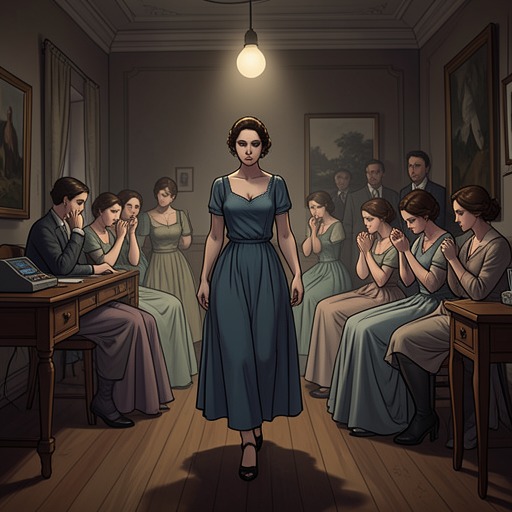
What Are You Going Throughonsra is a Bodo word for the poignant realization that a love shared with another person is destined not to endure. Its English rendering, to love for the last time, carries a different promise from the one it intends: the narrator hears in the phrase both the coming end of love and the force of a love so intense that it might seem to leave no room for another.
Meaning and Translation
The narrator explains that onsra belongs to Bodo, a language spoken by the Bodo people in parts of northeastern India, and has no English equivalent. It describes the feeling that arises when someone recognizes that a relationship’s love will not last. The translation to love for the last time is therefore misleading: English speakers might understand it as finally finding a true, enduring love, rather than loving in the knowledge that the love is ending.
The phrase’s ambiguity turns on what last means. It can mark the final instance of a love that is already passing, or suggest a love so complete that no later love seems possible. The narrator’s first response to the translation was the latter: an overwhelming, fierce, deep love after which a person could never love again. That interpretation does not replace the word’s stated meaning; it reveals the emotional possibility the English phrase opens up even as it obscures the original sense.
Love Outside Romance
The narrator distinguishes this interest in love from a taste for romance as a genre, which she says she has never liked. What fascinates her instead are stories of women in love when that love is unconventional, especially difficult, hopeless, or even insane. onsra gives concise form to the tension in those stories: love can be real and profound without promising a future.
The word follows an account whose ending the narrator cannot recall: a woman catcalled by men who turn out to be plainclothes police officers is arrested, and the narrator forgets what becomes of her story. The abrupt admission of forgetting sits beside the effort to name a difficult feeling. onsra does not restore the missing ending; it makes the uncertainty of love, and of what can be retained in a story, newly legible.
Loss and the Work of Attention
The book’s surrounding scenes give the word’s sense of an approaching end an emotional context without explicitly repeating it. In the hospital, the narrator tries to calm herself by breathing deeply when her friend’s daughter calls to say that her plane has landed and asks whether she can pick anything up. The interruption brings ordinary care into the same moment as the friend’s illness. Soon afterward, the friend notices sunset-pink snow outside the window and remarks that she has lived to see it. The scene holds attention to a small beauty beside the knowledge of limited time.
Everyday tasks similarly alternate with grief rather than resolving it. At the rented house, the narrator makes a grocery list and sits in sunlight, taking comfort in the belief that she is reasonably calm; the sight of her friend slumped at the kitchen table in tears immediately breaks that calm. Elsewhere, the narrator reflects that small routines once helped her manage anxiety and depression: completing a chore, or taking a quiet work break to eat a packed sandwich and fruit, could help her live another day. These episodes give the idea of love’s lastness a practical counterpoint: daily attention continues even when it cannot undo the loss.
Childhood Happiness and Aftermath
The friend’s recollection of childhood sharpens the contrast between a wish fulfilled and adult life’s divided desires. As a child, she says, a person can want one thing—a bicycle, puppy, or new skates—with such complete focus that receiving it feels like being given everything. After puberty, she believes, that pure bliss becomes impossible because a person no longer wants only one thing. Her memory of loving the first day of school, which she regarded as a place of hope, thankfulness, and joy, extends this account of an earlier, more concentrated happiness.
After the friend’s death, the narrator sits in a park beneath her friend’s windows with groceries the friend will never eat: eggs, bread, salmon, kale, and ice cream. The food is both provision for the living and a measure of the absence; the narrator says she will eat it, and then eat more. She imagines herself as a lonely, possibly mad old woman on a bench, fears dizziness when she considers standing, and watches other people move on. The fairy tale, she thinks, will end, and she will be alone. Read beside these scenes, onsra names more than the recognition that love cannot endure unchanged: it gives language to loving someone while knowing that the shared life will end, and to the bewildering continuation of ordinary life afterward.