Gosport Hall
When You Were MineGosport Hall is Isobel Davenport’s inherited residence and the setting where family memory is recast as captivity. Once a second home filled with childhood play, the remote house becomes a cold, shuttered prison after Rupert Davenport breaks into it and holds Isobel there. Its significance rests on that reversal: the place is not Rupert’s property, but Isobel’s inheritance, and its corridors, rooms, and old escape route help her resist his control.
Identity and Inheritance
Gosport Hall is described as a small hunting lodge on the outskirts of Northampton: remote, yet accessible. It had belonged to Isobel’s grandmother. After her grandmother’s death, Isobel’s father inherited it; when he died, the property passed directly to Isobel, who was still too young to decide what to do with it. Peter Davenport explains that the house had been closed and mothballed for years. The family had once visited often, but stopped after their mother died because their father could not bear to return.
The property was not simply a family residence. Isobel also stood to inherit money and property from her grandmother’s side of the family in her own right, with access tied to coming of age. Gosport Hall thus embodied both personal history and future independence: its ownership gave Isobel a claim that Rupert could not lawfully convert into his own merely by acting as her guardian.
A Childhood Home Made Unfamiliar
Isobel remembers Gosport Hall as a large, sprawling house whose long, draughty corridors she knew in minute detail. She and her older brother Peter had spent much of their childhood chasing one another through them. In her escape, that knowledge is practical: even in darkness, she moves through a building whose layout is familiar, making her way toward Peter’s old bedroom at the far corner of the main house.
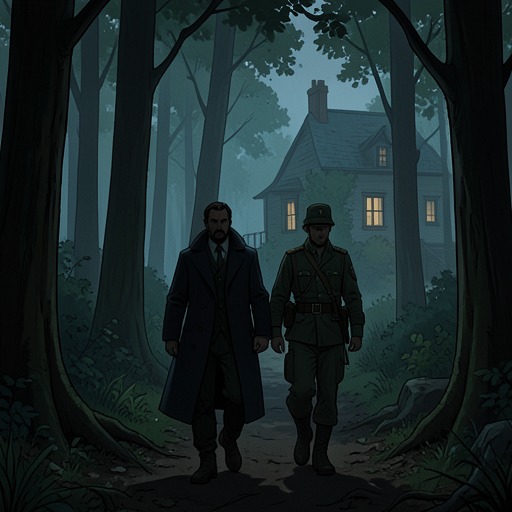
The present house bears little resemblance to that remembered refuge. The rooms that had once seemed warm and inviting now feel cold, empty, and alien. Heavy wooden shutters remain closed even in daylight, leaving the interior isolated and damp; neglect and Rupert’s presence give the residence a menacing quality. The contrast makes the building’s change more than a matter of atmosphere. Its architecture retains the physical traces of Isobel’s childhood, but the life once associated with those spaces has become only a distant echo.
Confinement and Escape
Rupert has no rightful claim to Gosport Hall: he breaks into the property and imprisons Isobel there. During her captivity, he beats her and tries to force her to sign a false betrothal document while pretending to have guardianship rights he does not possess. The house’s remoteness enables the confinement, but its familiar details also offer Isobel a way to plan beyond it.
One such detail is the rose trellis on the outside wall. Peter had secured it during his youth as a means of escaping the house, and Isobel remembers it as a possible way out. She reaches his old bedroom and finds the trellis still in place, but the escape route is not straightforward: climbing it in her soiled dress, she realizes, would be dangerous, especially because Peter had warned that scaling it risked his neck even without skirts. In Peter’s linen press she finds the rough clothes he once wore when going into the village—breeches, a cotton shirt, old boots, a thin jacket, a flat cap, and a riding cloak. The disguise matters because she knows her own clothing would make her recognizable and leave a trail for Rupert.
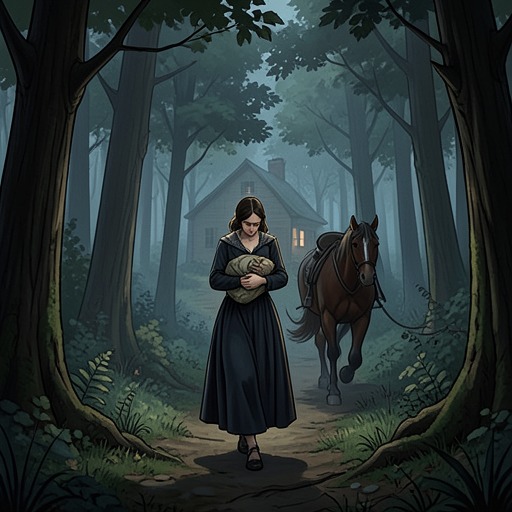
After leaving the house, Isobel crosses the yard away from the gravel and keeps to the shadows of the hedgerows before disappearing into nearby woodland. She continues on foot through the night, avoiding busy roads and resisting the temptation to take one of Rupert’s horses because she fears he would have her arrested for theft. At dawn she drinks from a small stream outside a hamlet. The boots Peter left are too large and chafe her feet, while hunger and a pounding head make the journey harder; nevertheless, remaining unseen is safer than returning to the roads or the house.
The Property at the Center of Rupert’s Scheme
Gosport Hall’s ownership becomes explicit when Rupert is confronted over his crimes. He insists that the house, its land, and its money should have been his, blaming his mother’s will and Isobel for the inheritance passing to her. His rage confirms that the property was not incidental to the imprisonment: he wanted assets that belonged to Isobel and believed himself entitled to them.
Rupert’s arrangement with Bertram DeLisle reveals how the attempted marriage was meant to serve that aim. DeLisle had paid Rupert to take Isobel as his wife. Rupert expected DeLisle to provide half her worth, using the money to hold off his creditors while he tried to obtain Isobel’s signatures transferring the house and land. DeLisle, in turn, says that he planned to persuade Isobel to surrender Gosport Hall and control of her funds after the marriage. The scheme joins coercion over Isobel’s person to a financial attempt to dispossess her: the house that once held her childhood freedom becomes the contested object behind her uncle’s confinement and fraud.