Isobel and DeLisle's relationship
When You Were MineIsobel and DeLisle's relationship is defined by a paper claim to marriage that Isobel rejects at every stage. DeLisle is presented as the intended groom in a betrothal document arranged with Rupert, and later claims that he and Isobel are already married. Her refusal, Peter’s counterevidence, and the unresolved status of the alleged marriage make the relationship a contest over who can define Isobel’s legal and personal position.
The proposed betrothal
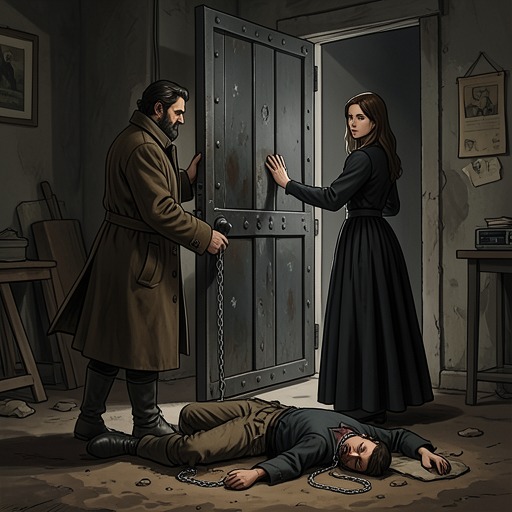
Before Isobel disappeared from Willowbrook Hall, staff understood that she had become betrothed to DeLisle. The arrangement was not presented as a choice she had made freely. When Rupert later confronted her, he referred to DeLisle as a fiancé waiting to meet her and threatened that DeLisle would make her remember her place if she tried to escape. Isobel firmly rejected the prospect of marrying him. Her response makes the central imbalance plain: Rupert and DeLisle treat the match as something they can impose, while Isobel denies that their wishes create any obligation on her part.
The proposed match was tied to Rupert’s control over Isobel’s circumstances. At Willowbrook Hall, he claimed that Peter had died in Norfolk and that this made him her guardian. He used that assertion to remove her from Elspeth’s care, giving her little time to pack and no clear account of where she was being taken. Isobel was distressed by the report of Peter’s death and agreed to leave only after Rupert promised that Elspeth would not be sent away. The account establishes the circumstances in which Rupert could exert pressure; it does not establish that Isobel accepted DeLisle as a suitor.
The document and Isobel’s refusal
Isobel later recalls that Rupert and DeLisle tried to make her sign a betrothal document naming DeLisle as her intended. She refused. The paper had already been signed by both men, and, as Isobel understood it, they wanted her signature as well to make it legally effective. Its physical existence therefore records an attempt to secure her assent, but her refusal is equally important: the document did not carry her signature. She also says Rupert put it before her several times. The repeated demand shows that the missing signature was not incidental to their plan.
Isobel recalls the document while reviewing the events that drove her onto the streets. Writing her account in sequence helped her recover the memory of it, turning a previously overlooked detail into possible evidence. The discovery shifts the paper from an instrument Rupert had used to pressure her into a potential means of examining what he and DeLisle had attempted. Isobel does not claim to know whether they still possess it; she judges that they probably do. The evidence leaves its whereabouts uncertain, but identifies its signatories and the signature they had sought from her.
A later claim of marriage
The conflict escalates when Rupert appears at Dominic’s home with DeLisle and asserts that Isobel cannot be Dominic’s wife. DeLisle then claims that Isobel is his wife and speaks as though he has a right to claim her. Rupert supports this position by invoking a vicar who, he says, married them, as well as an entry in the Church register. These are claims made by the two men during a confrontation, not an independent confirmation of a marriage. The account presented here does not establish that the ceremony took place or settle the document’s authenticity.
Isobel denies ever having married before Dominic. She states that she would never have chosen DeLisle and calls the claim a lie. The distinction between an alleged marriage and a consensual one is central to the scene: DeLisle treats the asserted status as a means of possession, while Isobel insists that she never agreed to marry him. Rupert’s performance is designed to unsettle the household and, particularly, to make Dominic doubt her. For a time, Dominic studies the document rather than answering Isobel, and she experiences his silence as a painful sign that he may believe Rupert.
Peter’s legal and documentary challenge
Peter intervenes by challenging the men’s account on two grounds. First, he says he was Isobel’s legal guardian when the supposed marriage occurred and had not given permission for her to marry anyone except Lord Havistock. His statement directly contests Rupert and DeLisle’s assumption that they could establish a valid marriage simply by asserting that it existed. Peter frames the question as one requiring investigation rather than accepting either side’s claim as settled.
Second, Peter points to papers drawn up and signed around three years earlier, with magistrate witnesses, recording Isobel’s betrothal to Dominic. He uses them to argue that Isobel was not free to marry DeLisle if the earlier arrangement was in force. This is Peter’s counterclaim, supported by documents he says he holds; the scene does not provide a final legal ruling on either the papers or the alleged ceremony. Its immediate effect is to prevent Rupert from controlling the account uncontested and to make the dispute one of competing records, witnesses, and assertions.
Meaning and limits of the relationship
The relationship’s defining pattern is the attempt to turn coercion into formal status. Rupert and DeLisle rely first on a betrothal paper requiring Isobel’s signature, then on a claimed marriage supported by an alleged ceremony and register entry. Isobel’s refusals, her account of the unsigned document, and Peter’s evidence challenge the progression from their intention to a binding relationship. The materials make clear that DeLisle is an adversary in a forced match, not a partner Isobel has chosen.
The dispute also belongs to the wider struggle over Isobel’s identity and autonomy: Rupert’s guardianship claim enables her removal, while DeLisle’s assertions seek to define whom she is bound to marry. Yet the available account leaves the alleged marriage unresolved. It shows the claim being made, resisted, and challenged, without supplying the final verification that would determine its legal force. That uncertainty is part of the relationship’s narrative significance: Isobel’s own account must compete with documents and declarations produced by men seeking authority over her.